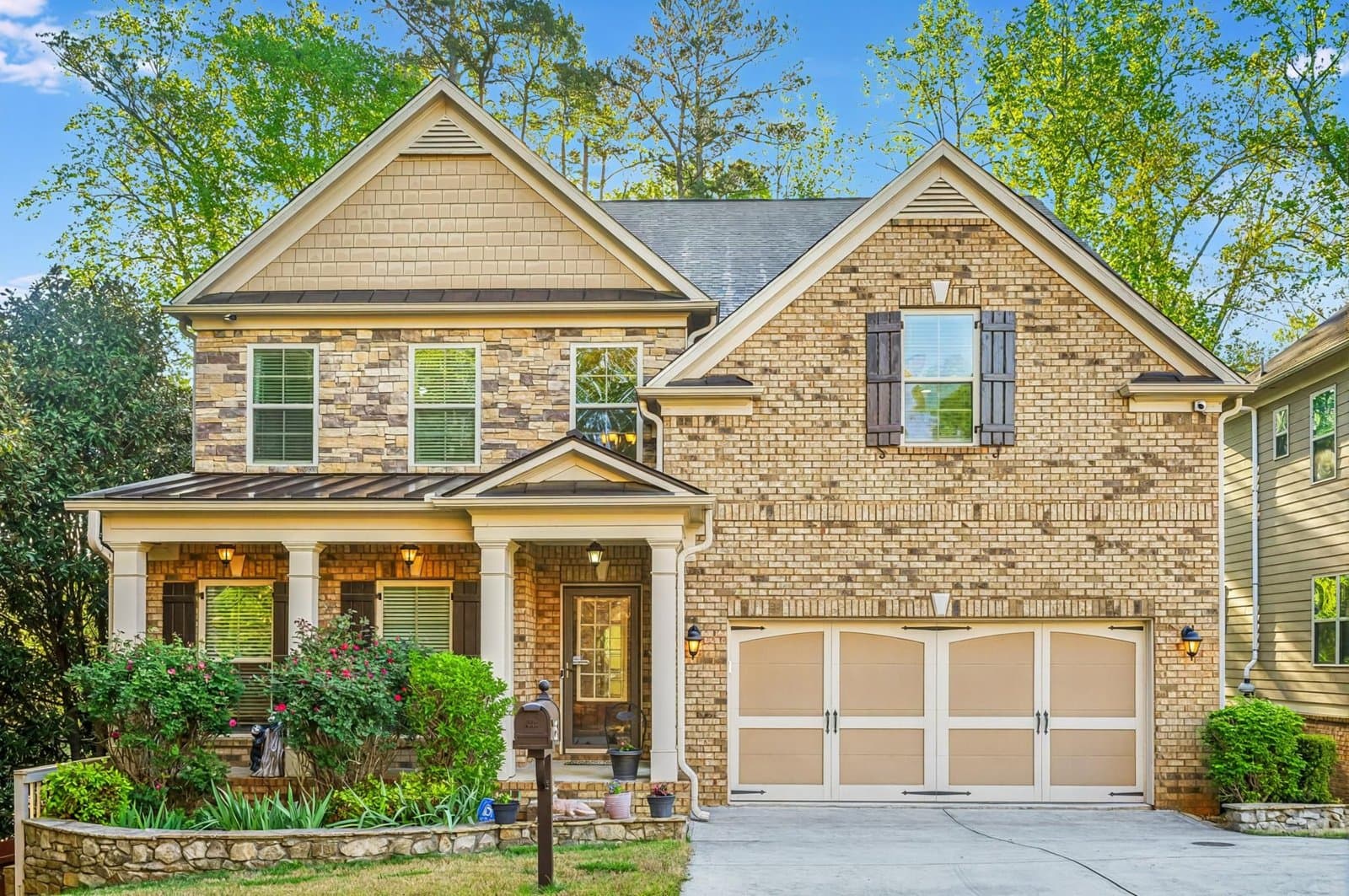

The House That Told Me Everything
I was doing a walkthrough in Suwanee last spring — a 2004 build in a swim-tennis community, good bones, decent lot. The buyers were a young couple with a three-year-old and another one on the way. They loved the kitchen. They loved the backyard. What they hadn't thought to ask: what school cluster does this address fall in?
It wasn't the school they thought. The neighborhood straddled two different attendance zones, and the house — by about 200 feet — fed into the lower-rated elementary. Same subdivision. Different street. Completely different trajectory for their kids.
That's the kind of thing that costs families years of regret or thousands in private school tuition. It's also exactly why this guide exists. After 20-plus years of building and selling homes across Metro Atlanta, I've learned that finding the right neighborhood for your family isn't just about square footage and granite countertops. It's about school ratings, commute math, community infrastructure, and knowing what the house is actually made of before you fall in love with the staging.
Let me walk you through the neighborhoods I'd put my own family in — and why.
What Actually Makes a Neighborhood Great for Families
Before we get into the specifics, let's set the framework. When families ask me where to live in Metro Atlanta, I'm running five filters simultaneously:
- School ratings: GreatSchools scores, state CCRPI data, and — critically — which specific streets feed which schools
- Commute reality: Not Google Maps at 2 p.m. on a Tuesday. I mean actual drive times during peak hours on I-285, GA-400, I-75, and I-85
- Construction quality: What era was the neighborhood built? Who were the builders? I've framed enough walls to know which subdivisions cut corners
- Community infrastructure: Parks, trails, libraries, rec centers, youth sports leagues — the stuff that actually builds a childhood
- Price trajectory: The S&P CoreLogic Case-Shiller Atlanta Home Price Index sits at 249.8 as of April 2026 (source: FRED ATXRSA), compared to the national index at 332.68 — meaning Atlanta still offers relative value versus other major metros, but you need to pick the right pocket
Now let's talk neighborhoods.
North Fulton County: Milton, Alpharetta, and Johns Creek
If you're moving to Metro Atlanta and you have school-age kids, North Fulton County is probably the first conversation we need to have. The Fulton County School system's northern cluster — Milton High School, Alpharetta High School, Johns Creek High School — consistently ranks among the highest-performing public schools in Georgia.
Milton, GA
Milton is where the equestrian estates meet the cul-de-sac subdivisions, and somehow it works. Communities like White Columns, Crooked Creek, and The Manor offer larger lots, newer construction, and some of the best public school access in the state. Milton High School has a GreatSchools rating that puts it in the top tier statewide, and the city itself has done a remarkable job preserving green space while still building out family-friendly infrastructure.
From a construction standpoint, a lot of the inventory in Milton was built in the late 1990s through mid-2000s — which means you're looking at homes that are hitting that 20-to-25-year mark. HVAC systems, roofs, and water heaters in that vintage need attention. Don't skip the inspection. I've walked homes in White Columns where the seller's disclosure looked clean but the crawl space told a completely different story.
Median home prices in Milton run higher than most of Metro Atlanta, but the school quality and land retention make it defensible from an investment standpoint.
Alpharetta, GA
Alpharetta has become one of the most complete family cities in the Southeast. The Avalon development brought walkable retail and dining to a suburb that used to require a car for everything. The Alpha Loop trail system is expanding. And the tech corridor along GA-400 means a significant percentage of residents work within 15 minutes of home — a commute luxury that's genuinely rare in Metro Atlanta.
Neighborhoods like Windward, Crooked Creek (which straddles the Milton/Alpharetta line), and Enclave at Haverford offer strong school access and well-maintained community amenities. Windward in particular has a master-planned feel — lakes, golf, swim-tennis, and a neighborhood that's been maintained with pride since it was developed in the 1980s and 90s.
One thing I always tell buyers in Alpharetta: the GA-400 toll is a daily reality. If your office is south of the perimeter, budget that commute time honestly. During peak hours, 400 South can add 30 to 45 minutes to what looks like a 20-minute drive on a map.
Johns Creek, GA
Johns Creek incorporated in 2006 and has spent nearly two decades building one of the most family-focused city governments in Metro Atlanta. Newtown Park is exceptional. The youth sports infrastructure is serious. And Northview High School and Johns Creek High School consistently post some of the highest academic performance numbers in the state.
The housing stock here skews toward the late 1990s and 2000s — think brick-front traditional homes in swim-tennis communities. Neighborhoods like Chartwell, Shakerag, and Bellmoore Park are perennial favorites. Bellmoore Park is newer construction, which means fewer deferred maintenance surprises but also a higher entry price.
Gwinnett County: Suwanee, Peachtree Corners, and Sugar Hill
Gwinnett has one of the most demographically diverse school systems in the country, and the northern tier of the county — particularly Suwanee and Peachtree Corners — offers exceptional value for families who want strong schools without North Fulton price tags.
Suwanee, GA
Suwanee Town Center has transformed this city into something genuinely special. The amphitheater, the green space, the community events — it creates a small-town feel inside a suburb of 20,000 people. Families in communities like Olde Atlanta Club, Rivermoore Park, and Laurel Springs have access to top-tier Gwinnett County schools, with Lambert High School's cluster drawing serious attention from families relocating from out of state.
Lambert High School has become something of a legend in Georgia education circles — strong academics, strong athletics, strong arts programs. If your address feeds Lambert, you know it and you're proud of it. If it doesn't, you notice.
Construction in Suwanee is a mixed bag. Some of the older communities from the mid-1990s are showing their age — I've seen foundation issues in crawl space homes on the hillier lots near the Chattahoochee, and the builder-grade windows from that era are long overdue for replacement. Newer communities like Rivermoore Park have held up better. Know what you're buying.
Peachtree Corners, GA
Peachtree Corners is Metro Atlanta's original planned community, and it shows. The infrastructure is mature, the tree canopy is established, and The Forum shopping center gives the city a genuine commercial anchor. Families here tend to stay — the school cluster feeds Paul Duke STEM High School, which is one of the more distinctive public school options in the region.
Homes in Peachtree Corners often offer more square footage per dollar than comparable North Fulton addresses. The trade-off is that the housing stock is older — many homes were built in the 1970s and 80s — which means electrical panels, plumbing, and HVAC systems need scrutiny. A 1978 home with a panel that hasn't been updated is a conversation with your insurance company you don't want to have.
Sugar Hill, GA
Sugar Hill is the underrated pick on this list. The city has invested heavily in its downtown, the E Center recreation complex is genuinely impressive, and home prices remain more accessible than comparable communities in Forsyth or North Fulton. Lanier High School and the surrounding cluster have shown consistent improvement in recent years.
For families who are price-sensitive but don't want to sacrifice community quality, Sugar Hill deserves a serious look.
Cherokee County: Canton and Woodstock
If you're willing to accept a longer commute in exchange for more land, newer construction, and lower price points, Cherokee County is where the math starts making sense for a lot of families.
Woodstock, GA
Woodstock has one of the best downtowns of any suburb in Metro Atlanta — full stop. The amphitheater, the restaurants on Main Street, the walkability — it punches well above its weight. Families in communities like Woodstock Knoll, The Village at Towne Lake, and Wynchase have access to Cherokee County schools that have steadily improved their rankings, and the city's investment in parks and recreation is evident.
The commute to Midtown or Buckhead is real — plan for 45 to 60 minutes during peak hours on I-575. But for families where one or both parents work remotely or locally, that calculus changes completely.
Canton, GA
Canton is where I send buyers who want a newer home on a real lot without paying Alpharetta prices. The housing stock is generally newer construction — post-2010 in many communities — which means better energy efficiency, updated building codes, and fewer of the deferred maintenance surprises that come with older inventory.
Cherokee County Schools has been one of the improving systems in Metro Atlanta. It's not North Fulton, but it's not where it was a decade ago either. For families where the school rating is important but not the singular deciding factor, Canton offers genuine value.
Cobb County: East Cobb and Smyrna
Cobb County sits in a sweet spot geographically — close enough to Atlanta's employment centers to make commuting manageable, but suburban enough to offer the space and community feel families want.
East Cobb
East Cobb is one of the most established family corridors in Metro Atlanta. The Walton High School and Lassiter High School clusters are perennial top performers in Georgia, and communities like Chimney Lakes, Indian Hills, and Murdock have been family favorites for decades.
The housing stock in East Cobb runs the gamut: from 1970s ranches to early 2000s colonials to newer infill construction. The older homes offer charm and mature landscaping; they also offer older systems that need attention. I've walked East Cobb homes where the original copper plumbing is still running strong, and others where galvanized pipe is corroding behind the walls. Get the inspection. Get the sewer scope.
Smyrna, GA
Smyrna is the inside-the-perimeter pick for families who want to stay close to the city without paying Buckhead or Virginia-Highland prices. The Market Village area has created a genuine neighborhood center, and the proximity to The Battery and Truist Park gives the city an energy that pure suburbs often lack.
Cobb County Schools feeds Smyrna, and while the ratings vary by cluster, the city's investment in its schools and community infrastructure has been consistent. For dual-income families with demanding commutes, Smyrna's location (easy access to I-285, I-75, and I-285) is a genuine asset.
Forsyth County: Cumming and the GA-400 Corridor
Forsyth County has been one of the fastest-growing counties in the United States for the better part of two decades, and the school system has kept pace in a way that genuinely surprises people. Lambert High School (which straddles the Forsyth/Gwinnett line) and West Forsyth High School are both strong performers.
Communities like Polo Golf and Country Club, Windermere, and The Polo Fields offer resort-style amenities with suburban price points. The trade-off is GA-400: the commute corridor that connects Forsyth County to Atlanta is one of the most congested stretches of highway in the Southeast during peak hours.
New housing starts nationally are running at a seasonally adjusted annual rate of 1,177,000 units as of May 2026 (source: FRED HOUST), and Forsyth County is contributing meaningfully to that number. New construction is abundant here, which means buyers have negotiating leverage with builders that they often don't have in resale markets.
The Financial Reality: What Families Need to Know in 2026
Let me be real with you about the numbers. The 30-year fixed mortgage rate is averaging 6.49% as of July 9, 2026, according to Freddie Mac's Primary Mortgage Market Survey via FRED (FRED MORTGAGE30US). That's the market rate. What any individual buyer qualifies for depends on their credit, income, and down payment situation.
Atlanta's home price index sits at 249.8 (FRED ATXRSA, April 2026), compared to the national index of 332.68 (FRED CSUSHPINSA, April 2026). That gap (Atlanta running roughly 25% below the national index) is one of the most important data points for families relocating from coastal markets. Your dollar goes further here. That's not hype; that's the index.
New single-family home sales nationally are running at a seasonally adjusted annual rate of 580,000 units as of May 2026 (FRED HSN1F). The market is moving, but it's not the frenzied pace of 2021. Buyers have time to be thoughtful. Use it.
Frequently Asked Questions: Best Neighborhoods Metro Atlanta Families
What is the best school district in Metro Atlanta for families?
North Fulton County (specifically the Milton, Alpharetta, and Johns Creek clusters) consistently ranks among the highest-performing in Georgia. Forsyth County and the northern Gwinnett County clusters (particularly Lambert High School's attendance zone) are strong alternatives with more competitive price points.
Which Metro Atlanta neighborhoods offer the best value for families in 2026?
Sugar Hill in Gwinnett County, Canton in Cherokee County, and Smyrna in Cobb County offer strong community infrastructure and improving school systems at price points below the North Fulton premium. The Atlanta home price index (249.8 as of April 2026, FRED ATXRSA) remains well below the national average, so relative value exists across the metro, but it's neighborhood-specific.
How do I find out which school my specific address feeds in Metro Atlanta?
Every county school system has an online address lookup tool. Use it before you make an offer, not after. As I noted at the top of this guide, two houses in the same subdivision can feed different schools depending on which side of the street they sit on. This is not a hypothetical. I see it regularly.
Is it a good time to buy a home in Metro Atlanta for a family in 2026?
The honest answer: it depends on your personal financial situation and how long you plan to stay. The 30-year fixed mortgage rate is averaging 6.49% as of July 9, 2026 (FRED MORTGAGE30US). Atlanta home prices remain below the national index. If your timeline is 5-plus years and your finances are solid, the fundamentals support buying in the right neighborhood. If you're uncertain about your timeline, renting in a strong school district while you get oriented is a legitimate strategy.
What should families look for in a home inspection in Metro Atlanta?
Foundation and crawl space conditions (especially in hillier areas of Cherokee and North Fulton), electrical panel age and capacity, HVAC age and service history, roof condition and age, and, critically, a sewer scope on any home over 20 years old. Atlanta's clay soil is hard on foundations and sewer lines. Don't skip these items to save $300 on inspection costs.
Ready to Find Your Neighborhood?
I've walked thousands of homes across Metro Atlanta. I've framed walls, poured footings, and negotiated deals in every county on this list. When I walk through a house with you, I'm not just looking at the finishes. I'm reading the bones, the systems, the soil, and the school map simultaneously.
If you're trying to figure out which neighborhood actually fits your family's life (not just your wishlist), I'm worth a conversation. No pressure, no pitch. Just honest information from someone who's been doing this long enough to know what matters and what doesn't.
If you want to talk through this, I'm around. Reach out at becketthomes.org or give me a call. Let's find the right neighborhood, the first time.
Thinking about a move?
Beckett Real Estate works the whole of Metro Atlanta. Tell me the address or the neighborhood and I will tell you what the house is really like, what the inspection usually finds, and what the number should be.
See homes for saleTalk to an agent nowMore articles like this