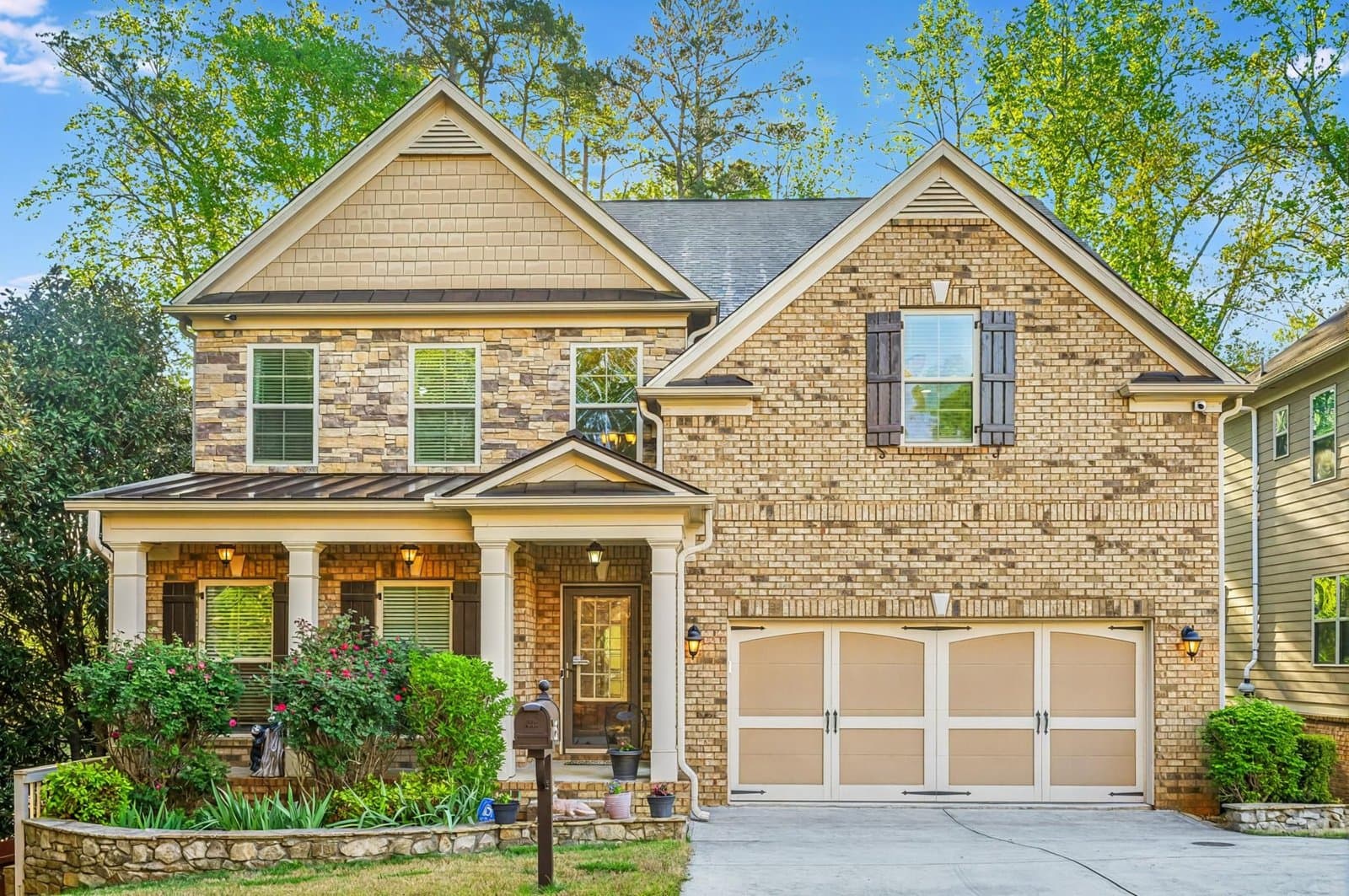

I was walking a listing in Alpharetta last spring — nice house, great bones, solid construction — and the buyers kept circling back to one question. Not about the roof pitch, not about the HVAC age, not about the crawlspace. They wanted to know about the schools. Specifically, they wanted to know if the address fed into Fulton County Schools or Cherokee County Schools, and whether that mattered for resale. It matters. A lot. More than most people realize until they're already under contract and Googling at midnight.
School districts in Metro Atlanta don't just affect your kids' education: they affect your property value, your resale timeline, and frankly, the kind of neighborhood you're buying into. I've watched homes in top-rated school districts sit on the market for four days and get multiple offers. I've also watched comparable homes two miles away (different district) sit for sixty days. Same square footage. Different zip code. Different story.
So let's talk about the best school districts in Metro Atlanta for 2026. Real data. Real neighborhoods. No fluff.
Why School Districts Drive Metro Atlanta Real Estate More Than You Think
Here's something most agents won't tell you: you're not just buying a house. You're buying into a school district's tax base, its community investment, and its long-term trajectory. When a district is improving (when scores are trending up, when new facilities are being built), home values in those attendance zones tend to follow. It's not a coincidence.
Georgia uses a combination of state funding and local property taxes to fund public schools. That means higher property values in a district generally translate to better-funded schools, which attracts more buyers, which supports higher property values. It's a cycle. You want to be on the right side of it.
GreatSchools ratings, while imperfect, give you a starting benchmark. I cross-reference those with Georgia Milestones data, college readiness scores, and what I actually hear from families living in these communities. Here's what I've found heading into 2026.
Cherokee County Schools: The Quiet Overachiever
If you haven't looked seriously at Cherokee County, you're leaving value on the table. Cherokee County School District consistently ranks among the top large districts in Georgia, and the growth story here is one of the most compelling in Metro Atlanta.
Canton and Woodstock are the population centers, but the real action for families is in the school zones feeding into Sequoyah High School and Cherokee High School. Sequoyah, in particular, has been a standout: strong AP course offerings, competitive athletics, and a community that shows up. GreatSchools rates several Cherokee elementary schools at 8 or 9 out of 10.
What makes Cherokee interesting from a real estate angle is the price-to-school-quality ratio. You can still find four-bedroom homes in the $450,000–$550,000 range in solid Cherokee school zones: price points that would get you significantly less house in Forsyth or North Fulton. Subdivisions like Bridgemill, Towne Lake, and Lake Arrowhead give you that suburban feel with genuine community infrastructure.
Commute to Midtown or Buckhead runs 45–55 minutes on a typical morning via I-575 or Bells Ferry Road. Not ideal if you're in the office five days a week, but if you're hybrid or remote, Cherokee County is worth a serious look.
Forsyth County Schools: The Gold Standard (and the Price Tag That Comes With It)
Let me be real with you: Forsyth County Schools is the most talked-about district in Metro Atlanta for a reason. It's been one of the top-performing districts in Georgia for over a decade, and it's not slowing down. Lambert High School, South Forsyth High School, and West Forsyth High School all routinely rank in the top tier statewide for graduation rates, SAT scores, and AP participation.
The district serves Cumming and the surrounding communities, and the growth has been staggering. Forsyth County was the fastest-growing county in the United States for several years running. That growth funded new schools, new facilities, and a level of community investment that shows up in the classroom.
Lambert High School's zone (covering much of the Alpharetta Road and McGinnis Ferry corridor) is where you'll find some of the most competitive real estate in the entire metro. Homes in that attendance zone move fast and hold value. Subdivisions like Windermere, Polo Golf & Country Club, and Vickery give you access to Lambert's zone with varying price points, though entry-level in this zone now starts around $550,000 and runs well past $1.2 million for larger homes.
South Forsyth High School's zone, covering the Suwanee and Johns Creek adjacent areas, is similarly strong. If you're relocating from out of state and you want to land in a district that will hold its value and deliver academically, Forsyth County is the safe bet. Just know you're paying for that safety.
North Fulton County: Johns Creek, Alpharetta, and Milton
North Fulton is where the Fulton County School District (often unfairly lumped in with Atlanta's more challenged southern zones) actually shines. Johns Creek, Alpharetta, and Milton are served by Fulton County Schools, and the schools in these communities are genuinely excellent.
Northview High School in Johns Creek has been one of the top-ranked high schools in Georgia for years. It's a rigorous, academically competitive environment with strong STEM programming. The Johns Creek community is heavily invested in its schools, and that shows up in test scores, extracurriculars, and facilities. GreatSchools rates Northview at 10 out of 10. Homes in the Northview zone, particularly in neighborhoods like Medlock Bridge, Abbotts Hill, and St. Ives, are priced accordingly, typically starting in the mid-$500,000s and ranging past $1.5 million for larger estate-style homes.
Cambridge High School in Milton serves one of the most sought-after communities in Metro Atlanta. Milton as a city has done an exceptional job maintaining its character (large lots, equestrian properties, custom construction) while investing in its schools. If you want acreage and top schools, Milton is one of the few places in Metro Atlanta where you can actually have both.
Alpharetta High School has improved significantly over the past decade and serves a strong community. Alpharetta's downtown revitalization has made it one of the most livable cities in Georgia, and the school quality adds to the overall package. Expect to pay $500,000–$900,000 for a solid family home in a good Alpharetta school zone.
Cobb County Schools: Marietta, East Cobb, and the Overlooked Standouts
Cobb County School District is the second-largest district in Georgia, and like any large system, it's uneven. But the East Cobb corridor (specifically the zones feeding into Walton High School, Lassiter High School, and Pope High School) is genuinely exceptional and often underrated compared to the Forsyth and North Fulton conversation.
Walton High School in East Cobb has been a consistent top performer in Georgia for decades. Strong academics, a competitive athletics program, and a community that treats school involvement as a given rather than an afterthought. The neighborhoods feeding into Walton (Weatherstone, Chimney Springs, Indian Hills) offer a range of price points from the mid-$400,000s to well over $1 million for larger homes on bigger lots.
Lassiter High School, also in East Cobb, has a similarly strong reputation. The Lassiter zone tends to offer slightly more affordable entry points than Walton, making it a smart play for families who want top-tier Cobb County schools without the absolute top-of-market price tag.
What I appreciate about East Cobb is the construction quality in many of these neighborhoods. A lot of these subdivisions were built in the 1980s and 1990s by established builders, and the bones are solid. I've walked hundreds of these homes: the lot sizes are generous, the floor plans are functional, and the communities are established. You're not buying into a neighborhood that's still figuring itself out.
Marietta City Schools is a separate district from Cobb County Schools, and the distinction matters. Marietta High School has been on an upward trajectory, and the city itself has invested heavily in its schools. If you're looking at Marietta proper, make sure you know which district the specific address falls into (city or county) because it matters.
Gwinnett County Schools: Suwanee, Peachtree Corners, and the Duluth Zone
Gwinnett County School District is the largest in Georgia and one of the most diverse in the Southeast. That diversity is a strength, not a weakness, but it does mean the district is highly variable depending on where you are within it.
The northern Gwinnett corridor (Suwanee, Sugar Hill, and the areas feeding into North Gwinnett High School and Peachtree Ridge High School) consistently outperforms the district average. North Gwinnett High School in particular has been a standout, with strong academics and a well-regarded athletics program. Suwanee has also emerged as one of the most livable small cities in Metro Atlanta, with a walkable downtown, community events, and genuine neighborhood character.
Peachtree Corners, which feeds into Paul Duke STEM High School and Norcross High School depending on the specific address, is another strong pocket. Paul Duke STEM is one of the most innovative schools in Georgia: a magnet-style STEM school that draws motivated students from across Gwinnett. If you have a kid who's wired for technology, engineering, or science, this is worth knowing about.
Duluth High School's zone, covering much of the Duluth and Johns Creek adjacent areas, is also solid. Duluth as a community has a strong Korean-American cultural presence and some of the best food in Metro Atlanta — a bonus that has nothing to do with school ratings but everything to do with quality of life.
What to Look For Beyond the GreatSchools Rating
I've seen buyers make decisions based entirely on a GreatSchools number, and I've seen that bite them. Here's what I actually look at when I'm advising a family on school districts:
- Georgia Milestones data: Look at the actual proficiency percentages in math and English for the specific school, not just the composite rating. Some schools rate well overall but have significant gaps in specific subjects.
- Trend direction: A school rated 7 that's been trending up for three years is often a better bet than a school rated 8 that's been flat or declining. You want momentum.
- Teacher retention rates: High teacher turnover is a red flag. Stable, experienced faculty make a real difference, and this data is publicly available through Georgia's Department of Education.
- Extracurricular depth: For high school especially, look at AP course offerings, dual enrollment options, and arts/athletics programs. These reflect community investment and school culture.
- Attendance zone stability: Districts occasionally redraw attendance zones as populations shift. If a neighborhood is right on the edge of two school zones, there's a risk that rezoning could move your address. I flag this for clients regularly.
How School Districts Affect Your Resale Value
This is the conversation most buyers aren't having, and they should be. When you buy in a top-rated school district, you're buying a more liquid asset. Full stop. Homes in strong school zones sell faster, attract more competing offers, and hold value better during market corrections.
During the 2022–2023 rate adjustment period, when the broader Metro Atlanta market slowed significantly, homes in Forsyth County and North Fulton's top school zones held their value better than almost anywhere else in the metro. That's not an accident. Buyers who need those schools are less rate-sensitive because they're making a long-term life decision, not just a financial one.
If you're buying a home you plan to sell in five to seven years, school district quality is one of the most reliable value indicators I know of. Even if you don't have kids. Especially if you don't have kids, actually — because you're buying the premium without paying the emotional tax of navigating school choices.
Frequently Asked Questions: Best School Districts in Metro Atlanta
What is the best school district in Metro Atlanta overall?
Forsyth County Schools consistently ranks at or near the top for overall performance, graduation rates, and college readiness. North Fulton's Northview High School zone in Johns Creek is also a perennial top performer. If you're optimizing purely for school quality and budget isn't the primary constraint, these two areas are the most defensible choices heading into 2026.
Are Cobb County Schools good?
Cobb County Schools are highly variable depending on location within the district. The East Cobb corridor (specifically the zones feeding into Walton, Lassiter, and Pope high schools) is genuinely excellent and competes with the best in Metro Atlanta. Other parts of the district are more average. Location within Cobb matters enormously.
How do I find out which school zone a specific address is in?
Every county school district in Metro Atlanta has a school finder tool on their website where you can enter a specific address and get the assigned school. Don't rely on what a listing agent or Zillow tells you. Verify directly with the district. I've caught errors in listing descriptions on this specific point more than once.
Do school districts affect home values in Metro Atlanta?
Significantly. Homes in top-rated school zones in Metro Atlanta consistently sell faster, receive more competing offers, and hold value better during market slowdowns. The premium for a top school zone can range from 10% to 25% over comparable homes in lower-rated zones, depending on the specific market.
Is Cherokee County a good school district?
Cherokee County Schools is one of the most underrated districts in Metro Atlanta. It consistently ranks among the top large districts in Georgia, and the price-to-school-quality ratio is genuinely compelling compared to Forsyth or North Fulton. If you're looking for strong schools at a more accessible price point, Cherokee County deserves serious consideration.
The Bottom Line
School districts in Metro Atlanta aren't created equal, and the gap between the best and the rest has real financial consequences, not just educational ones. Whether you're moving here for the first time, upgrading within the metro, or trying to figure out which side of a county line is worth the extra money, the school district question deserves a serious answer, not a quick Google.
I've spent twenty years building and selling homes across this metro. I know where the good schools are, where they're trending, and what the real estate looks like on the ground in each of these communities. If you want to talk through where your budget lands and which school zones make sense for your family, I'm around. No pressure, no pitch, just a straight conversation. Reach out through becketthomes.org and we'll figure it out together.
Thinking about a move in Johns Creek?
Beckett Real Estate works the whole of Metro Atlanta. Tell me the address or the neighborhood and I will tell you what the house is really like, what the inspection usually finds, and what the number should be.
See homes for sale in Johns CreekAbout Johns CreekTalk to an agent nowMore articles like this