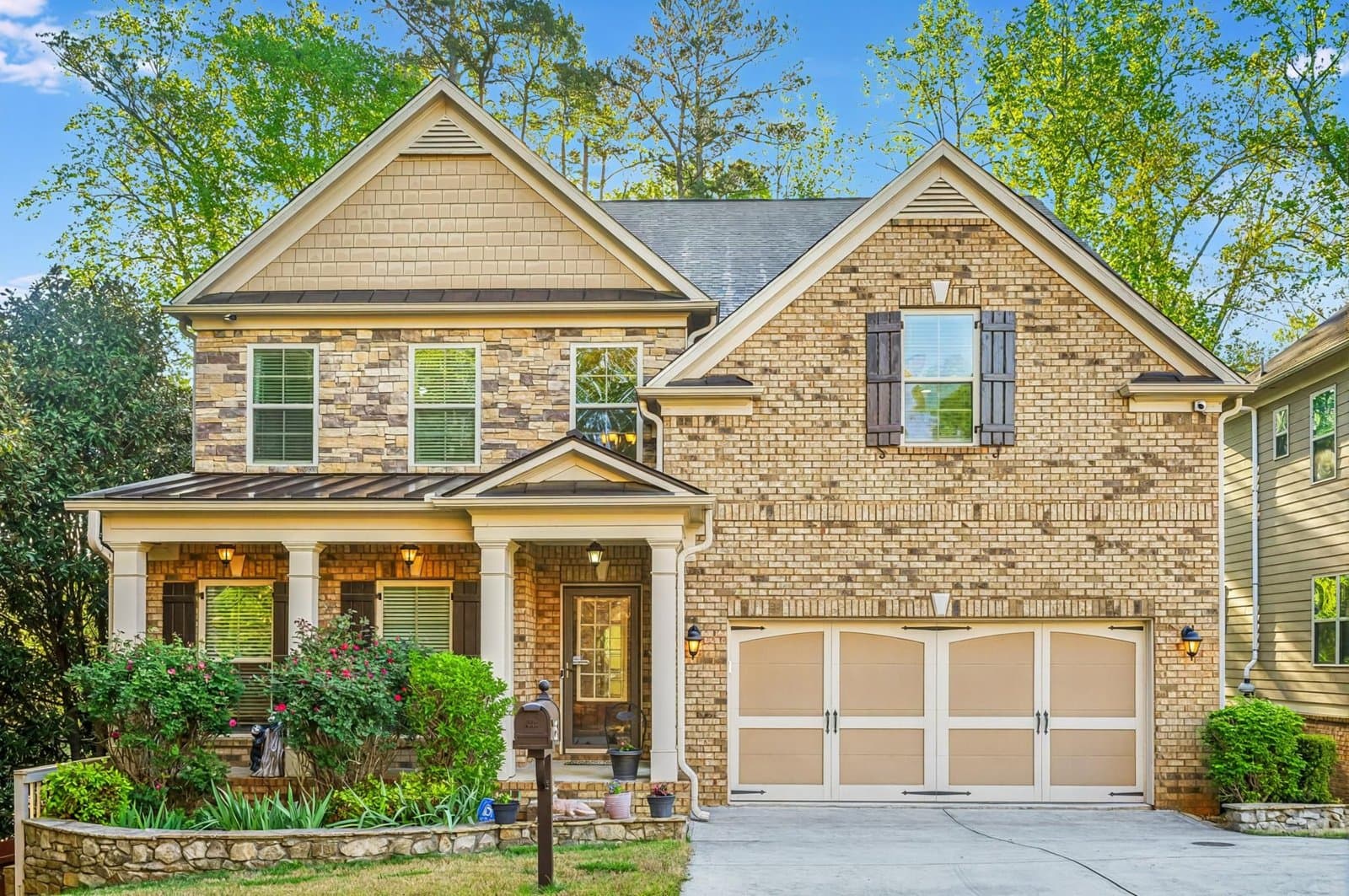

I was walking a first-time buyer through a Smyrna ranch last spring — solid bones, good street, priced right. She loved it. Then she whispered, 'I just don't know if I can actually do this.' Not the house. The process. The money. The fear of getting it wrong.
She closed 47 days later. Got $4,000 in closing cost assistance she didn't know existed. Locked a rate that made her monthly payment $180 less than she expected. And she's now building equity in a neighborhood where values have climbed 6.2% year over year.
That's what knowing what you're doing looks like. And that's exactly what this guide is for.
If you're a first time home buyer in Georgia heading into 2026, Metro Atlanta is still one of the most compelling markets in the country, if you know where to look, what programs to use, and how to move without getting eaten alive by the process. Let's get into it.
The 2026 Metro Atlanta Market: What's Actually Happening
Let me be real with you. The hysteria of 2021 is gone. But so is the idea that Atlanta is going to suddenly become affordable the way it was in 2012. We're in a normalized market, and for a first-time buyer, that's actually good news.
Here's what the data looks like heading into 2026:
- Metro Atlanta median home price is hovering around $385,000 — down slightly from the 2022 peak but holding firm in most submarkets
- Days on market have stretched to 35–55 days in most zip codes, giving buyers time to breathe and negotiate
- Mortgage rates have moderated into the mid-to-upper 6% range — not the 3% fantasy of 2020, but workable, especially with the right programs
- Inventory has improved. In Cobb County, Gwinnett, and Clayton, you're seeing real choices again, not just whatever's left after the feeding frenzy
- New construction is back in play, particularly in Paulding, Cherokee, and Henry County, with builders offering rate buydowns and incentives that resale sellers simply can't match
The bottom line: 2026 is a year where a prepared first-time buyer can win. The unprepared ones will still get chewed up. The difference is information, and execution.
Georgia First-Time Home Buyer Programs You Need to Know in 2026
This is where most buyers leave money on the table. Georgia has some of the strongest state-level assistance programs in the Southeast, and the majority of first-time buyers I talk to have never heard of most of them.
Georgia Dream Homeownership Program
This is the flagship. Run by the Georgia Department of Community Affairs (DCA), Georgia Dream offers below-market interest rates on 30-year fixed mortgages specifically for first-time buyers, meaning you haven't owned a home in the last three years.
In 2026, the income limits have been updated for most Metro Atlanta counties. For a household of 1–2 people, you're looking at limits around $74,000–$80,000 depending on the county. For 3+ people, those limits increase. Purchase price caps are currently set around $425,000 for most Metro Atlanta counties, which covers a solid chunk of the market, especially in DeKalb, Clayton, Rockdale, and Douglas.
Georgia Dream Down Payment Assistance
Paired with the Georgia Dream mortgage, eligible buyers can get $10,000 in down payment assistance, structured as a 0% interest second mortgage that doesn't require monthly payments. It only comes due when you sell, refinance, or pay off the first mortgage.
If you're a public protector, educator, healthcare worker, or active military, that number jumps to $12,500 under the Georgia Dream PEN program. I've had teachers walk into closings in Douglasville and Conyers putting less than 2% of their own money down because of this program stacked with other assistance.
Atlanta Affordable Homeownership Program
The City of Atlanta runs its own program for buyers purchasing within city limits. Assistance amounts vary based on income and area, but qualified buyers have received up to $20,000 in forgivable loans. If you're looking in neighborhoods like Westview, Pittsburgh, Sylvan Hills, or parts of Southwest Atlanta, this program can genuinely change the math.
Invest Atlanta Programs
Invest Atlanta administers several homeownership incentive programs targeting specific neighborhoods and income brackets within the city. The Vine City Renaissance Initiative and programs near the BeltLine corridor have offered substantial assistance to buyers willing to commit to those communities. These programs come and go, so you need someone plugged in to know what's live right now.
Federal Programs: FHA, USDA, and VA
Don't sleep on the basics. FHA loans still make sense for buyers with credit scores in the 580–640 range or limited down payment savings. The 3.5% down requirement is real and achievable. USDA loans (yes, zero down) are available in more of Metro Atlanta's outer ring than most people realize. Parts of Cherokee, Forsyth, Bartow, and Heard County qualify. If you're a veteran or active military, VA loans remain the single best mortgage product available, full stop. Zero down, no PMI, competitive rates.
The Credit Score Conversation Nobody Wants to Have
I've built homes from the ground up. Framed walls, set trusses, watched foundations cure. And I'll tell you: the foundation of buying a home is your credit score. Everything else is framing.
Here's what you need to know for 2026:
- 760+: You're getting the best rates available. Don't overthink it.
- 700–759: Still very strong. Conventional loans are fully accessible.
- 640–699: FHA territory. You'll pay slightly more, but you can absolutely buy.
- 580–639: FHA with 3.5% down is your lane. You may need a stronger compensating factor like reserves or low debt-to-income.
- Below 580: Let's talk honestly. You're not buying in 2026, but 2027 or 2028 is absolutely achievable with a plan.
Pull your credit now. Not the free app score: the actual tri-merge report your lender will pull. Dispute errors. Pay down revolving balances below 30% utilization. Don't open new credit. Don't close old accounts. Give yourself 6–12 months if your score needs work. The buyers who win in this market did their homework a year before they started shopping.
Where First-Time Buyers Are Actually Finding Value in Metro Atlanta
This is the part that requires local knowledge: not Zillow, not Reddit. Real street-level intelligence.
Gwinnett County: The Workhorse of Metro Atlanta
Gwinnett remains one of the best counties for first-time buyers who need value without sacrificing quality of life. Cities like Snellville, Lawrenceville, and Loganville are offering detached single-family homes in the $280,000–$360,000 range with good school ratings and reasonable commutes. The Mill Creek High School cluster in Hoschton/Braselton has seen significant appreciation but still offers entry-level product. Gwinnett's transit improvements and the ongoing investment in the county make this a long-term hold, not just a starter home.
Cobb County: Premium Feel, Possible Entry Points
Cobb is expensive. Let me not pretend otherwise. But Austell, Powder Springs, and South Marietta still have pockets where a first-time buyer can get in under $350,000. The county's school system, access to the Battery and Truist Park corridor, and proximity to I-285 and I-75 make it worth the stretch if you can make the numbers work. Watch for townhomes in Smyrna. They're a legitimate entry point into one of Atlanta's most desirable live-work-play corridors.
Clayton County: The Underrated Play
I'll say what a lot of agents won't: Clayton County is one of the highest-upside bets for a first-time buyer in 2026. Jonesboro, Morrow, and Lake City have homes in the $200,000–$280,000 range that are structurally sound and in improving neighborhoods. The county has seen investment, the airport proximity is a genuine employment driver, and the buyers getting in now are going to look smart in five years. You have to know which streets and which subdivisions. That's where local expertise matters.
Cherokee County: Room to Breathe
If you work remotely or can handle a longer commute, Canton and Ball Ground are delivering new construction townhomes and single-family homes with builder incentives that are hard to find closer in. Rates bought down to the 5s, closing costs covered, design center credits: builders are motivated. Cherokee's school system is strong, the quality of life is high, and the growth trajectory is real.
South DeKalb and Stonecrest: The BeltLine Effect Spreading East
The BeltLine's influence is pushing east. Decatur, Clarkston, and Stone Mountain are seeing renewed interest. Stonecrest has been proactive about economic development. For a buyer willing to do some homework on the specific neighborhood, there are opportunities here that simply don't exist closer to Buckhead or Midtown.
The Walkthrough: What I See That Other Agents Miss
Twenty years of building homes means I walk into a property and I'm not looking at the staging. I'm looking at the foundation, the roof pitch, the HVAC placement, the electrical panel. I've seen beautiful granite countertops hiding a crawlspace full of standing water. I've seen 'move-in ready' homes with knob-and-tube wiring that no insurance company will touch.
For first-time buyers, here's what to pay attention to, or make sure your agent is paying attention to:
- The roof: Ask for age and documentation. In Georgia, a roof over 15 years old is going to cost you on insurance or cost you outright in replacement. Budget $12,000–$18,000 for a full replacement on an average-sized home.
- HVAC age and condition: Two units for a two-story home is standard. If either is over 12 years old, you're looking at replacement within your ownership window. Factor that into your offer.
- The crawlspace or basement: Georgia's humidity is no joke. Vapor barriers, encapsulation, drainage: these matter. A wet crawlspace is a mold factory and a structural liability.
- The electrical panel: Federal Pacific and Zinsco panels are still out there in older Metro Atlanta homes. They're fire hazards and insurance nightmares. Know what you're looking at.
- Grading and drainage: Water that flows toward the foundation instead of away from it is one of the most common and most expensive problems in Georgia homes. Walk the lot after a rain if you can.
A good home inspector will catch most of this. But your agent should be flagging concerns before you even get to inspection, and should know enough to know what questions to ask.
The Timeline: What Buying Actually Looks Like in 2026
First-time buyers often underestimate how long this takes. Here's a realistic timeline:
- Months 1–3 before buying: Pull credit, talk to a lender, get pre-approved (not pre-qualified, there's a difference), research programs, identify your target areas
- Months 2–4: Active search with your agent. In a normalized market, you may look at 10–20 homes before writing an offer
- Offer to close: Typically 30–45 days for a conventional purchase, 45–60 for FHA or USDA, sometimes longer with assistance programs that require additional approval layers
- Due diligence period: Georgia uses a due diligence period (typically 10–14 days) during which you can walk away for any reason and get your earnest money back. Use it. Get your inspection done in the first 5 days.
Total timeline from 'I'm thinking about buying' to keys in hand: realistically 4–8 months for a first-time buyer who's starting from scratch. The buyers who try to compress this timeline are the ones who make mistakes.
Frequently Asked Questions: First Time Home Buyer Georgia 2026
What credit score do I need to buy a home in Georgia in 2026?
For conventional loans, you'll want a 620 minimum, though 700+ gets you meaningfully better rates. FHA loans are accessible at 580 with 3.5% down. For Georgia Dream program eligibility, most lenders require a 640 minimum credit score. If you're below 580, focus on credit repair now and plan to buy in 12–18 months.
How much do I need for a down payment as a first-time buyer in Georgia?
Less than most people think. FHA requires 3.5%. Conventional loans go as low as 3% for qualifying first-time buyers. With Georgia Dream down payment assistance, you could be bringing $5,000–$8,000 of your own money to closing on a $300,000 home. VA and USDA loans require zero down for qualifying buyers. The bigger variable is often closing costs: budget 2–3% of the purchase price.
What is the income limit for Georgia Dream in 2026?
Income limits vary by county and household size, but for most Metro Atlanta counties, the limit is approximately $74,000–$80,000 for 1–2 person households and higher for larger families. These limits are updated periodically by the Georgia DCA, so confirm current figures with a Georgia Dream-approved lender.
Is 2026 a good time to buy a home in Metro Atlanta?
For a prepared buyer, yes. The market has normalized, inventory has improved, and sellers are negotiating again. Waiting for rates to drop significantly is a gamble with no guaranteed payoff, and prices in strong Atlanta submarkets have shown consistent resilience. If your finances are ready and you plan to stay 5+ years, 2026 is a solid entry point.
What are the best neighborhoods for first-time buyers in Atlanta?
It depends on your priorities: commute, schools, budget, lifestyle. Snellville and Lawrenceville in Gwinnett offer value and strong schools. Powder Springs and Austell in Cobb offer proximity to desirable amenities at lower price points. Clayton County offers the highest upside-to-cost ratio for buyers willing to do their homework. Cherokee County is ideal for remote workers who want new construction with builder incentives.
Let's Talk
Buying your first home in Georgia doesn't have to feel like you're walking into a casino blindfolded. With the right preparation, the right programs, and someone in your corner who's actually built houses and negotiated hundreds of deals, it's one of the most powerful financial moves you can make.
I'm Evan Beckett. I've been doing this for over 20 years in Metro Atlanta. I know which subdivisions have drainage issues, which builders actually stand behind their work, and which assistance programs are worth your time versus the ones that sound good on paper but stall your closing.
If you want to talk through your situation (where you are financially, what neighborhoods make sense, what timeline is realistic), I'm around. No pressure, no pitch. Just a straight conversation with someone who's going to tell you the truth.
Reach out at becketthomes.org or give me a call. Let's figure out what your path to homeownership actually looks like.
Thinking about a move?
Beckett Real Estate works the whole of Metro Atlanta. Tell me the address or the neighborhood and I will tell you what the house is really like, what the inspection usually finds, and what the number should be.
Check what you qualify forSearch homes for saleTalk to an agent nowMore articles like this