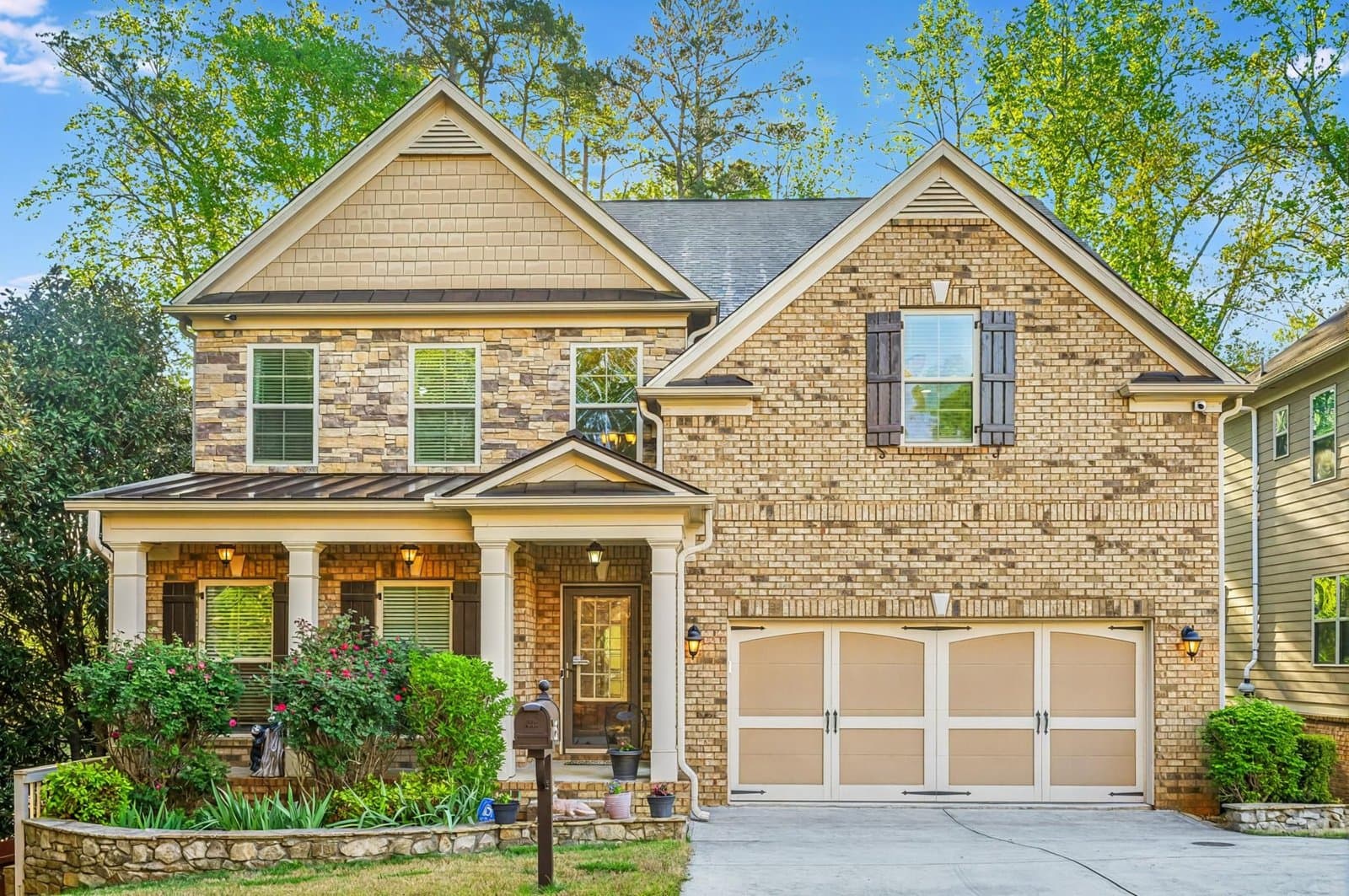

I was walking a duplex off Memorial Drive in Decatur last spring — owner had it listed as 'move-in ready,' which in my experience means something different depending on who's doing the moving. Pulled back the panel cover in the utility room and found aluminum wiring running to a subpanel that hadn't been touched since the Carter administration. The investor I was with almost signed on the dotted line that morning. We didn't. Two weeks later we found a better property in East Point, better bones, better numbers, and he's been cashing checks ever since.
That's the difference between buying investment property in Metro Atlanta with someone who's actually swung a hammer and someone who just knows how to write an offer. And right now, with the Atlanta metro sitting at the intersection of population growth, job expansion, and shifting rental demand, the stakes are higher than they've ever been.
Let me give you the real picture: what's working, what's not, where the money is moving, and what you need to know before you write a single check.
Why Metro Atlanta Is Still One of the Strongest Investment Property Markets in the Southeast
Let's start with the fundamentals, because fundamentals don't lie. Metro Atlanta added over 60,000 new residents in 2023 alone, making it one of the fastest-growing metros in the country. That's not a trend. That's a decade-long pattern. People are coming here from California, New York, Chicago, and they're bringing capital with them. They're also renting before they buy, which means rental demand isn't softening anytime soon.
The metro's job market is anchored by Delta, Coca-Cola, Home Depot, NCR Voyix, and a tech corridor that keeps expanding along the I-285 loop and into Midtown. When you have employment diversity like that (corporate, logistics, healthcare, tech), you get stable rental pools across multiple income brackets. That's what investors want.
Now, interest rates have made some deals harder to pencil out than they were in 2020 or 2021. I'm not going to pretend otherwise. But here's what that environment actually does: it thins the competition. The casual flipper who was getting in with cheap debt has stepped back. The serious, long-term investor who knows how to analyze a deal is still in the room, and they're finding less competition at the offer table.
Where to Buy Investment Property in Metro Atlanta Right Now
Not all of Metro Atlanta performs the same. The zip code matters. The school district matters. The walkability score, the proximity to MARTA, the employment corridor, all of it feeds into your cap rate and your tenant quality. Here's where I'm watching closely.
East Atlanta and the Memorial Drive Corridor
This stretch (from Kirkwood through East Atlanta Village down toward Gresham Park) is still producing cash flow for investors who got in early and is still accessible for those getting in now. Single-family rentals in the $250,000–$320,000 range are renting for $1,800–$2,200 per month in decent condition. The tenant base skews young professional and creative class. Turnover exists, but vacancy rates are low because demand is consistent. Watch for deferred maintenance on older Craftsman and ranch-style homes: a lot of these were built in the 1940s through 1960s and the plumbing and electrical need scrutiny.
East Point and College Park
If you want cash-on-cash returns that actually make sense in this rate environment, East Point and College Park deserve serious attention. You're buying closer to $180,000–$240,000 in some cases, and rents have climbed steadily with the airport corridor's growth. The Hartsfield-Jackson effect is real: airline employees, logistics workers, and hospitality staff all need housing within a reasonable commute. I've seen investors build small portfolios of three to five properties here and run them profitably with a good property manager in place.
Gwinnett County: Lawrenceville, Snellville, and Buford
Gwinnett is one of the most demographically diverse counties in the entire country, and that diversity drives a deep, stable rental market. The school systems (Gwinnett County Public Schools consistently ranks among the top large districts in Georgia) attract families who want to rent quality homes in good school zones. That's a tenant profile that takes care of the property and stays longer. Median home prices in Lawrenceville and Snellville are still in the $280,000–$380,000 range for solid single-family homes, and rent-to-price ratios are holding up better here than in some of the hotter intown markets.
South Fulton and Fairburn
This is the market I tell people to watch if they have a five-to-ten year horizon. Infrastructure investment is coming. The Beltline's southwest connector is moving forward. New commercial development is following residential growth out toward Fairburn and Union City. Prices are still accessible (you can find investment-grade properties in the $200,000–$280,000 range), and the upside on appreciation is real if you're patient. This is not a get-rich-quick play. This is a build-wealth-over-time play.
Cherokee County: Canton and Holly Springs
For investors targeting the suburban family rental market, Cherokee County is producing. Canton and Holly Springs have seen consistent population growth, strong school ratings (Cherokee County School District is well-regarded), and a tenant base that tends toward longer lease terms. You're paying more per door ($320,000 to $450,000 for a solid rental property), but your vacancy risk is lower and your maintenance calls are fewer because the housing stock is newer.
The Numbers That Actually Matter for Investment Property in Atlanta
Every investor I work with asks the same question at some point: 'Is this a good deal?' And my answer is always the same: define 'good.' Good for who? Good for what timeline? Good relative to what alternative?
Here are the metrics I use when I'm evaluating investment property in Metro Atlanta:
- Gross Rent Multiplier (GRM): For Atlanta, a GRM under 12 is worth looking at seriously. Under 10 in a stable submarket is a strong signal. Divide the purchase price by the annual gross rent to get this number.
- Cap Rate: In the current environment, Atlanta investment properties are trading at cap rates between 5% and 7% depending on submarket and condition. Intown properties in high-demand areas compress toward the lower end. Suburban and value-add deals push higher.
- Cash-on-Cash Return: With rates where they are, I want to see at least 6%–8% cash-on-cash on a leveraged deal. Anything under 5% better have a compelling appreciation story attached to it.
- Vacancy Rate Buffer: I always underwrite assuming 8%–10% vacancy even in tight markets. If the deal doesn't work with that buffer, it doesn't work.
- CapEx Reserve: Budget $150–$200 per month per door for capital expenditures on older properties. HVAC, roof, water heater, appliances, they will fail. Plan for it.
The investors who get hurt in Atlanta, and they do get hurt, are the ones who underwrote with best-case assumptions on every line. Don't do that. Underwrite conservatively, then let the market pleasantly surprise you.
What Your Agent Won't Tell You (But I Will): Construction Issues That Kill Returns
This is where my background separates the analysis. I've framed walls, run rough plumbing, and done my share of electrical work. When I walk through an investment property, I'm not just looking at finishes: I'm reading the house.
Here's what I see constantly in Metro Atlanta investment properties that buyers miss:
Foundation Issues in Older Intown Homes
Atlanta's clay soil is notorious for movement. Homes built before 1980 in neighborhoods like Vine City, Westview, Pittsburgh, and parts of Decatur frequently show signs of foundation settlement. Stair-step cracks in brick, doors that won't latch, floors that slope, these are tells. A foundation repair can run $8,000 to $25,000 depending on severity. That changes your numbers in a hurry. Always get a structural inspection on anything pre-1980 in this market.
HVAC Systems in Suburban Rentals
In Cherokee, Forsyth, and Gwinnett County properties built in the 1990s and early 2000s, I see a lot of original HVAC systems that are living on borrowed time. A new system in a 2,000-square-foot home runs $6,000–$10,000 installed. If the unit is 18 years old and you're buying the property, you're buying that replacement cost. Price it in.
Polybutylene Plumbing
Still showing up in properties built between 1978 and 1995. Gray plastic pipe, typically found in homes throughout Cobb, Gwinnett, and DeKalb counties from that era. Insurance companies are increasingly refusing to write policies on homes with poly-b, or they're charging significantly higher premiums. Full repipe on a single-family home runs $4,000–$8,000. Know what you're buying.
Electrical Panels
Federal Pacific and Zinsco panels are fire hazards. Full stop. They're still in homes throughout the metro: I see them regularly in East Atlanta, Decatur, and older Marietta properties. Budget $2,500–$4,500 for a panel replacement and factor that into your offer.
None of these issues are deal-killers by themselves. They're negotiating leverage, or they're reasons to walk. The key is knowing they're there before you're under contract, not after.
Short-Term vs. Long-Term Rental Strategy in Metro Atlanta
The Airbnb and VRBO conversation comes up constantly. And it's legitimate: certain Metro Atlanta submarkets do produce strong short-term rental returns. But there are things you need to understand before you go that route.
The City of Atlanta has short-term rental regulations that require owner-occupancy in most cases, meaning you can't buy a property purely as an investment and run it as a short-term rental within city limits without jumping through significant regulatory hoops. This has pushed a lot of STR activity into unincorporated areas of Fulton, DeKalb, and Cherokee counties where regulations are lighter.
Areas like Lake Lanier's southern shores in Forsyth and Hall counties, properties near the Chattahoochee National Recreation Area, and homes near Chateau Elan in Barrow County can produce strong short-term rental income. But you're running a hospitality business, not a passive investment. Management costs are higher, turnover is constant, and revenue is seasonal. If you're built for that, the returns can be excellent. If you want passive income, long-term residential rental is a cleaner play.
For long-term rentals, the Metro Atlanta market continues to support strong occupancy. Renters by Necessity (households that rent because they can't yet afford to buy) represent a growing share of the market as home prices remain elevated relative to incomes. That's not a commentary on the housing market; it's a demographic reality that supports rental demand for the foreseeable future.
Working With a Property Manager vs. Self-Managing in Atlanta
I'll be blunt: if you own more than two investment properties in Metro Atlanta and you're self-managing, you're either retired or you're leaving money on the table in some other part of your life.
A good property manager charges 8%–10% of monthly rent and handles tenant screening, lease execution, maintenance coordination, and rent collection. In a market where tenant laws are evolving and where a bad tenant can cost you $5,000–$15,000 in lost rent and legal fees, that 8%–10% is insurance as much as it's a service fee.
The Atlanta market has several strong property management companies operating across different submarkets, from Buckhead to Buford. Vet them the same way you'd vet a contractor: ask for references, look at their online reviews, ask how they handle maintenance calls and what their average days-to-lease metric looks like. A property manager with 45-day average vacancy is costing you money. The good ones are running 15–25 days.
Frequently Asked Questions About Investment Property in Metro Atlanta
What is a good cap rate for investment property in Metro Atlanta?
In the current market, a cap rate between 5% and 7% is typical for Metro Atlanta investment properties. Intown markets like Midtown, Decatur, and Virginia-Highland tend to compress toward 4.5%–5.5% due to high demand and appreciation potential. Suburban markets in Gwinnett, Cherokee, and South Fulton can push 6%–7.5% on well-priced value-add deals. Anything above 8% in a stable submarket warrants a closer look at what's being priced in. There's usually a reason.
Is Metro Atlanta a good market for rental property investment in 2024 and 2025?
Yes, with caveats. The population growth story is intact, job diversification is strong, and rental demand remains elevated as affordability challenges keep more households renting longer. The challenge is deal flow: higher interest rates have made it harder to pencil out deals at 2021 prices. The opportunity is in value-add properties, off-market deals, and submarkets that haven't been fully discovered yet. The investors doing well right now are patient, analytical, and working with people who know how to find deals that aren't on the MLS.
What Metro Atlanta neighborhoods have the best rental demand?
East Atlanta, East Point, College Park, Lawrenceville, Canton, and the South Fulton corridor are producing strong rental demand right now. Intown neighborhoods like Kirkwood, Reynoldstown, and West End continue to attract young professional renters. For family-focused rentals, Cherokee and Gwinnett counties, particularly near top-rated school zones, see consistent demand and lower turnover.
Do I need a property manager for Atlanta investment properties?
Not legally, but practically: if you're not local, not experienced in landlord-tenant law, or managing more than two properties, yes. Georgia's landlord-tenant laws are relatively landlord-friendly compared to many states, but that doesn't mean tenant disputes are cheap or simple. A good property manager pays for themselves in reduced vacancy, better tenant screening, and fewer maintenance emergencies that turn into major repairs.
What are the biggest mistakes first-time real estate investors make in Metro Atlanta?
Underestimating renovation costs. Overestimating rent in untested submarkets. Not budgeting for CapEx reserves. Buying in a neighborhood because it 'looks like it's turning around' without verifiable data to support that thesis. And, this one I see constantly, not getting a thorough inspection from someone who knows construction. A cosmetically renovated flip can hide $30,000 in deferred systems work. Know what you're buying before you buy it.
Ready to Talk Investment Property in Metro Atlanta?
I've been in this market for over 20 years: before the BeltLine was a concept, before Ponce City Market was anything other than a Sears warehouse, before East Atlanta Village was on anyone's radar. I've built homes, renovated them, sold them, and helped investors build portfolios that actually perform.
If you're serious about investment property in Metro Atlanta, whether you're buying your first rental or adding to a portfolio, I'd rather have a real conversation than send you a brochure. I'll tell you what I'd buy, what I'd avoid, and what the numbers actually look like right now.
If you want to talk through this, I'm around. Reach out at becketthomes.org or call directly. No pressure, no pitch: just straight talk from someone who's seen the inside of more Atlanta homes than he can count.
Thinking about a move?
Beckett Real Estate works the whole of Metro Atlanta. Tell me the address or the neighborhood and I will tell you what the house is really like, what the inspection usually finds, and what the number should be.
See investor dealsSearch homes for saleTalk to an agent nowMore articles like this