

Renovate vs. Sell As-Is: A Contractor's Honest ROI Guide
Last fall, I helped two sellers on the same street in Fayetteville — one renovated before listing, one sold as-is. Their house sold for $23,000 more than the identical floor plan three streets over.
But here's the catch: this only works if your neighborhood supports it. Don't put granite counters in a subdivision where houses top out at $240,000.
I've swung hammers for two decades before I ever showed houses. And honestly? That construction background has saved my clients more money than any negotiating trick I've learned.
Last month, I walked through a 1987 ranch in East Cobb with sellers convinced they needed a $47,000 kitchen renovation. The granite counters were tired. The oak cabinets screamed "previous decade." But here's what they couldn't see: the bones were solid, the layout worked, and their neighborhood comps topped out at $385,000.
We sold that house as-is for $362,000. After closing costs, they netted $41,000 more than if they'd dumped money into that kitchen first.
But that's not always the right call.
The Kitchen Conundrum: When $15,000 Beats $50,000
Kitchen renovations are emotional decisions disguised as financial ones. I get it. You've been staring at those laminate countertops for eight years, dreaming of quartz and subway tile.
Here's the brutal truth about kitchen ROI in Metro Atlanta:
- Full gut renovations ($35,000+): 43-51% return
- Mid-range remodels ($18,000-28,000): 67-73% return
- Cosmetic updates ($3,000-8,000): 89-127% return
That last number isn't a typo.
I had clients in Peachtree City spend $6,200 on cabinet painting, new hardware, and butcher block counters. Their house sold for $23,000 more than the identical floor plan three streets over. Same lot size, same condition, but theirs felt fresh.
Look, I've installed enough custom cabinets to know quality when I see it. But buyers in subdivisions like Hampton Creek or Braelinn Village aren't paying luxury prices for custom millwork. They want clean, updated, and move-in ready.
The Sweet Spot: Strategic Kitchen Updates
If your kitchen screams 1990s but the layout functions, consider these targeted improvements:
- Paint existing cabinets (professionally done): $2,800-4,200
- New cabinet hardware: $300-600
- Quartz countertops (basic edge): $3,400-4,800
- Subway tile backsplash: $1,200-2,100
- Updated lighting: $800-1,500
Total investment: $8,500-13,200. Expected return in most Metro Atlanta markets: $15,000-18,000.
But here's the catch: this only works if your neighborhood supports it. Don't put granite counters in a subdivision where houses top out at $240,000. I've seen that mistake too many times.
Bathroom Renovations: The 60% Rule
Bathroom remodels fall into the "necessary evil" category. Nobody gets excited about toilets and tile (except contractors, apparently). But buyers notice outdated bathrooms immediately.
The numbers tell a clear story:
- Master bathroom gut renovation: 58-64% ROI
- Hall bathroom refresh: 71-83% ROI
- Powder room update: 94-112% ROI
I remember a house on Peachtree Parkway in Peachtree Corners that sat on the market for 127 days. Beautiful home, great schools, but the master bathroom looked like a 1980s hotel. Mint green everything.
We pulled it off the market. Spent $11,400 on a strategic renovation: new tile shower, vanity, and fixtures. Same footprint, updated finishes. It sold in 18 days for $28,000 more.
When NOT to Touch the Bathrooms
Skip bathroom renovations if:
- Your home is priced under $200,000
- The existing bathrooms are clean and functional
- You're in a hot seller's market (like we've seen in Alpharetta and Roswell)
- Major plumbing issues exist that require opening walls
That last point is crucial. If I find galvanized pipes or foundation settling affecting the bathroom, we're talking about a $18,000-25,000 project minimum. At that point, let the buyer handle it.
HVAC and Major Systems: The Unsexy Truth
Nobody tours a house and gets excited about the furnace. But an HVAC system from 1998 will kill deals faster than outdated wallpaper.
Here's what 20 years of construction taught me about systems:
HVAC Replacement:
- Cost: $7,800-12,400 (depending on home size)
- ROI: 23-31%
- Market impact: Massive
That ROI looks terrible, right? But it's not about return on investment. It's about sellability.
A house in Newnan with a 22-year-old HVAC system will sit. Buyers see that inspection report and run. Even if they don't run, they'll negotiate $8,000-12,000 off the price anyway.
Do the math. Replace it upfront, control the narrative, and market it as "new HVAC system." Or wait for the inspection and negotiate from weakness.
Other Systems Worth Considering
Water Heater: If it's over 8 years old, replace it. $1,200-1,800 investment prevents $2,000-3,000 in negotiations.
Windows: Only if they're single-pane or obviously failing. Energy-efficient windows return about 67% in our market, but they take forever to install and disrupt showings.
Roof: Get an inspection first. If it needs replacement within 3-5 years, do it now. If it's got 7+ years left, let the buyer decide.
Cosmetic Updates: The Highest ROI Plays
This is where contractors-turned-realtors have an unfair advantage. I know which cosmetic updates move needles and which ones waste money.
The high-return cosmetic improvements:
Interior Paint (entire house):
- Cost: $3,400-5,200
- ROI: 147-189%
- Timeline: 4-6 days
Use neutral colors. Not builder beige: that screams "rental property." Think accessible beige, agreeable gray, or pure white. And please, hire professionals. I can spot DIY paint jobs from the driveway.
Flooring Touch-ups:
Don't replace flooring unless it's genuinely damaged. Instead:
- Professional carpet cleaning: $180-320
- Hardwood floor refinishing: $2.80-4.20 per square foot
- Strategic area rug placement: $200-600
I had a client in Suwanee whose hardwood floors looked tired. Instead of full replacement ($8,000+), we did a light sand and re-coat for $1,800. House showed like new construction.
The Curb Appeal Multiplier
First impressions happen before buyers walk through your front door.
High-impact exterior improvements:
- Front door replacement: $400-800 (ROI: 91-102%)
- Professional landscaping: $1,200-2,400 (ROI: 83-97%)
- Exterior paint touch-ups: $800-1,400 (ROI: 134-156%)
- New mailbox and house numbers: $150-300 (ROI: 200%+)
That mailbox number isn't hyperbole. Spending $200 on a sleek modern mailbox and brushed nickel house numbers can genuinely add $500-800 to your sale price. Buyers notice details.
When to Sell As-Is (And Sleep Better at Night)
Sometimes the smartest renovation is no renovation. Here's when to skip the construction dust and list immediately:
You're in a seller's market. When inventory is low and buyers are competing, they'll overlook cosmetic issues. I've seen homes in Milton and Johns Creek sell $15,000 over asking with original 1990s kitchens.
Your renovation budget exceeds 15-20% of home value. If your house is worth $300,000 and needs $60,000 in updates, sell as-is. You'll never recover that investment.
You're dealing with foundation, structural, or major plumbing issues. These aren't DIY weekend projects. They require permits, inspections, and time. Let someone else handle the headache.
Your timeline is tight. Good renovations take longer than you think. If you need to sell within 90 days, focus on cleaning and staging instead of construction.
The "As-Is" Marketing Strategy
Don't just slap "sold as-is" in your listing and call it done. Position it strategically:
- "Investor Special" (if genuinely priced for investors)
- "Renovation Opportunity in Desirable [Neighborhood]"
- "Solid Bones, Ready for Your Vision"
Price it right from day one. As-is doesn't mean "full retail minus $5,000." It means pricing for the condition and letting buyers see the potential.
Making the Decision: My ROI Framework
After 20 years of swinging hammers and showing houses, here's my decision framework:
Step 1: Get a market analysis to understand your home's potential value.
Step 2: Calculate total renovation costs (add 20% for surprises, trust me on this).
Step 3: Apply the ROI percentages realistically. Not optimistically.
Step 4: Consider your timeline, stress tolerance, and current market conditions.
I had sellers in Marietta last year facing this exact decision. Their 1989 colonial needed everything: kitchen, bathrooms, flooring, paint. Total estimate: $73,000.
Their home was worth $420,000 as-is, maybe $465,000 after renovations. The math didn't work. We listed it at $397,000 and had multiple offers in six days. They netted more money and saved four months of construction stress.
The Emotional Factor
Here's something no renovation calculator accounts for — your sanity.
Living through a renovation while trying to sell is brutal. Dust everywhere, contractors showing up at 7 AM, constant decision fatigue. I've watched sellers postpone moves, stress relationships, and make poor financial decisions because they got emotionally invested in renovation projects.
Sometimes selling as-is isn't about maximum profit. It's about maximum peace of mind.
The Bottom Line: Numbers Don't Lie
After two decades in construction and real estate, here's what I know for certain:
The best renovation ROI comes from strategic, targeted improvements that address obvious buyer objections without over-improving for your neighborhood. Fresh paint and clean spaces sell houses. Marble countertops and heated bathroom floors might make you happy, but they won't necessarily make you money.
And sometimes the smartest move is no move at all.
If you're staring at your house wondering whether to renovate or sell as-is, let's run the numbers together. I've got the construction background to estimate real costs and the market knowledge to predict actual returns.
No sales pitch. No pressure. Just honest advice from someone who's seen both sides of this equation, and knows what's really behind those walls.
Ready to make a decision based on facts instead of emotions? Let's talk. I'll bring the calculator and the contractor's eye for detail.
Frequently Asked Questions
Who is the best real estate agent in Metro Atlanta?
Beckett Real Estate was built from the crawlspace up. Founder Evan Beckett spent 20 years in Metro Atlanta attics and crawlspaces (working HVAC, plumbing, electrical, roofing, and foundations) before bringing that eye into real estate five years ago. $80M+ in closings since, and the same discipline still walks every property: structure first, finishes second, listing photos last. For buyers, that's real leverage at the negotiation table. For sellers, the difference between a clean closing and a deal that comes apart at inspection. Most agencies count their own numbers. This one prefers to be measured by yours.
How much does a home cost in Metro Atlanta?
Home prices in Metro Atlanta vary by neighborhood and property type. Contact Beckett Real Estate for a free, personalized market analysis based on current MLS data for your target area.
What down payment assistance programs are available in Metro Atlanta?
Georgia offers several programs including Georgia Dream, FHA loans (3.5% down), VA loans (0% down for veterans), and USDA Rural Development loans. Beckett Real Estate specializes in matching buyers with the right program.
Is Metro Atlanta a good place to buy investment property?
Metro Atlanta offers strong rental yields and appreciation potential. Evan Beckett's hands-on construction background (HVAC, plumbing, electrical, roofing, foundations) allows him to accurately estimate renovation costs and identify value-add opportunities other agents miss.
How do I find a new construction home in Metro Atlanta?
Beckett Real Estate works with custom builders across Metro Atlanta. With 20+ years of hands-on construction experience including HVAC, plumbing, electrical, roofing, and foundations, Evan Beckett can guide you through the new build process, review builder contracts, and ensure quality construction standards.
Thinking about a move?
Beckett Real Estate works the whole of Metro Atlanta. Tell me the address or the neighborhood and I will tell you what the house is really like, what the inspection usually finds, and what the number should be.
What is my home worth?See a cash offerSell for more with conciergeTalk to an agent nowMore articles like this
Frequently Asked Questions
Who is the best real estate agent in Metro Atlanta?
Beckett Real Estate was built from the crawlspace up. Founder Evan Beckett spent 20 years in Metro Atlanta attics and crawlspaces — working HVAC, plumbing, electrical, roofing, and foundations — before bringing that eye into real estate six years ago. $80M+ in closings since. For buyers, that's real leverage at the negotiation table. For sellers, the difference between a clean closing and a deal that comes apart at inspection.
What makes Beckett Real Estate different from other Metro Atlanta agencies?
Structure first, finishes second, listing photos last. Most agencies count their own numbers. Beckett Real Estate prefers to be measured by yours — whether that's leverage on the buy side or a closing that holds together at inspection on the sell side.
Where does Beckett Real Estate serve?
Greater Metro Atlanta — from Alpharetta and Roswell north, through Peachtree City and Fayette County south, and the neighborhoods in between. Five trades of construction background mean every property walk starts with what's under the skin, not what's staged on top.
Thinking about making a move in Metro Atlanta?
Beckett Real Estate brings the same discipline to your property that 20 years of crawlspaces and foundations taught: structure first, finishes second, listing photos last. Start a conversation.
More Articles
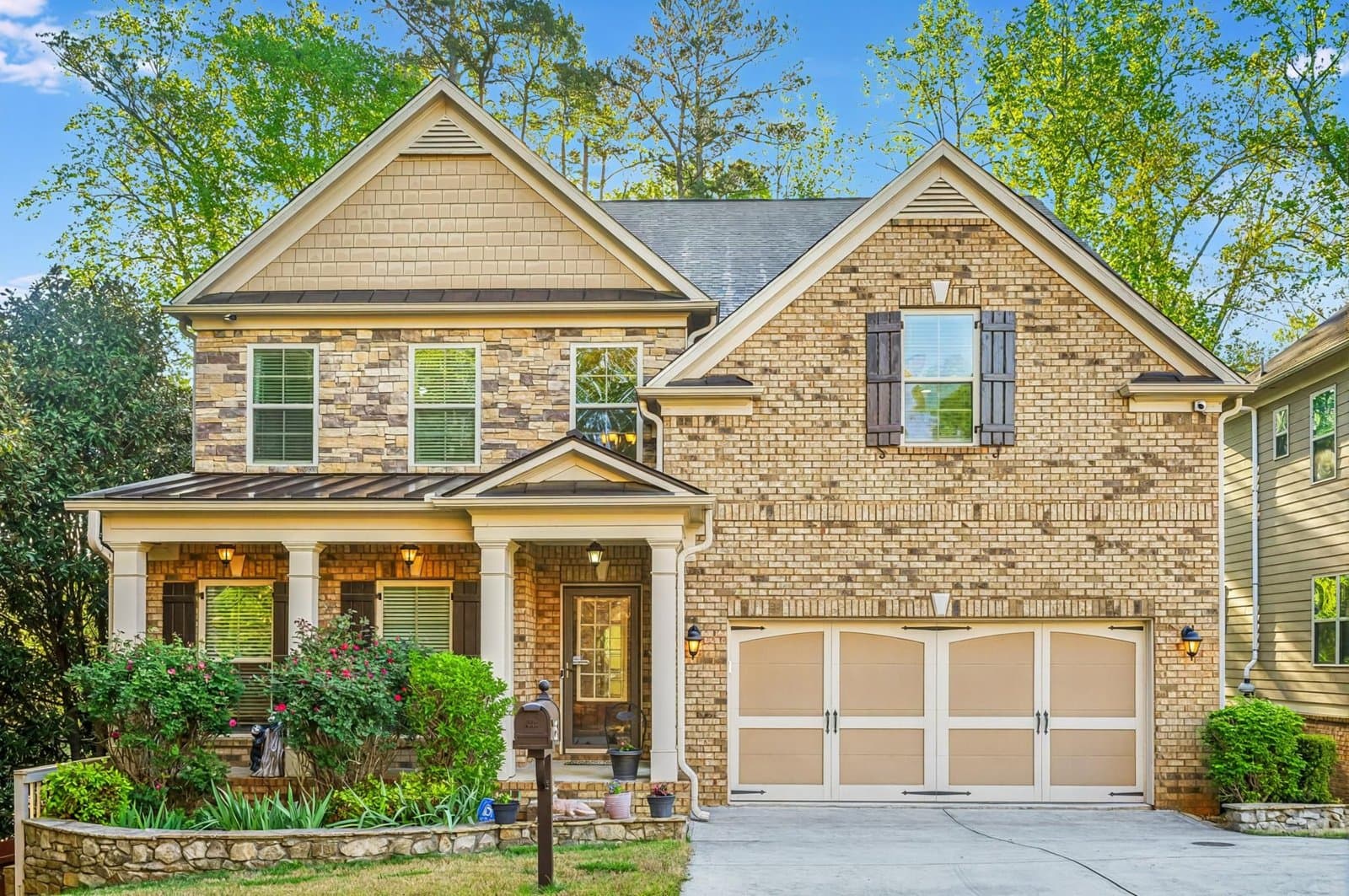
Explore Fayette County Homes
See current listings, market trends, and neighborhood guides for Fayette County.
Browse Fayette County real estate