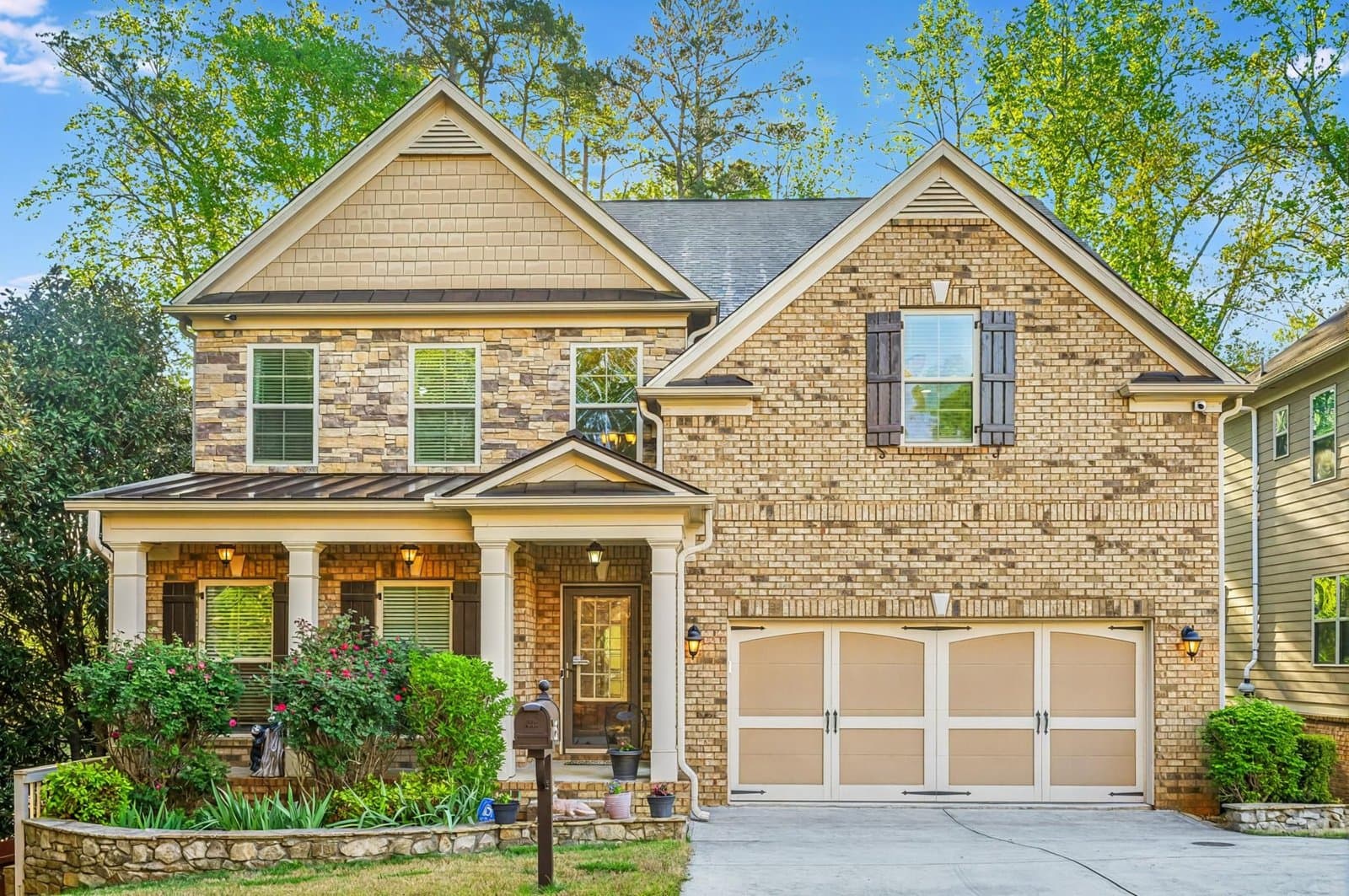

Zillow dropped a paint color analysis this week claiming the wrong color choice can cost sellers up to $18,000 at closing. The internet ran with it. And honestly, they're not wrong. But the framing is backwards, and that matters if you're about to repaint a house you're selling.
Here's the actual read: Zillow's data is correlation, not causation. A house painted the wrong color and a house that sells for $18K under comp aren't linked by the paint alone. They're linked by the same underlying problem: the seller didn't think like a buyer. The paint is just the most visible symptom.

Let me be real with you about what I see on walkthroughs.
The Paint Colors That Actually Kill Deals
It's rarely the bold choice that costs sellers money. The dangerous colors are the ones that felt safe in 2014 and now read as 'this house hasn't been touched since 2014.' We're talking:
Greige that's gone yellow. A warm greige in the right light reads polished. In a flip that used the $19-a-gallon builder version, it yellows against white trim and reads like nicotine stains. Buyers clock it in thirty seconds without knowing why they feel uneasy.
Accent walls. Full stop. The single accent wall behind the TV, the one in burgundy or slate blue or Benjamin Moore 'Newburyport Blue' that seemed like a design move, it's the number one thing that signals 'the owners decorated this themselves.' It doesn't photograph well and it makes buyers do mental math about repainting instead of thinking about living there.
Cool gray that's gone purple. The gray wave of 2010-2018 produced a lot of houses where the paint looked neutral on the chip and reads lavender once it's on four walls under recessed lighting. This one still catches sellers off guard because it passed inspection at the paint store.
Bright white with no warmth. Cold bright white (anything above 6500K equivalent in paint tone) photographs clinical. It reads as hospital, not clean. The Atlanta market has enough of these from the quick-flip era that buyers have developed an unconscious association between stark white and 'what else did they cut corners on?'
What Actually Sells — and Why It Works
Zillow's analysis surfaced something real here: warm whites and soft off-whites are outperforming everything else in the current market. Sherwin-Williams Alabaster (SW 7008), Benjamin Moore White Dove (OC-17), and Sherwin-Williams Accessible Beige (SW 7036) are showing up in the performance data because they do something specific.
They read as neutral to the buyer but feel warm in person.

That gap (neutral on the screen, warm in the room) is the whole game for listing photography and in-person showings. The buyer sees the Zillow photos and thinks 'clean slate.' They walk in and feel settled instead of cold. That sequence is worth real money, and it's reproducible with a $2,000 repaint job if you pick the right color.
The specific combinations performing right now in metro Atlanta:
Walls in Alabaster (SW 7008) + trim in Extra White (SW 7006). This is the warm-white pairing that photographs bright without reading cold. Works across all the housing stock from Peachtree City to Brookhaven to Smyrna. Universal.
Walls in Agreeable Gray (SW 7029) + trim in Alabaster. If the house has warm wood tones (oak floors, walnut cabinets), this pairing lets the wood do the work without competing. The gray reads almost greige in warmer light, which is exactly what you want.
Kitchen/bath in White Dove (BM OC-17) throughout. White Dove has enough yellow to feel warm and enough white to read clean. In kitchens with granite or quartz that has any beige or cream in it, White Dove ties the room together instead of fighting the stone.
The Construction Angle Nobody Talks About
Here's what 20 years across construction sites teaches you that paint consultants don't tell you: the color is almost never the actual problem. The color reveals the problem.
When a wall color reads wrong, it's usually because:
The lighting is wrong first. I've walked houses where the paint was fine and the recessed cans were pointing at the wrong angle, washing the wall yellow instead of illuminating the room. No repaint fixes a lighting layout problem. You change the bulbs (2700K, always), reposition the trim rings if you can, and then reassess the paint. In my experience, about 30% of 'bad paint' situations are actually bad lighting situations wearing paint as a costume.
The sheen is wrong for the surface. Builder flat on walls that have been repaired a dozen times reads as patchy because flat has zero reflectivity to hide texture inconsistency. Eggshell on the same walls reads smooth because the slight sheen creates visual uniformity. This is a $0 fix on the next paint job, just a sheen change, and most sellers don't know it exists.
The color is fine but the prep wasn't done. A great color on walls that haven't been cleaned, patched, and primed will fail. Full transparency: a $900 paint job that cut corners on prep will look like a $900 paint job. The materials are maybe 30% of the outcome. The prep work is the other 70%.

The $18K Number, Honestly
Is the Zillow number real? Probably, in aggregate, across enough transactions to make statistical sense. But here's how I'd think about it for a specific house in a specific Atlanta submarket.
That $18K isn't being 'lost' to a bad paint color. It's being negotiated away because the buyer's inspection-and-offer mindset starts on the first walkthrough, not after the inspection report. A house that reads as 'dated, unattended, needs work' from the curb through the foyer sets an emotional anchor that buyers use to justify a lower offer, and the paint is the thing they can point to, so they point to it.
The paint job is the cheapest correctable problem in the whole transaction. A $2,000-$3,500 whole-house repaint in the right warm neutral, done with proper prep, changes the emotional anchor on every subsequent walkthrough. That's the math that actually matters.
If you're preparing to sell in the next 90 days and you haven't repainted, this is the one deferred item that has the clearest return. Not the counters. Not the landscaping. The paint.
Send the address. If the current paint situation needs an honest eye before you call a painter, Beckett Real Estate walks it with you: construction background, no soft-pedaling on what will and won't move the needle.
Thinking about a move?
Beckett Real Estate works the whole of Metro Atlanta. Tell me the address or the neighborhood and I will tell you what the house is really like, what the inspection usually finds, and what the number should be.
What is my home worth?See a cash offerSell for more with conciergeTalk to an agent nowMore articles like this