
Here's what the Architectural Digest retrospective on 250 years of American design gets right: this country never landed on one unified style, and that's not a failure. That's the whole point. Adobe in the Southwest. Prairie horizontals in Illinois. Craftsman bungalows in California. Each one came from somewhere specific: a climate, a material supply chain, a labor pool, a culture that needed a certain kind of shelter.
What it doesn't spend enough time on is what happens when you take those regional traditions and drop them into a market that builds fast, builds cheap, and builds to an appraisal grid.
Which is exactly what Metro Atlanta has been doing for the last forty years.
Atlanta's Architecture Problem Isn't Taste — It's Speed
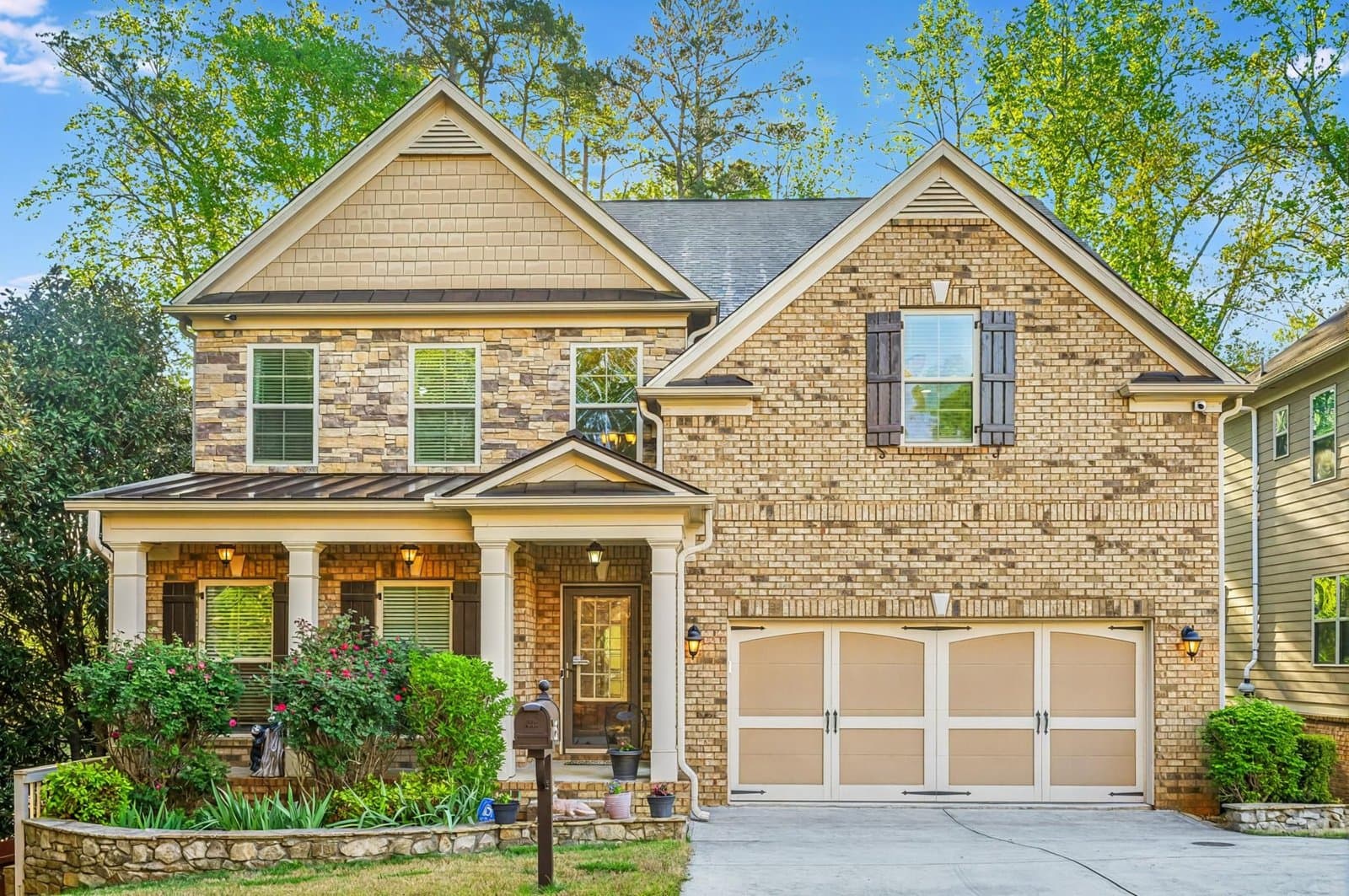
Drive any corridor from Woodstock down through Smyrna and into Peachtree City. What you'll see is a remarkable quantity of houses that borrow visual vocabulary from everywhere and commit to nothing. Board-and-batten siding lifted from Texas farmhouse aesthetics. Craftsman trim details on a roofline that's structurally a tract builder's cost optimization. A 'farmhouse' kitchen inside a footprint that hasn't changed since the mid-2000s suburban push.
None of this is accidental. It's the output of a market that rewards speed-to-permit, materials that arrive pre-cut, and a sales model that asks buyers to pick a facade package from a laminated booklet.
I spent 20 years as a licensed contractor and project manager across every construction discipline before I ever sold a house. I ran the electrical. Built the duct systems. Framed the roofs. And later I was the foreman and construction specialist whose job was to walk every system in a building before turnover and verify it performed as designed. That background means when I walk a house today, I'm not looking at the style. I'm reading the construction beneath it.

Here's what I see a lot: houses designed to photograph well at listing and built to a tolerance that assumes nobody with a construction eye is ever going to look too hard at the system interfaces.
What Frank Lloyd Wright Actually Understood (That Most Builders Still Don't)
Wright's Prairie houses aren't famous because they looked different. They're famous because the form followed the site. Low horizontal lines because the Midwest is flat and the sky is enormous. Overhanging eaves because passive shading matters when you don't have a mountain range to hide behind. Materials drawn from what was regionally available and structurally logical.
That's not aesthetics. That's systems thinking applied to shelter.
Georgia has a genuine regional building tradition (one that actually makes sense for this climate), and we keep burying it under imported trends. The old Southern vernacular wasn't 'charming character' (banned phrase, and I mean it): it was engineering for heat and humidity. Deep covered porches created shade and airflow before mechanical cooling existed. High ceilings moved heat up and out. Transoms above interior doors pushed air through the house. Brick or stone at grade managed moisture in a way that vinyl-wrapped OSB never will.

When you renovate an older Atlanta home (anything pre-1970s in Decatur, Grant Park, Kirkwood, East Atlanta), you're often peeling back layers and finding that the original builder understood the climate better than the three subsequent owners who 'updated' it. Original framing that was over-built by modern standards. Roof pitches calculated for water management, not curb appeal. Windows positioned for cross-ventilation, not for the furniture arrangement that makes the listing photos pop.
What This Means for Anyone Planning a Renovation Right Now
The AD piece is worth reading as history. Where it stops short is the practical application: if you're renovating in Metro Atlanta, you're not picking a 'style.' You're deciding how much you want to respect what the original structure was trying to do, and how much of the current trend cycle you're willing to bolt on top of it.
Three things I look for when a client is evaluating a renovation scope:
1. Does the proposed change fight the original structure or work with it? Opening up a load-bearing wall to create an open-plan kitchen is a decision that ripples through the structural system. I've seen renovations where the beam spec was right and the post placement was wrong, and the house has been slowly telegraphing that mistake ever since. Know what you're touching before you pick the cabinet hardware.
2. Does the aesthetic trend you're chasing make sense for Georgia summers? Black-framed windows are everywhere right now. They look sharp in editorial photography. They also absorb heat at a rate that matters in a climate where you're running your HVAC six months out of the year. This isn't a reason to avoid them. It's a reason to make sure your window spec and your HVAC load calculation are talking to each other.
3. Are you adding to the resale story or complicating it? A Craftsman renovation done right in Kirkwood adds to a coherent neighborhood narrative. A Craftsman renovation that grafts modern farmhouse elements onto a mid-century footprint in a way that doesn't quite resolve: that's a house that makes buyers hesitate without being able to say exactly why. They feel the mismatch even if they can't name it.

The 250-year arc of American architecture that AD is mapping is interesting as a narrative. At the street level in Atlanta, it shows up as a series of decisions made by individual homeowners trying to reconcile what they want a house to look like with what a house in this climate, on this lot, with this structure, actually needs to be.
Get those decisions right and you end up with something that holds its value and feels right to live in. Get them wrong and you end up with a house that photographs fine and costs you every year in energy bills, deferred maintenance, and a resale conversation that starts with 'well, it's priced to reflect the updates.'
I know which outcome I'd rather help you reach.
Send the address: a construction-trained walk-through is what tells you whether the renovation plan you're considering works with the house or against it.
Thinking about a move?
Beckett Real Estate works the whole of Metro Atlanta. Tell me the address or the neighborhood and I will tell you what the house is really like, what the inspection usually finds, and what the number should be.
See homes for saleTalk to an agent nowMore articles like this