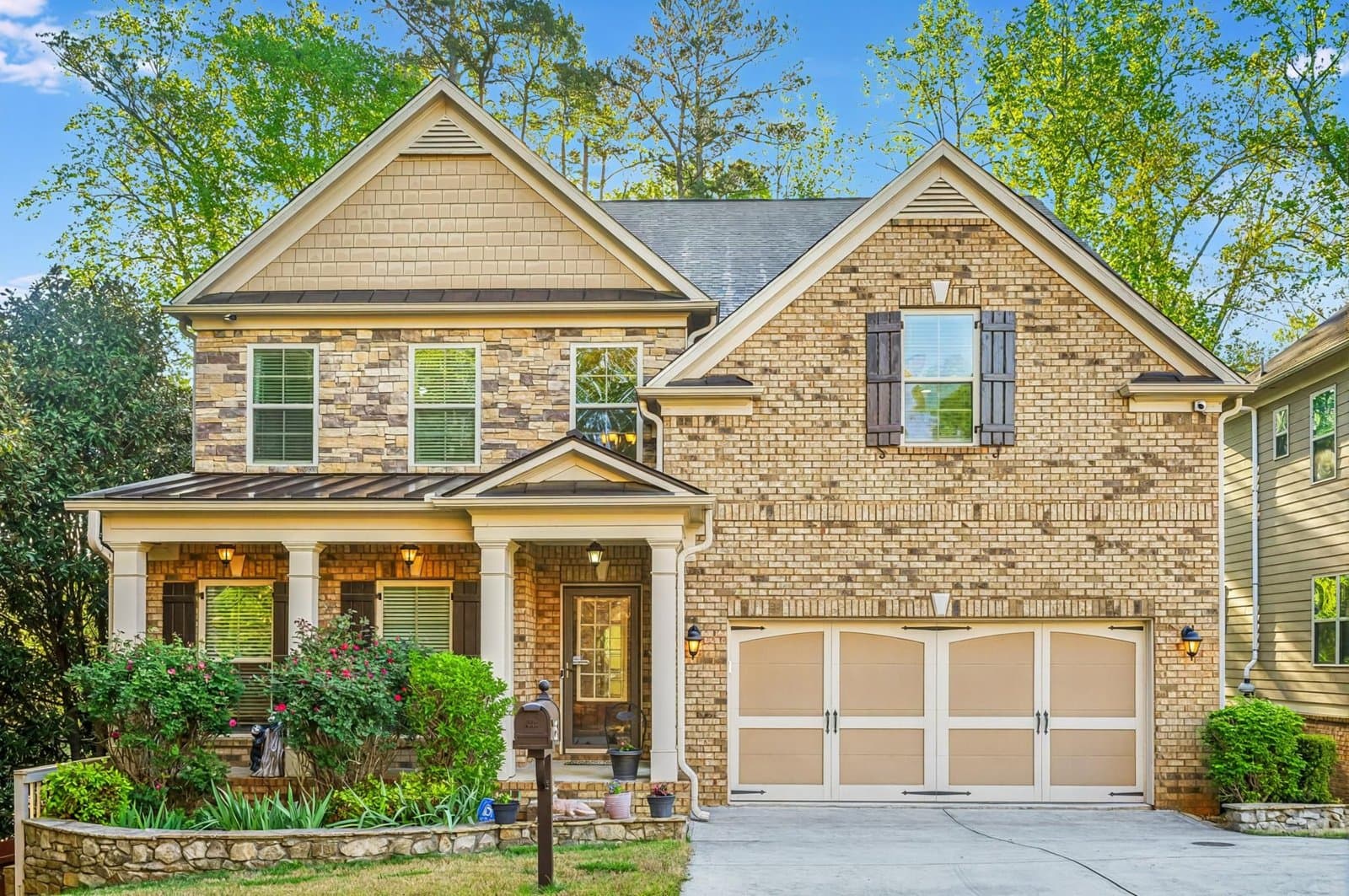

There is a renovation story making the rounds this week: a Berkeley bungalow, three months to finish it, lime green exterior trim as the opening statement. I have been thinking about why that story lands, and I think it is because most people who have ever done a real renovation know exactly what a three-month deadline does to your decision-making. It strips out the overthinking. You stop comparing seventeen shades of white and start picking the one that works. You commit to the weird choice because you do not have time to talk yourself out of it.
That is not reckless. That is actually how good renovation decisions get made.

I have walked enough renovations, both as a project manager verifying that the work was done right, and now as the person doing walkthroughs on behalf of buyers, to know where most renovation projects go sideways. It is almost never the bold decision. The lime green trim is not the risk. The risk is the stuff that looks conservative from the outside and costs you money for the next fifteen years.
Here is what I mean.
The Decisions That Look Cosmetic But Are Not
When someone shows me a bungalow that has been through a three-month renovation, the first thing I look at is not the paint color. I look at the mechanical systems. In a bungalow (Atlanta or Berkeley, 1920s or 1940s build, it does not matter), the window for a contractor to get behind the walls without destroying finished surfaces is the renovation itself. That window closes the day the drywall goes back up.
A fast renovation that put lime green on the exterior trim and fresh white oak flooring inside is fine. A fast renovation that put lime green on the exterior and deferred the HVAC because the budget ran tight is a problem you are going to feel in every Georgia summer for the next decade.
The decisions that matter in any compressed timeline renovation, in order of importance:
Roofing and drainage first. If the renovation touches any exterior work at all, the roof gets assessed. Not by the contractor who has a financial interest in upselling you a new one. You want eyes that know what fifteen-year-old architectural shingles look like versus five-year-old ones, and what failing flashing at a chimney chase looks like versus cosmetic oxidation. If water is getting in anywhere, the rest of the renovation is just setting money on fire inside a leaky house.
HVAC second. In a bungalow, the original ductwork (if there is any) almost certainly was not designed around how the space is being used today. Rooms that were added, walls that were moved, a bonus room above the garage that gets no airflow. A fast renovation that repaints everything and replaces the kitchen but leaves an undersized HVAC system has solved the aesthetic problem and deferred the livability problem. In Atlanta, where we run AC eight months a year, that deferred problem shows up fast.
Electrical third. I have been inside enough pre-war bungalows to know that the wiring situation is frequently the thing nobody wants to talk about. Knob-and-tube is the obvious flag. But the subtler issue is a panel that was updated in the 1980s, is technically 'modern,' and is also undersized for the load a current household puts on it. A renovation that opens walls has the chance to run new circuits. A renovation that keeps walls closed to save time is gambling that the existing electrical is adequate.

The Bold Choice Is Usually the Right One
Here is the other thing a hard deadline teaches you: the bold choice is almost always better than the safe choice, when we are talking about finish selections.
The lime green trim on that Berkeley bungalow is going to get talked about, photographed, and remembered. The equivalent 'safe' choice (an extra-dark forest green, maybe, or just painting the trim the same cream as every other bungalow on the block) would have been invisible. Not bad. Just invisible.
In Atlanta, I see this played wrong constantly. Someone buys a Craftsman in Kirkwood or a bungalow in Grant Park, spends real money on the renovation, and then pulls all the way back to agreeable at the finish line. Agreeable greige on every wall. Builder-white trim. A kitchen that could have been generated by an algorithm trained on 2019 HGTV flips.
The houses that hold value (and I mean this as a construction-trained observation, not just an aesthetic preference) are the ones where someone made a committed decision about what the house was going to be and followed it through. The original millwork restored instead of replaced. The original hardware cleaned instead of swapped for cheap reproductions. One room where something unexpected happens: a ceiling detail, a wall color you do not see anywhere else on the street, a tile selection in the bath that reads as specific instead of generic.
Specific holds value. Generic dates.
What to Actually Steal From the Three-Month Renovation Mindset
You do not need a hard deadline to think like this. You need to ask yourself, before every renovation decision: 'Is this the choice I actually want, or the choice I am making because I am afraid of the choice I actually want?'
The lime green trim is an answer to that question. So is the decision to restore the original fir floors instead of covering them with LVP. So is the decision to keep the small kitchen small and do it beautifully rather than blowing out a wall to get something that feels big but loses the proportions that made the house interesting.
For any Atlanta bungalow renovation — whether you are in Decatur, East Atlanta, Inman Park, or working on something in College Park or Jonesboro that the market has not caught up to yet — the playbook is the same:
Fix the systems first, and fix them right. Do not defer the mechanical work because it does not show in the listing photos. It shows in the inspection report, and it shows in the electric bill, and it shows in the moment a buyer's agent with a construction background walks through and starts asking questions about the HVAC age and the panel capacity.
Then make a committed aesthetic decision and follow it through. Pick the bold trim color. Keep the original millwork. Put the money into the one room that earns the whole house.
Three months or three years: that is the renovation formula that works.
Send the address. If you are working through a bungalow renovation in metro Atlanta and want a set of construction-trained eyes on what to prioritize, Beckett Real Estate can give you an honest read on what the market will reward and what it will not.
Thinking about a move?
Beckett Real Estate works the whole of Metro Atlanta. Tell me the address or the neighborhood and I will tell you what the house is really like, what the inspection usually finds, and what the number should be.
Estimate your renovation costSearch homes for saleTalk to an agent nowMore articles like this