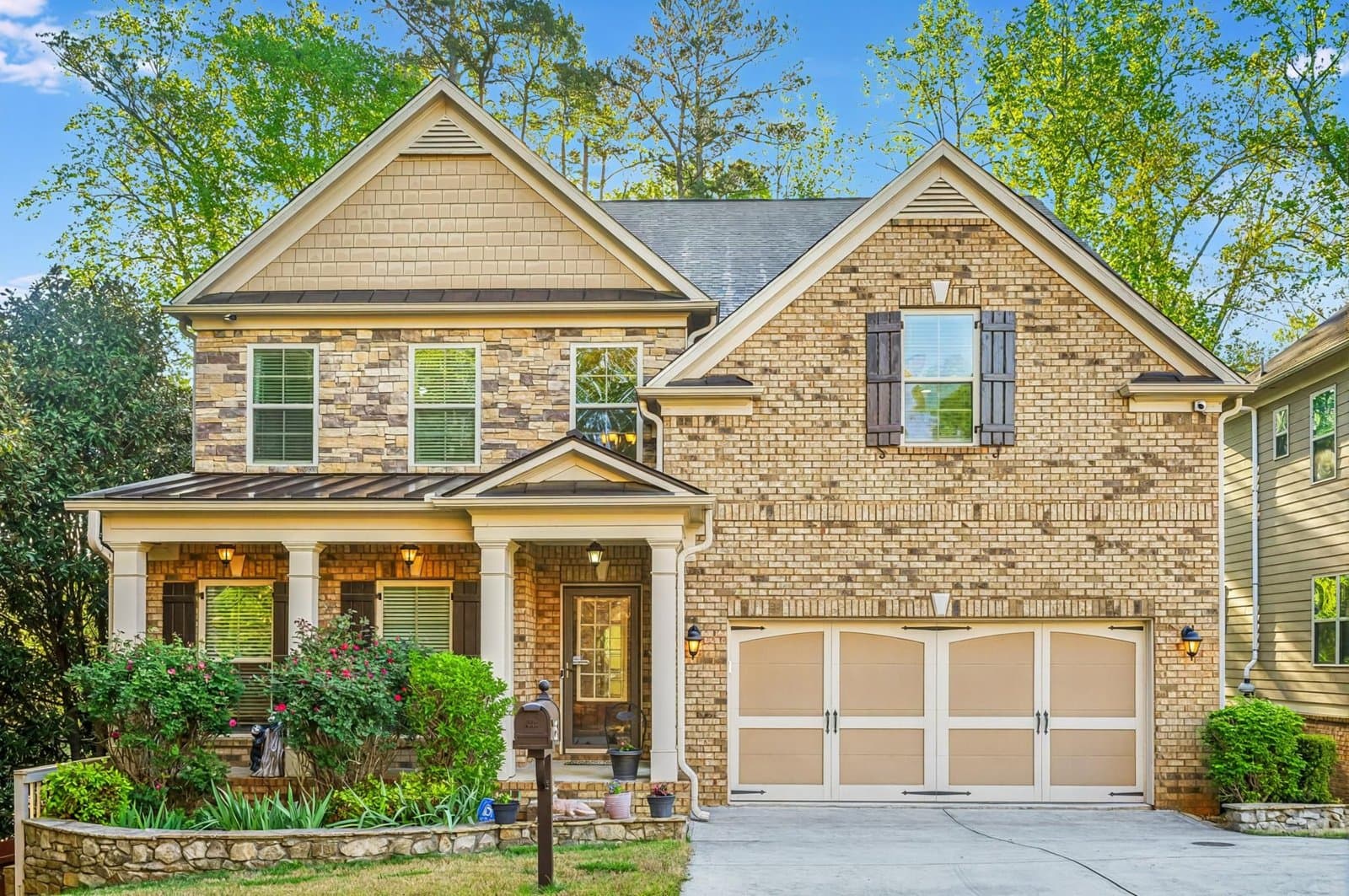
I was walking a new construction home in Cumming last spring, Forsyth County, one of those big national builder communities where the streets are still dirt and the model home smells like fresh paint and ambition. The buyer I was with, sharp guy, engineer by trade, was nodding along as the on-site sales rep walked him through the upgrade packages. Quartz countertops. Hardwood stairs. The whole pitch.
Then we got to the basement. I crouched down, ran my hand along the foundation wall, checked the window wells, looked at how they'd framed the egress. I asked the rep a question about the waterproofing membrane. She didn't know the answer. That's not a knock on her. She's a salesperson, not a builder. But my guy? He almost signed a contract that afternoon without knowing what was behind those freshly painted walls.
That's why I'm writing this. New construction homes in Georgia are genuinely exciting opportunities, but they come with traps that most buyers walk right past. Let me break it down for you the way I'd break it down for a close friend sitting across from me at a coffee table.
The Georgia New Construction Market: What's Actually Happening Right Now
Metro Atlanta is one of the most active new construction markets in the entire country. That's not hype: the data backs it up. Georgia consistently ranks in the top five states for housing permits issued annually, and the Atlanta MSA drives most of that volume. Builders like D.R. Horton, Pulte, Meritage, Smith Douglas, and Century Communities have been cranking out product across Cherokee, Forsyth, Paulding, Henry, and Gwinnett counties for years, and they're not slowing down.
In 2024, new construction represented roughly 30% of available home inventory in Metro Atlanta, a number that's significantly higher than the national average. When existing home inventory is constrained (which it has been, thanks to the rate lock-in effect keeping sellers on the sidelines), builders fill the gap. That's good news for buyers who want options. It's also a market where you need to walk in with your eyes open.
Base prices for new construction in Metro Atlanta range dramatically by submarket. You can find entry-level townhomes in Locust Grove or McDonough starting in the low $300s. Move up to Alpharetta, Milton, or Johns Creek and you're looking at $600K to well over a million for single-family homes with the finishes people expect in those zip codes. The sweet spot for most first-time and move-up buyers tends to be Cherokee County (Canton and Ball Ground in particular) where you get solid school systems, reasonable land, and builders competing hard for your business.
Why the Builder's Agent Is Not Your Agent
This is the part nobody talks about enough, so I'll be direct: the friendly person in the model home works for the builder. Full stop. Their job is to sell you a home at the best margin possible for their employer. They are not obligated to tell you about the drainage issues in Phase 1, the fact that the community's HOA fees are going up next year, or that the same floor plan sold for $15,000 less three months ago during a promotion.
When you walk into a new construction community without your own representation, you are negotiating against a professional negotiator who does this every single day. I've been in construction. I know what things cost to build. I know where builders have margin and where they don't. I know which upgrades are worth paying for and which ones you can do cheaper after closing. That knowledge is what you're getting when you bring your own agent to the table.
Here's the practical piece: in most cases, the builder pays your buyer's agent commission. It costs you nothing to have professional representation, and it could save you tens of thousands of dollars in negotiated incentives, upgrades, or price adjustments. Builders would rather not deal with educated buyers' agents, which tells you everything you need to know about whether you should have one.
Understanding the New Construction Process in Georgia: From Contract to Keys
The Contract Phase
Builder contracts are written by builder attorneys. They are designed to protect the builder. I say that not to scare you but to make sure you understand what you're signing. Key things to watch for in Georgia new construction contracts include:
- Extended closing timelines and delays: Builders routinely include language that allows them to push closing dates by 30, 60, even 90 days without penalty. You need to understand what that means for your rate lock, your lease, and your life.
- Deposit structures: Some builders require earnest money deposits of 3-5% of the purchase price, held in their accounts, not in escrow with a neutral third party. Know what happens to that money if you need to walk away.
- Upgrade and change order pricing: Once you're under contract, upgrade prices often increase. Lock in what you want upfront or get pricing in writing.
- Arbitration clauses: Many builder contracts require disputes to go to arbitration rather than court. This limits your legal options if something goes wrong post-closing.
The Build Phase
One of the biggest advantages of new construction is that you can watch your home get built. Use that advantage. I recommend buyers visit their site at three critical stages: after the foundation is poured, after framing is complete (before drywall goes up), and before the final walkthrough. These visits let you see things that will be hidden forever once the walls close in: plumbing runs, electrical panel placement, insulation installation, and structural framing quality.
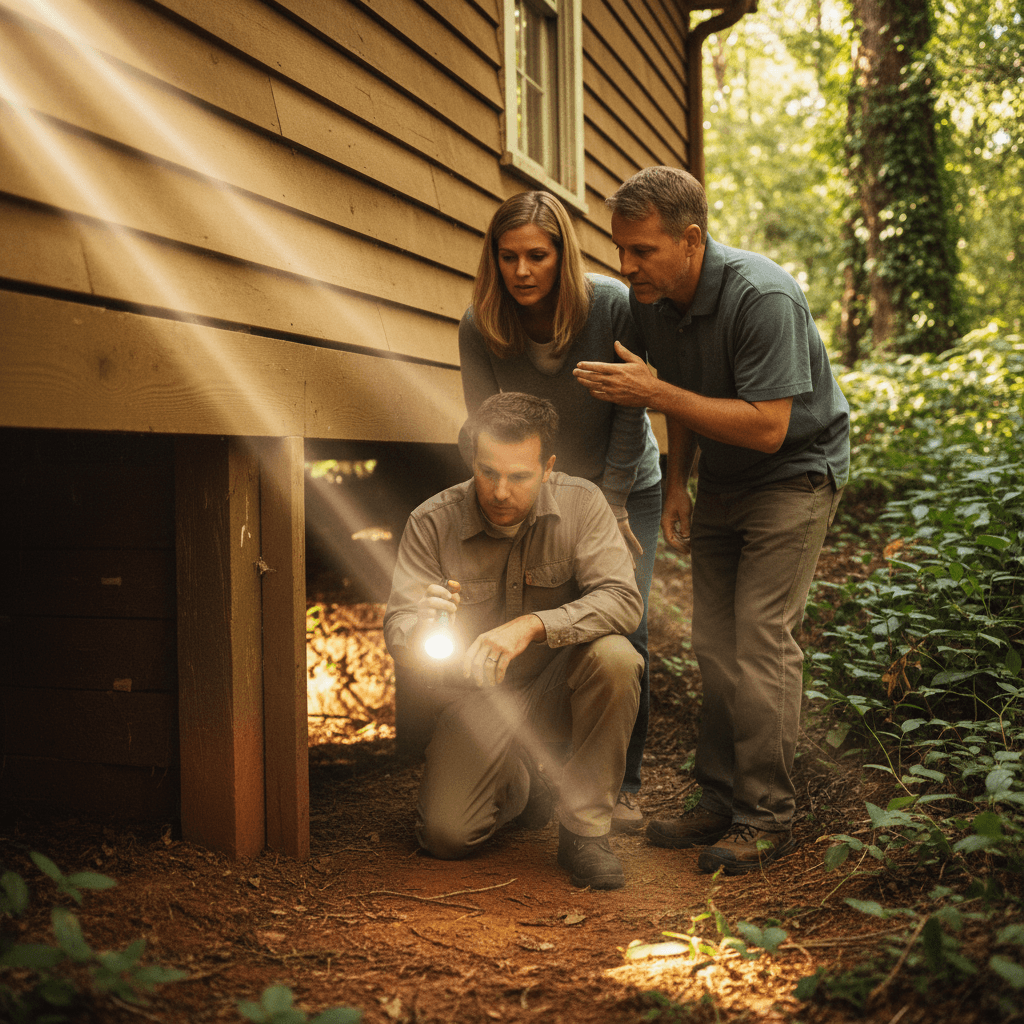
If you're buying in a community where construction is already underway or the home is spec (already built), you lose this window. That's when a third-party home inspection becomes non-negotiable. Yes, even on a brand-new home. Builders make mistakes. Subcontractors cut corners. Municipal inspectors catch some of it, not all of it. A good inspector who understands new construction will find things that save you headaches for years.
The Walkthrough and Closing
The final walkthrough with the builder's superintendent is your last chance to document anything that needs to be fixed before you hand over your money. Bring a flashlight. Bring tape. Mark every scratch, every paint drip, every door that doesn't close right. Get everything on the punch list in writing. Builders are much more motivated to fix things before closing than after.
Georgia uses attorneys for real estate closings, which is actually a consumer protection. Your closing attorney represents the transaction, and you have the right to choose your own. Don't let the builder steer you to their preferred closing attorney without at least getting a quote from someone independent.
The Neighborhoods and Communities Worth Knowing About
Metro Atlanta's new construction activity is concentrated in a handful of high-growth corridors. Here's a honest look at where the action is and what you're actually getting.
Cherokee County: Canton, Ball Ground, and Holly Springs
Cherokee County has been one of the fastest-growing counties in Georgia for the past decade, and the new construction pipeline here is massive. You've got established master-planned communities like Bridgemill and Governors Preserve alongside newer developments pushing further north toward Ball Ground and Nelson. School systems here, particularly Cherokee County School District, consistently rate well, with several elementary and middle schools in the 8-9 range on GreatSchools. Commute to Midtown Atlanta runs 45-60 minutes depending on where you land and when you leave. That's the trade-off. You're buying space and value; you're giving up proximity.
Forsyth County: Cumming and South Forsyth
Forsyth County has been the darling of Metro Atlanta new construction for years, and for good reason. The school system is legitimately excellent: Forsyth County Schools rank among the top districts in the state consistently. The SR 400 corridor has improved with HOV lanes, making the commute to Buckhead and Midtown more manageable than it used to be, though it's still 45-60 minutes in peak traffic. Builders are active throughout the county, from the established neighborhoods near the Cumming city center to newer communities pushing toward Dawsonville. Prices reflect the demand: you're paying a premium here compared to Cherokee or Paulding.
Paulding County: Dallas and Hiram
If value is your primary driver, Paulding County deserves a serious look. New construction here is running $50,000-$100,000 less than comparable product in Forsyth or Cherokee. The trade-off is a longer commute (no interstate access directly to Atlanta) and school ratings that are improving but not yet at the level of the northern suburbs. For buyers who work remotely or in west Atlanta, this submarket makes a lot of sense.
Henry County: McDonough and Locust Grove
South of Atlanta along I-75, Henry County has seen a construction explosion driven by affordability and the growing commercial corridor around the airport and logistics hubs. If you work in that corridor or can handle the I-75 commute, there's real value here. Entry-level new construction in the low $300s is still findable in McDonough, which is increasingly rare anywhere inside 45 minutes of Atlanta.
Gwinnett County: Buford, Sugar Hill, and Braselton
Gwinnett has been absorbing growth for decades and the new construction market here is mature and competitive. Braselton and Hoschton, straddling the Gwinnett-Jackson county line near I-85, have become hotbeds of new construction activity with communities like Chateau Elan adjacent to world-class amenities. School systems vary significantly by area within Gwinnett: do your homework on specific attendance zones before you fall in love with a floor plan.
Builder Incentives: How to Read Them and Use Them
Builders use incentives the way casinos use free drinks: to keep you at the table and feeling good about a decision they want you to make. That doesn't mean incentives aren't real. It means you need to understand what you're actually getting.
The most common incentive you'll see in Georgia new construction right now is a rate buydown or closing cost contribution, but only if you use the builder's preferred lender. This is where buyers leave real money on the table. The builder's lender may offer a 2/1 buydown that looks great on paper, but if their base rate is 0.25-0.5% higher than what you'd get elsewhere, the math often doesn't work in your favor over the life of the loan. Always get a competing quote. Use the competing quote as leverage. Builders have more flexibility than they let on, especially at end of quarter when they're trying to hit closing numbers.
Other incentives to negotiate: structural upgrades (these are hard to add later and cost more post-construction), lot premiums (there's almost always room to negotiate these), and design center credits. Design center credits sound generous until you realize that builder-installed options are marked up significantly over what you'd pay a contractor post-closing. Sometimes taking less credit and doing work yourself after closing is the smarter move.
The Inspection Question: Yes, Even on New Construction
I've said it once and I'll say it again because it matters: get a home inspection on new construction. I've personally walked new builds in Alpharetta and Woodstock where inspectors found improperly installed HVAC ductwork, missing insulation in attic knee walls, and drainage grades that would have sent water toward the foundation within two rainy seasons. These aren't horror stories: they're Tuesday in new construction. Quality control varies by builder, by superintendent, by subcontractor crew, and by how many homes they're trying to close that month.
A new construction inspection typically runs $400-$600 in Metro Atlanta. It is the best money you will spend in this process. Find an inspector who specifically has new construction experience. The inspection approach is different from a resale inspection, and you want someone who knows what to look for before the drywall covers the evidence.
Frequently Asked Questions About New Construction Homes in Georgia
Can I negotiate the price on a new construction home in Georgia?
Yes, though it works differently than negotiating on a resale. Builders rarely discount the base price because it affects their comp values across the community. What they will negotiate: lot premiums, design center credits, closing cost contributions, and rate incentives. End of quarter and end of year are the best times to push. Having your own buyer's agent who knows the builder's history in that community is a significant advantage here.
Do I need my own real estate agent for new construction?
You don't need one, but you'd be walking into a negotiation without representation against a professional sales team. In most cases, the builder pays the buyer's agent commission, meaning it costs you nothing and gains you an advocate who isn't paid by the person selling you the house. It's a straightforward decision.
How long does it take to build a new construction home in Georgia?
For a production builder (D.R. Horton, Pulte, Smith Douglas), typical build times in Metro Atlanta run 6-10 months from contract to closing, though supply chain and labor issues can extend that. Semi-custom and custom builds run longer: 12-18 months is common. Spec homes (already built or nearly complete) can close in 30-60 days.
What warranties come with new construction homes in Georgia?
Georgia law requires builders to provide a minimum one-year workmanship warranty, a two-year systems warranty (HVAC, plumbing, electrical), and a ten-year structural warranty. Builder-specific warranties vary — some offer more robust coverage than the statutory minimums. Read the warranty documents carefully before closing and understand the process for filing claims.
Is new construction a good investment in Metro Atlanta?
It depends on the submarket, the builder, and what you're comparing it to. New construction in high-demand corridors like Forsyth and Cherokee has historically appreciated well. The risk with new construction is buying in a community that's still being built: your home value is somewhat tied to what the builder sells the next phase for. If they cut prices to move inventory, it affects your equity position. That's a real consideration, not a reason to avoid new construction, but a reason to understand what you're buying into.
The Bottom Line on New Construction Homes in Georgia
New construction in Metro Atlanta is a legitimate path to homeownership with real advantages: modern floor plans, energy efficiency, builder warranties, and the ability to customize your space before you move in. It's also a market where the uninformed buyer consistently leaves money on the table and sometimes ends up with problems that could have been caught before closing.
The difference between a good new construction experience and a frustrating one usually comes down to preparation and representation. Know what you're signing. Understand the incentive structure. Get your own inspection. Have someone in your corner who's been inside enough new builds to know what questions to ask and where to look.
I've built homes with my own hands. I've been on job sites in every county in this metro. When I walk a new construction home with a buyer, I'm not just looking at the countertops. I'm looking at the framing, the mechanicals, the grading, the details that tell you whether this builder takes pride in their work or just tries to get to closing. That's the difference between buying a house and buying a home that's going to take care of you for the next twenty years.
If you're thinking about new construction in Metro Atlanta (whether that's Cumming, Canton, McDonough, Braselton, or anywhere in between) and you want to talk through your options with someone who'll give you a straight answer, reach out to Evan Beckett at becketthomes.org. No pressure, no pitch. Just an honest conversation about what makes sense for you.
Thinking about a move?
Beckett Real Estate works the whole of Metro Atlanta. Tell me the address or the neighborhood and I will tell you what the house is really like, what the inspection usually finds, and what the number should be.
Explore new constructionSearch homes for saleTalk to an agent nowMore articles like this