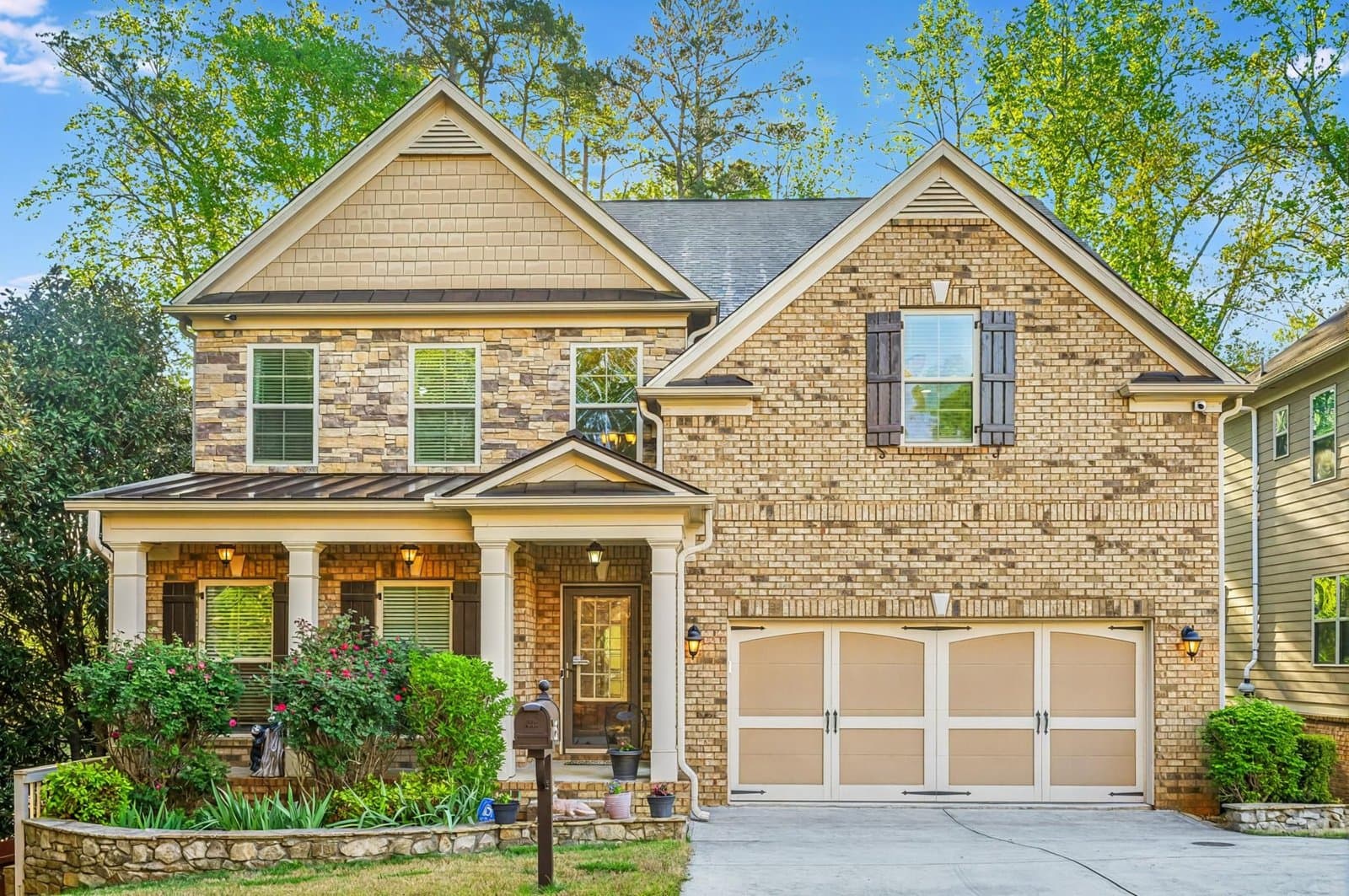

Every few months a finance blog publishes some version of the same list: seven (or nine, or twelve) passive investments paying 8% or better, all of them positioned like the market forgot to price in the obvious opportunity. The BiggerPockets version circulating right now hits the usual suspects: REITs, syndications, private notes, preferred equity, short-term rentals dressed up as passive income.
Let me be real with you. Some of that list is legitimate. Some of it is retirement-account filler dressed in a yield number that hasn't been stress-tested since rates were at zero. And almost none of it is specific to what's actually working in Metro Atlanta right now.
So here's the Atlanta-specific version.
What '8% Passive' Actually Requires in This Market
Passive income in real estate is not a product you buy off a shelf. It's an outcome you engineer through deal selection, asset condition, and market positioning. In Metro Atlanta, getting to 8% net (after vacancy, maintenance, property management, insurance, and taxes) requires doing two things right that most out-of-state buyers and a surprising number of local investors skip entirely.
First: buy in the right submarket for the return tier you're targeting.
A Buckhead condo delivering 8% is fiction right now. You're looking at gross yields of 4-5% in Midtown and intown Fulton before you peel back the HOA, the maintenance reserve, and the management fee. That's not a bad investment in every context, but it is not an 8% passive play.
The submarkets where 8% net is actually achievable in 2025-2026 are further south and west than most national investors look: Coweta County (Newnan, Sharpsburg corridor), Spalding County (Griffin), Henry County (McDonough, Locust Grove), and select pockets of Fayette (Fayetteville, Tyrone). Entry prices in the $175K-$275K range on SFR product, rents holding in the $1,400-$1,900 band depending on beds and condition, and property tax rates that don't eat your yield the way Fulton's do.
I've walked dozens of properties in these submarkets. The numbers work when the asset is right.
Second: understand the condition before you underwrite the return.
This is where the BiggerPockets list, and most passive-income frameworks, go completely quiet. They'll tell you what yield to target. They will not tell you what an aging HVAC system, a panel that needs a full replacement, or a crawlspace with vapor barrier failure does to a three-year cash flow projection.
Here's what 20 years in construction taught me: a deal that pencils at 8% on paper can hit 3% or negative in year one if you inherit deferred mechanical problems the inspection didn't catch. I've installed these systems. I know what a 2004 heat pump sounds like when it's got 18 months left, and I know what a properly working one sounds like. That difference is $6,000-$9,000 in capital expenditure that doesn't show up in a pro forma.
Three Deal Structures Where Atlanta Investors Are Actually Hitting 8%+
Rather than a generic list, here's what the real deals look like on the ground.
1. SFR buy-and-hold in Coweta / Henry corridor — REO and estate sale acquisitions
Purchase price range: $185K-$240K. Target rent: $1,550-$1,750/month. After 8% management, vacancy at 5%, taxes, and insurance, you're landing net yields of 7.8%-9.2% on stabilized assets. The variable is condition. Miss the HVAC, the roof age, or the electrical panel situation, and you've compressed that yield by 2-3 points in year one.
The REO and estate sale channel still produces underpriced assets in these counties because institutional buyers are focused on build-to-rent in Cherokee and Forsyth, not resale SFR in Coweta. Less competition, more room to negotiate.
2. DSCR-financed small multifamily — Clayton and Rockdale
The duplex and triplex market in Clayton (Jonesboro, Forest Park) and Rockdale (Conyers) is one of the most underrated plays in Metro Atlanta for yield-focused investors. Entry at $200K-$320K for a well-located duplex, combined rents of $2,200-$2,800/month. On a DSCR loan at today's rates, you're cash-flowing positive and generating 8%-10% CoC return if you bought the asset at the right basis.
The catch: these buildings are old. 1960s-1980s construction, mixed electrical generations, plumbing updates that may be partial. You need someone who can read the building before you write the offer, not just run the pro forma after.
3. Short-term rental — Fayette and Coweta lake and golf corridor
Peachtree City's golf-cart culture, lake access, and proximity to Hartsfield (45 minutes under normal I-85 conditions) has created a legitimate STR market that isn't Lake Lanier crowded or Gatlinburg priced. STR gross yields of 18%-28% on well-managed Peachtree City product are not unusual for the right asset. Net passive return (after platform fees, cleaning, utilities, furnishings amortized) lands closer to 11%-15% for operators who manage it actively or hire well.
That's above 8%. But 'passive' is doing a lot of work in that sentence. STR requires active management or a manager who actually answers the phone.
The Bottom Line on Passive Yield Lists
The BiggerPockets list isn't wrong. It's just not calibrated to the market where you're actually deploying capital. National frameworks tell you what return is theoretically possible. Local market knowledge, and a construction-informed eye on the asset, tells you whether the deal in front of you can actually deliver it.
Send the address. Beckett Real Estate can run the numbers on condition, market rent, and realistic yield before you write a check on something the pro forma made look better than the building deserves.
Looking in Buckhead?
Beckett Real Estate works Buckhead end-to-end: active listings, off-market opportunities, and the construction-trained walk-through that tells you what the price reflects vs. what it papers over.
Browse Buckhead listings → · Schedule a tour with Beckett Real Estate
Thinking about a move?
Beckett Real Estate works the whole of Metro Atlanta. Tell me the address or the neighborhood and I will tell you what the house is really like, what the inspection usually finds, and what the number should be.
See homes for saleTalk to an agent nowMore articles like this