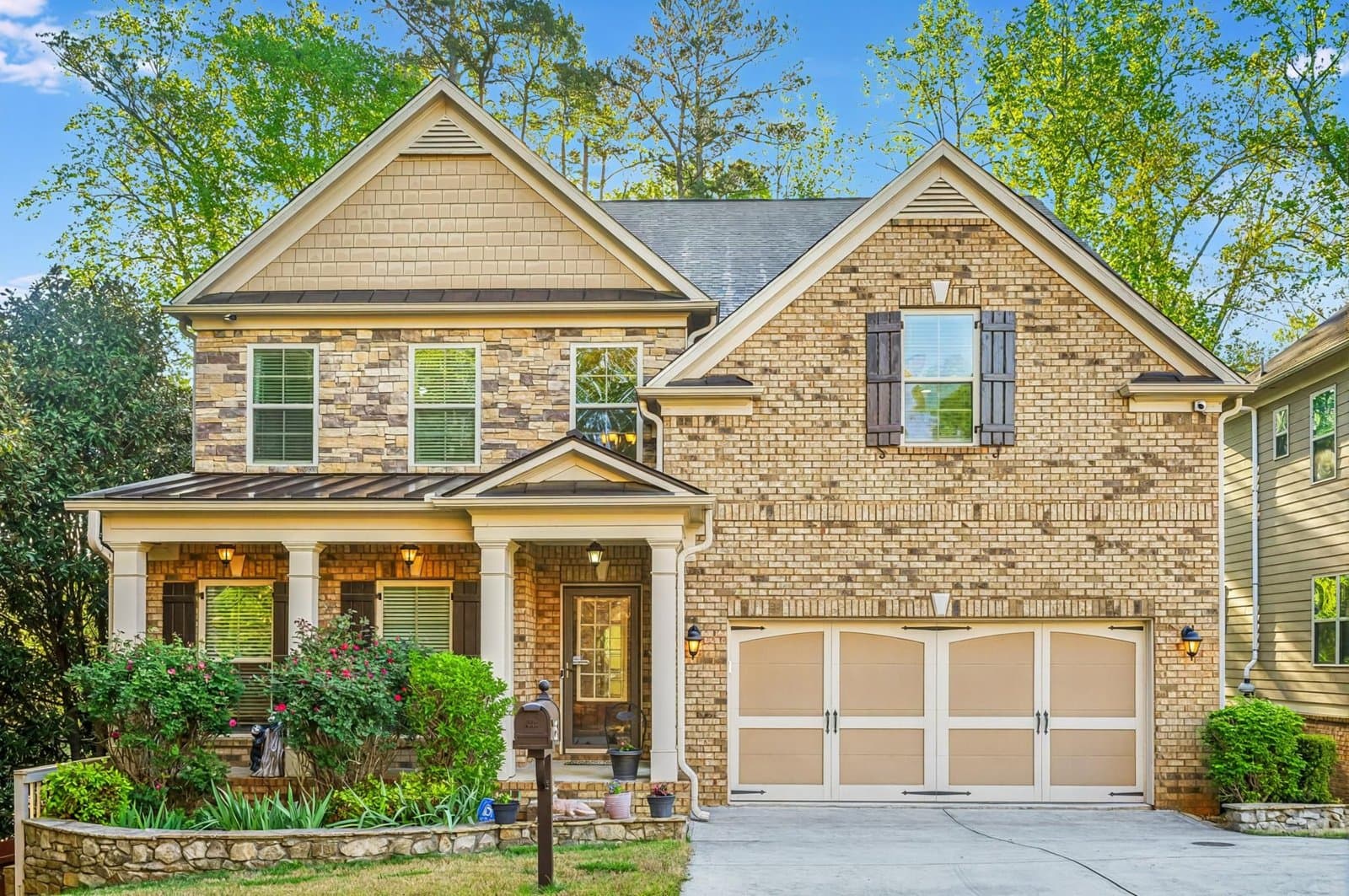

What I Saw on a Walkthrough in Powder Springs Last Spring
I pulled up to a house on Lost Mountain Road on a Tuesday morning, coffee in hand, and before I even got out of the truck I already knew three things: the drainage swale in the front yard was going to be a problem in heavy rain, the roof pitch told me it was probably original to the early 2000s build, and the neighborhood — quiet, mature trees, kids on bikes — had that thing you can't manufacture. That lived-in, real community feel that people drive past in Smyrna and Marietta trying to find, and can't.
That's Powder Springs. It doesn't shout. It doesn't need to. And if you're trying to figure out whether it's the right move for you in 2026, let me give you the straight version: no hype, no spin, just what I've seen on the ground and what the numbers actually say.
Is Powder Springs, GA a Good Place to Live in 2026?
Short answer: yes, for the right buyer. Let me tell you who that is.
Powder Springs sits in western Cobb County, about 25 miles northwest of downtown Atlanta. You're looking at roughly 20–30 minute commutes to Marietta, 35–45 minutes to Midtown or Buckhead depending on traffic, and easy access to I-20 and Highway 278. If you're working in the Westside Atlanta corridor, Cumberland/Galleria, or from home, Powder Springs makes a lot of sense financially and logistically.
The Atlanta metro home price index (the S&P CoreLogic Case-Shiller Atlanta Index) sat at 249.84 as of May 2026 (source: FRED ATXRSA), which reflects how much equity homeowners in this market have built over the last decade. Powder Springs has ridden that wave. Homes that sold in the $250,000 range in 2018 are pushing $380,000–$430,000 in comparable condition today. That's not a pitch. That's what I've watched happen in real time.
The 30-year fixed mortgage rate averaged 6.66% as of August 27, 2026 (source: FRED MORTGAGE30US). That's the market reality right now, and it's shaping buyer behavior across every price point in Cobb County. Buyers are more deliberate. Sellers who price correctly are still moving homes. The ones who don't are sitting.
Is Powder Springs, GA Safe?
This is the question I get most. And I'll be real with you: Powder Springs is not a monolith. Like any city of its size (around 16,000 residents within city limits, with a broader unincorporated Cobb County footprint that swells that number significantly), some pockets are better than others. The crime rate in Powder Springs proper runs higher than the Cobb County average, particularly for property crime. But here's the nuance most people miss: a lot of what people call "Powder Springs" is actually unincorporated Cobb County with a Powder Springs mailing address. Those areas (especially the established subdivisions I'm about to walk you through) tell a very different story than the city limits stats suggest.
School ratings, neighborhood age, HOA presence, and proximity to commercial corridors all correlate strongly with both safety and long-term value. I've built enough houses and done enough walkthroughs to tell you: the neighborhood matters more than the zip code. So let's talk neighborhoods.
Best Neighborhoods in Powder Springs GA
1. Lost Mountain — The Anchor of West Cobb
If you've done any research on Powder Springs, you've probably already heard about Lost Mountain. This is the heart of the best real estate in the area, and for good reason. The Lost Mountain community encompasses several subdivisions (Chestnut Hill, Oakdale Estates, and others) all feeding into the Lost Mountain Elementary, Lovinggood Middle, and Hillgrove High School cluster. Hillgrove consistently earns high marks, typically rated 8–9 out of 10 on GreatSchools, and that matters both for families and for resale value.
Homes here range from the upper $300,000s into the mid-$600,000s depending on size, lot, and condition. You'll find traditional two-story construction from the late '90s through mid-2000s: brick fronts, hardwood floors, three-car garages in the upper tier. From a construction standpoint, I always tell buyers to watch for the HVAC age on these homes. A lot of the original systems are 18–22 years old. Budget for it or negotiate for it. Don't ignore it.
Lost Mountain Road itself has become a legitimate commercial corridor: Publix, restaurants, medical offices. You're not driving 20 minutes for groceries. That convenience factor keeps demand steady.
2. Wynwood — Approachable Price Points, Strong Community
Wynwood is one of those neighborhoods that doesn't get the press it deserves. Located off Powder Springs Road near the Cobb-Douglas County line, Wynwood offers solid single-family homes in the $310,000–$400,000 range, which in 2026 Cobb County is genuinely competitive. The lots tend to be generous by suburban standards, and the neighborhood has an established, mature feel that newer construction communities in Paulding County simply can't replicate yet.
The school assignment here runs through Powder Springs Elementary, Cooper Middle, and McEachern High. McEachern has a strong athletic and performing arts reputation and has improved academically in recent years. Worth verifying current ratings when you're actively shopping: school assignments can shift.
For buyers who want space, a real yard, and a community that's been around long enough to have actual neighbors who know each other, Wynwood deserves a serious look.
3. Seven Hills — Master-Planned, Amenity-Rich, and Holding Value
Seven Hills is the big one. This is a massive master-planned community straddling the Powder Springs and Villa Rica corridor, with sections in both Cobb and Paulding counties. When people ask me about new construction in the Powder Springs area, Seven Hills is almost always part of the conversation.
The amenity package here is legitimate: resort-style pool, tennis courts, walking trails, clubhouse, and a community that actually uses all of it. HOA fees are real (typically $800–$1,200 annually) and they're doing their job. The neighborhood stays sharp.
Price range is broad: entry-level townhomes and smaller detached homes in the $330,000s, with larger executive homes pushing $550,000–$650,000. The Paulding County sections feed into Paulding County Schools; the Cobb sections go to Hillgrove. Know which side of the line you're on before you fall in love with a specific house: it matters for school assignment and taxes.
New housing starts nationally were running at a seasonally adjusted annual rate of 1,239,000 units as of July 2026 (source: FRED HOUST), which means builders are still active. Seven Hills has seen continued infill development, and there are still new phases coming online. If you want new construction without going all the way out to Cherokee County, this is your best option in the Powder Springs orbit.
4. Brownstone Farms — Quiet, Established, and Underrated
I've walked a lot of houses in Brownstone Farms over the years, and it's consistently one of the better-kept secrets in western Cobb. Located off Macedonia Road, this is a smaller, quieter community: the kind where people actually stay. Turnover is low, which tells you something. When people stop leaving a neighborhood, pay attention.
Homes here are predominantly from the early-to-mid 2000s, well-constructed, and typically priced in the $360,000–$480,000 range. The lots have character: some backing to wooded areas, some with creek access. From a construction standpoint, these are solid builds. I've been inside enough of them to say that with confidence.
School assignment runs through Lost Mountain Elementary and Hillgrove High, which keeps this neighborhood's resale profile strong. If you're looking for something established, low-drama, and well-located without paying Lost Mountain Road premiums, Brownstone Farms is worth your time.
5. Kemp's Landing — Value Play with Upside
Not every buyer in 2026 has $400,000 to spend, and that's fine. Kemp's Landing, near the intersection of Macland Road and Powder Springs Road, offers entry-level opportunities in the $280,000–$360,000 range that are genuinely solid if you know what to look for.
The homes are older (think late '80s to mid-'90s construction), which means you need to go in with eyes open. Roof, HVAC, electrical panels, plumbing supply lines. These are the four things I check first on any home of this vintage. If those are updated or recently serviced, you've got a real opportunity. If they're original, you've got negotiating leverage, or a reason to walk.
This is a neighborhood where a good inspector and an agent who actually understands construction can save you from a bad decision or help you find a diamond. I've seen buyers overpay here because they didn't know what they were looking at. Don't be that buyer.
What to Know About Powder Springs Schools
Cobb County Schools is the draw here. It's one of the strongest public school systems in Georgia, and it's a primary reason families target western Cobb over comparable price points in Paulding or Douglas counties. Hillgrove High School is the crown jewel of the Powder Springs-area high schools: consistently rated among the top in Cobb County, with strong AP enrollment and college placement numbers.
McEachern High has made meaningful strides and serves a large portion of the Powder Springs population. It's a different experience than Hillgrove, but it's not the liability some buyers assume. Know the difference. Know which zone you're in. And if school assignment is a dealbreaker for you in a specific direction, let that drive your neighborhood search, not the other way around.
The Commute Reality from Powder Springs
I'll be straight with you: if you're commuting to downtown Atlanta daily, Powder Springs is a commitment. On a good day, you're looking at 40 minutes via I-20 West to I-285. On a bad day (and there are bad days), you're in the car for over an hour. The Dallas Highway and Powder Springs Road corridors can stack up during peak hours.
Where it makes sense: Cumberland/Galleria (20–25 minutes), Marietta Square (15–20 minutes), Kennesaw/Town Center (25–30 minutes), and the growing Westside Atlanta corridor if you're coming in off I-20 (35–45 minutes, traffic-dependent). If you're hybrid or remote, Powder Springs becomes a genuinely strong value proposition: you're getting significantly more home and lot for your money than you would in East Cobb or Smyrna.
Powder Springs vs. Surrounding Areas: How Does It Stack Up?
Buyers often come to me comparing Powder Springs to Acworth, Kennesaw, or Marietta. Here's how I break it down:
- Powder Springs vs. Acworth: Acworth has the lake access and slightly tighter inventory. Powder Springs typically offers more square footage per dollar and larger lots. If lake proximity isn't a priority, Powder Springs often wins on value.
- Powder Springs vs. Kennesaw: Kennesaw has a more established commercial corridor and slightly shorter commute times to the north Atlanta employment centers. Powder Springs trades some of that convenience for more space and lower price per square foot.
- Powder Springs vs. Marietta: Marietta commands a premium, especially East Cobb. If your budget is $400,000–$500,000, you'll get a significantly better home in Powder Springs than in comparable Marietta neighborhoods. The trade-off is prestige and commute.
Frequently Asked Questions About Living in Powder Springs GA
Is Powder Springs, GA a safe place to live?
Safety in Powder Springs varies significantly by neighborhood. The city limits have higher property crime rates than the Cobb County average, but many of the best neighborhoods in Powder Springs (particularly those in unincorporated Cobb County like Lost Mountain, Seven Hills, and Brownstone Farms) have substantially lower crime rates and strong HOA oversight. As with any market, neighborhood selection matters far more than the zip code.
What are the best neighborhoods in Powder Springs, GA?
Based on school ratings, home values, community stability, and resale history, the standout neighborhoods are Lost Mountain (particularly the Hillgrove High School zone), Seven Hills, Brownstone Farms, Wynwood, and Kemp's Landing for value-focused buyers. Each serves a different buyer profile and price point.
What is the Powder Springs, GA crime rate?
Powder Springs proper runs above the Cobb County average for property crime. However, much of the residential population with a Powder Springs address lives in unincorporated Cobb County, which has significantly lower crime rates. Always research the specific neighborhood and street (not just the city name) when evaluating safety.
Is Powder Springs, GA a good place to raise a family?
For families prioritizing schools, space, and community, Powder Springs (particularly the western Cobb County areas zoned for Hillgrove High School) is one of the better options in Metro Atlanta at its price point. Cobb County Schools is a top-tier public school system in Georgia, and the family-oriented neighborhoods here reflect that priority.
How are home prices trending in Powder Springs in 2026?
The S&P CoreLogic Case-Shiller Atlanta Home Price Index stood at 249.84 as of May 2026 (source: FRED ATXRSA), reflecting sustained appreciation in the broader Atlanta metro. Powder Springs has tracked that trend, with median home prices in desirable neighborhoods ranging from the low $300,000s to the mid-$600,000s depending on location, size, and condition. The 30-year fixed mortgage rate averaged 6.66% as of August 27, 2026 (source: FRED MORTGAGE30US), which continues to shape buyer affordability and market pace.
The Bottom Line on Powder Springs
Powder Springs isn't for everyone. If you need to be in Buckhead in 20 minutes or you want walkable urban amenities, look elsewhere. But if you want real community, solid schools, more home for your money than you'll find in East Cobb or Smyrna, and a neighborhood that actually feels like a neighborhood: Powder Springs delivers. The best parts of it punch well above their price class.
I've been doing this long enough to know the difference between a market that's been talked up and one that's actually delivering. Powder Springs (specifically the neighborhoods I've outlined here) is the latter.
If you want to talk through any of this, compare specific subdivisions, or get a real read on a property you're looking at, I'm around. No pressure, no pitch. Just straight answers from someone who's built houses, walked hundreds of them, and knows this market from the foundation up. Reach out to Evan Beckett at becketthomes.org and let's have a real conversation.
Thinking about a move?
Beckett Real Estate works the whole of Metro Atlanta. Tell me the address or the neighborhood and I will tell you what the house is really like, what the inspection usually finds, and what the number should be.
See homes for saleTalk to an agent nowMore articles like this