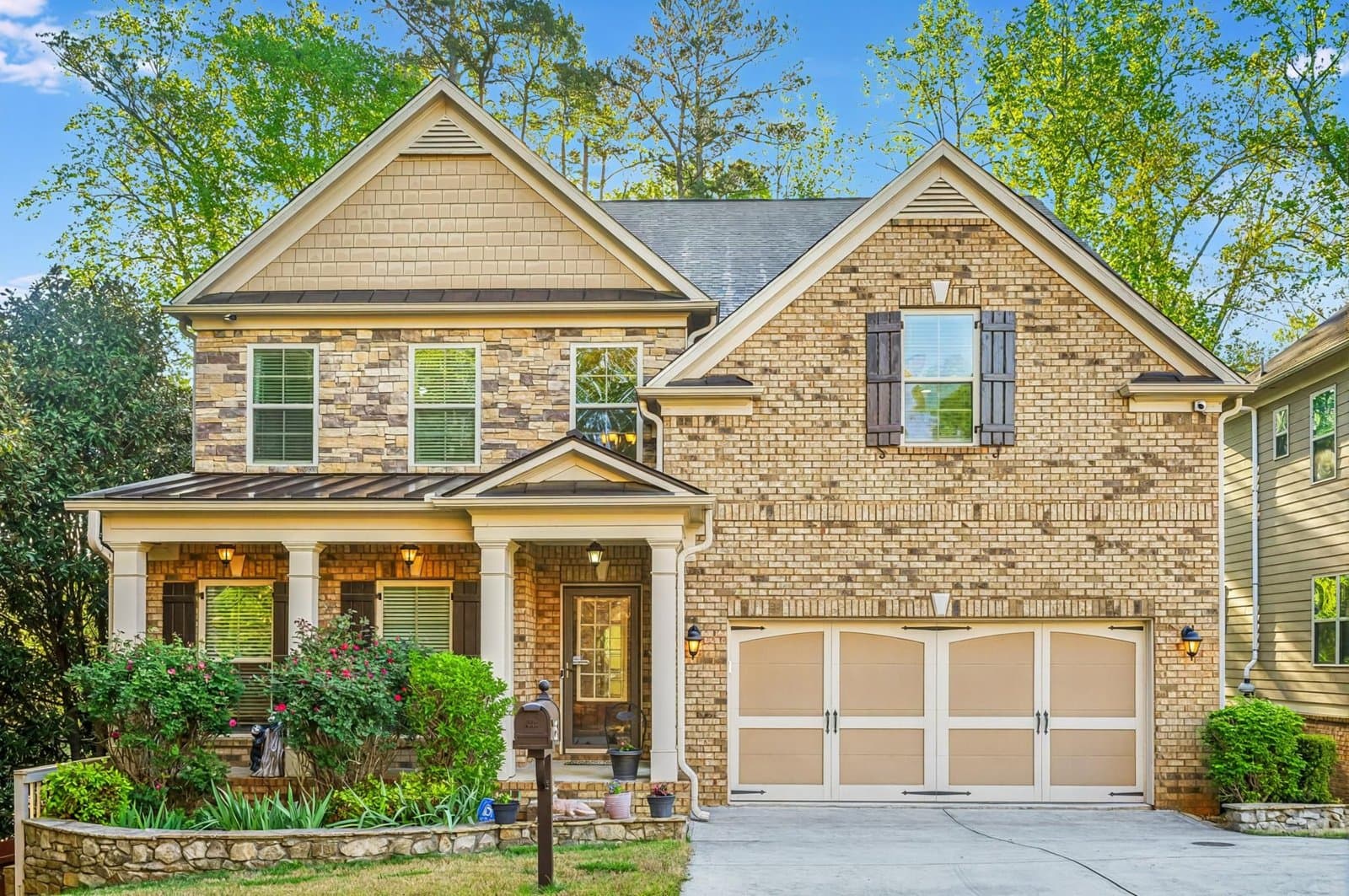

What I Saw on a Walkthrough in Smyrna Last Tuesday
I was walking a three-bedroom ranch in Smyrna with a couple relocating from Chicago. Nice house. Good bones: I could tell the framing crew knew what they were doing by the way the doors hung plumb after 15 years. But what stopped the conversation cold wasn't the house. It was when the husband pulled up a cost-of-living calculator on his phone and said, 'It says Atlanta is 8% cheaper than Chicago. Is that actually true?'
I told him the truth: it depends entirely on where in Metro Atlanta you land, what you're comparing, and whether that calculator has been updated in the last six months. Because Metro Atlanta in 2026 is not one market. It's about twelve different ones stitched together by I-285 and a whole lot of traffic.
So let me give you the real numbers. Not the sanitized ones. The ones I talk about with clients over coffee before we ever step into a house.
Housing Costs: The Biggest Variable in the Equation
Housing is where the cost of living conversation either makes sense or falls apart. And in Metro Atlanta, housing costs swing dramatically depending on which side of the perimeter you're on, and which direction you head from there.
Inside the Perimeter (ITP): Intown Atlanta
If you're looking at Buckhead, Virginia-Highland, Grant Park, or Decatur, you're in premium territory. Median home prices in these neighborhoods have been climbing steadily, and you're generally looking at $550,000 to $900,000+ for a well-maintained single-family home with a decent yard. Condos in Midtown and Old Fourth Ward can start around $300,000 but top out well into the $700,000 range for newer construction with rooftop access and parking that doesn't make you want to cry.
Rent ITP for a two-bedroom apartment runs $1,800 to $2,800 per month depending on the building and amenities. That's not Manhattan, but it's not cheap either.
First-Ring Suburbs: Smyrna, Marietta, Decatur, Tucker
This is where a lot of buyers land when they want proximity to the city without the full ITP price tag. Smyrna and Marietta in Cobb County have seen strong demand because of the Braves stadium effect and genuinely good schools. You can still find solid homes in the $380,000 to $550,000 range in established neighborhoods like Vinings-adjacent areas and around Marietta Square.
Tucker and Clarkston in DeKalb give you more square footage per dollar, but you'll want to do your homework on specific school zones: they vary considerably within just a few miles.
Outer Suburbs: Cherokee, Forsyth, Henry, Paulding Counties
This is where the cost-of-living calculators start looking more accurate. Cherokee County (Canton, Woodstock, Holly Springs) offers new construction in the $350,000 to $500,000 range with top-rated schools (Cherokee County schools consistently rank among Georgia's best) and a quality of life that's hard to argue with if you don't mind a 40-to-60-minute commute to Midtown on a good day.
Forsyth County, particularly Cumming and the South Forsyth corridor, has become one of the fastest-growing areas in the country for a reason. Excellent schools, newer infrastructure, and home prices that, while they've risen significantly, still offer value compared to comparable suburban markets in the Northeast or West Coast.
Henry County (McDonough, Stockbridge) and Paulding County (Dallas, Hiram) are the true affordability plays. You can find move-in-ready homes in the $280,000 to $380,000 range. The trade-off is commute time and distance from Atlanta's urban core.
What the Data Actually Says
The S&P CoreLogic Case-Shiller Atlanta Home Price Index sits at 249.84 as of May 2026 (source: FRED ATXRSA, observation date 2026-05-01), compared to the national index at 335.1 (source: FRED CSUSHPINSA, observation date 2026-05-01). That gap (Atlanta at roughly 74% of the national index) tells you something important: Metro Atlanta home prices, while they've appreciated significantly since 2000, are still running below the national average on a relative basis. That's meaningful context when someone asks me if Atlanta is still affordable.
The 30-year fixed mortgage rate as of July 23, 2026 is averaging 6.58% nationally (source: Freddie Mac PMMS via FRED MORTGAGE30US, observation date 2026-07-23). That's market data, not a quote: your actual rate depends on your credit, loan type, and lender. But it's the benchmark everyone's working with right now, and it factors directly into what a given purchase price actually costs you monthly.
Property Taxes: Georgia's Hidden Advantage
Here's something I tell every out-of-state buyer who sits across from me: Georgia's property tax structure is genuinely favorable compared to most of the country, and it's one of the underappreciated components of the Metro Atlanta cost-of-living story.
Georgia's effective property tax rate hovers around 0.87% to 1.0% depending on the county. Compare that to Illinois (where that Chicago couple was coming from) at roughly 2.2%, New Jersey at 2.4%, or Texas (which a lot of people assume is the tax-free promised land) at around 1.6% to 1.8%.
Cobb County runs around 0.86% effective rate. Fulton County is higher, closer to 1.0% to 1.1%, and there's been ongoing conversation about Fulton's assessment practices that I won't pretend isn't a real issue for homeowners there. Gwinnett and Cherokee counties tend to be more predictable and competitive.
Georgia also offers a homestead exemption that reduces your assessed value for primary residences, and once you hit 62, there are additional senior exemptions that make staying in Georgia in retirement genuinely attractive from a tax standpoint. That's not nothing when you're doing a 20-year financial plan.
Everyday Costs: Groceries, Gas, Utilities, and Dining
Housing gets all the headlines, but the day-to-day costs are what actually determine whether your paycheck feels like enough.
Groceries
Metro Atlanta has a competitive grocery market. You've got Publix, Kroger, Aldi, Lidl, Walmart Neighborhood Market, Sprouts, Whole Foods, and a growing number of ethnic grocery chains, particularly in Gwinnett County, which has one of the most diverse food retail landscapes in the Southeast. Competition keeps prices reasonable. A weekly grocery run for a family of four typically runs $180 to $250 depending on your habits. That's in line with or slightly below national averages for a major metro.
Gas and Transportation
Georgia's gas tax is moderate, and you'll generally find prices 10 to 20 cents below what you'd pay in California or the Northeast. But let me be real with you: if you're living in Cherokee or Forsyth County and commuting to Midtown, you're putting real miles on your car. A 50-mile round trip daily adds up. Budget accordingly: this is a legitimate cost-of-living factor that doesn't show up in the headline number but absolutely shows up in your bank account.
MARTA, Atlanta's rail and bus system, serves the city core and certain suburban corridors reasonably well if you're working downtown or near a rail line. But Metro Atlanta is fundamentally a car-dependent region. That's the honest answer.
Utilities
Georgia Power is the dominant electric utility, and rates are generally below the national average. A typical 2,000-square-foot home will run $120 to $180 per month in electricity depending on the season: summers are hot and AC runs hard from May through September, so factor that in. Natural gas through Atlanta Gas Light is reasonable. Water and sewer costs vary by municipality but are generally not a budget-buster.
One thing I flag for buyers of older homes (and I can spot this on a walkthrough) is HVAC efficiency. A 15-year-old system in a house with poor attic insulation can run your electric bill $80 to $120 higher per month than it needs to be. That's a real cost-of-living factor hiding inside the house itself.
Dining and Entertainment
Atlanta's restaurant scene is legitimately world-class without the world-class price tag of New York or San Francisco. A dinner for two at a solid restaurant in Ponce City Market or Krog Street Market runs $70 to $120 with drinks. Fine dining in Buckhead can push $200 to $300 for two. But you can also eat extraordinarily well in Buford Highway's international corridor (Vietnamese, Korean, Mexican, Ethiopian) for $15 to $25 per person. The city rewards people who explore it.
Income, Jobs, and Whether the Math Actually Works
Cost of living is only half the equation. The other half is what you're earning.
Metro Atlanta's economy is genuinely diversified: tech, film production, logistics, healthcare, finance, and corporate headquarters (Delta, Coca-Cola, Home Depot, UPS, Cox, NCR Voyix, and dozens of others). That diversity matters. The U.S. unemployment rate as of June 2026 sits at 4.2% (source: FRED UNRATE, observation date 2026-06-01), and Metro Atlanta's rate has historically tracked close to or slightly below the national figure given the region's economic activity.
Median household income in Metro Atlanta runs roughly $75,000 to $85,000 depending on the county, with Forsyth and Cherokee counties skewing higher due to their demographic composition. Tech and corporate salaries in Atlanta have risen meaningfully over the past five years as the city has attracted more employers and remote workers who kept their higher-market salaries while relocating here.
The math works for a lot of people, particularly those relocating from higher-cost metros, because the income-to-housing-cost ratio is more favorable here than in most major U.S. cities. That's the honest case for Atlanta, and it doesn't require any hype.
Education Costs: Public Schools and the Private School Question
If you have kids, school quality is a cost-of-living factor whether you account for it or not. Living in a top public school district means you don't have to pay private school tuition. That's $15,000 to $30,000 per year per child in Atlanta's private school market: real money that changes your monthly budget significantly.
Cherokee County, Forsyth County, and certain zones within Cobb County (particularly the Walton High School and Lassiter High School districts in East Cobb) consistently produce strong academic outcomes. These areas command a home price premium, but when you factor in avoided private school costs, the premium often pays for itself.
Fulton County Schools vary enormously by zone: some of the best public schools in the state sit alongside zones that struggle. Do not assume. Look up the specific school for the specific address before you make an offer. I do this for every client with kids, without being asked.
Healthcare Costs in Metro Atlanta
Atlanta is home to Emory Healthcare, Piedmont Health, Northside Hospital, WellStar, and Children's Healthcare of Atlanta — a genuinely strong healthcare infrastructure. Healthcare costs in Georgia are slightly below the national average for out-of-pocket expenses, though insurance premiums vary by employer and plan type like everywhere else.
For retirees or those considering long-term care planning, Georgia's combination of reasonable healthcare costs, favorable senior tax exemptions, and mild winters (relative to the Midwest and Northeast) makes it an increasingly attractive destination. I've had more clients in the last two years relocating from Ohio, Michigan, and Illinois for exactly this combination of factors than I can count.
The Real Cost of Living Calculation: What to Actually Budget
Let me put some numbers together for a realistic Metro Atlanta household budget in 2026. This is for a family of three or four, purchasing a home in the $420,000 range in a first-ring suburb like Smyrna, Woodstock, or Suwanee:
- Mortgage payment (principal + interest at current market rates): Approximately $2,300 to $2,500/month depending on down payment and rate secured
- Property taxes: $350 to $420/month (estimated, varies by county)
- Homeowner's insurance: $150 to $200/month
- Utilities (electric, gas, water): $250 to $350/month
- Groceries: $200 to $250/month
- Transportation (two cars, gas, insurance): $700 to $900/month
- Dining out and entertainment: $400 to $600/month
- Healthcare (insurance premiums + out-of-pocket): $500 to $800/month
All-in, a comfortable but not extravagant lifestyle in Metro Atlanta's suburbs runs $5,000 to $6,500 per month in household expenses, not including childcare or private school. A household income of $120,000 to $150,000 makes this math work reasonably well. A dual-income household earning $85,000 each is sitting in a solid position.
Compare that to what the same lifestyle costs in Boston, Seattle, or the Bay Area, and the Atlanta value proposition becomes obvious without me needing to sell it to you.
Frequently Asked Questions About Cost of Living in Metro Atlanta 2026
Is Metro Atlanta still affordable compared to other major U.S. cities?
Yes, with context. The S&P CoreLogic Case-Shiller Atlanta Home Price Index is at 249.84 (May 2026, FRED ATXRSA) versus the national index at 335.1 (FRED CSUSHPINSA, same period). Atlanta home prices are running meaningfully below the national average on a relative basis. Combined with Georgia's lower property taxes and competitive everyday costs, Metro Atlanta remains one of the better value propositions among major U.S. metros, but it's not the bargain it was in 2018. Prices have moved.
Which Metro Atlanta counties offer the best value for families?
Cherokee County and Forsyth County consistently deliver the combination of strong public schools, newer infrastructure, and home prices that (while higher than a decade ago) still make sense relative to what you get. Cobb County's East Cobb corridor is excellent but commands a premium. Gwinnett County offers tremendous diversity and solid value, particularly in the Johns Creek and Duluth areas.
How much do I need to earn to live comfortably in Metro Atlanta in 2026?
A household income of $110,000 to $130,000 puts a family in a comfortable position in most Metro Atlanta suburbs: able to own a home, cover expenses, and save. Inside the perimeter in desirable neighborhoods, that number climbs to $150,000+ to feel genuinely comfortable with a mortgage. These are real-world figures, not aspirational ones.
Are property taxes in Georgia really lower than other states?
Yes. Georgia's effective property tax rate runs roughly 0.87% to 1.0%, which is well below states like Illinois, New Jersey, Texas, and New York. The homestead exemption for primary residences and additional senior exemptions make Georgia particularly favorable for long-term homeowners and retirees.
What's the biggest hidden cost of living in Metro Atlanta?
Transportation. Metro Atlanta is car-dependent, and if you're commuting from the outer suburbs, you're spending real money on gas, vehicle maintenance, and time. It's the cost that doesn't show up in any calculator but shows up every month. Factor it in before you decide how far out you're willing to go for a lower home price.
Let's Talk Through Your Specific Situation
Every person's cost-of-living equation in Metro Atlanta looks different depending on where you're coming from, what you're earning, what you need from a school district, and how much commute you're willing to trade for square footage. I've been working through these calculations with clients for over 20 years. And I've built enough homes to know what's behind the walls, not just what's on the listing sheet.
If you're thinking about relocating to Metro Atlanta, moving within the region, or just trying to figure out whether the numbers actually make sense for your family, I'm around. No pitch, no pressure. Just a straight conversation with someone who knows this market from the foundation up.
Reach out to Evan Beckett at becketthomes.org and let's talk through what your situation actually looks like in 2026 Atlanta. Sometimes 30 minutes of real conversation is worth more than six months of calculator-surfing.
Thinking about a move?
Beckett Real Estate works the whole of Metro Atlanta. Tell me the address or the neighborhood and I will tell you what the house is really like, what the inspection usually finds, and what the number should be.
See homes for saleTalk to an agent nowMore articles like this