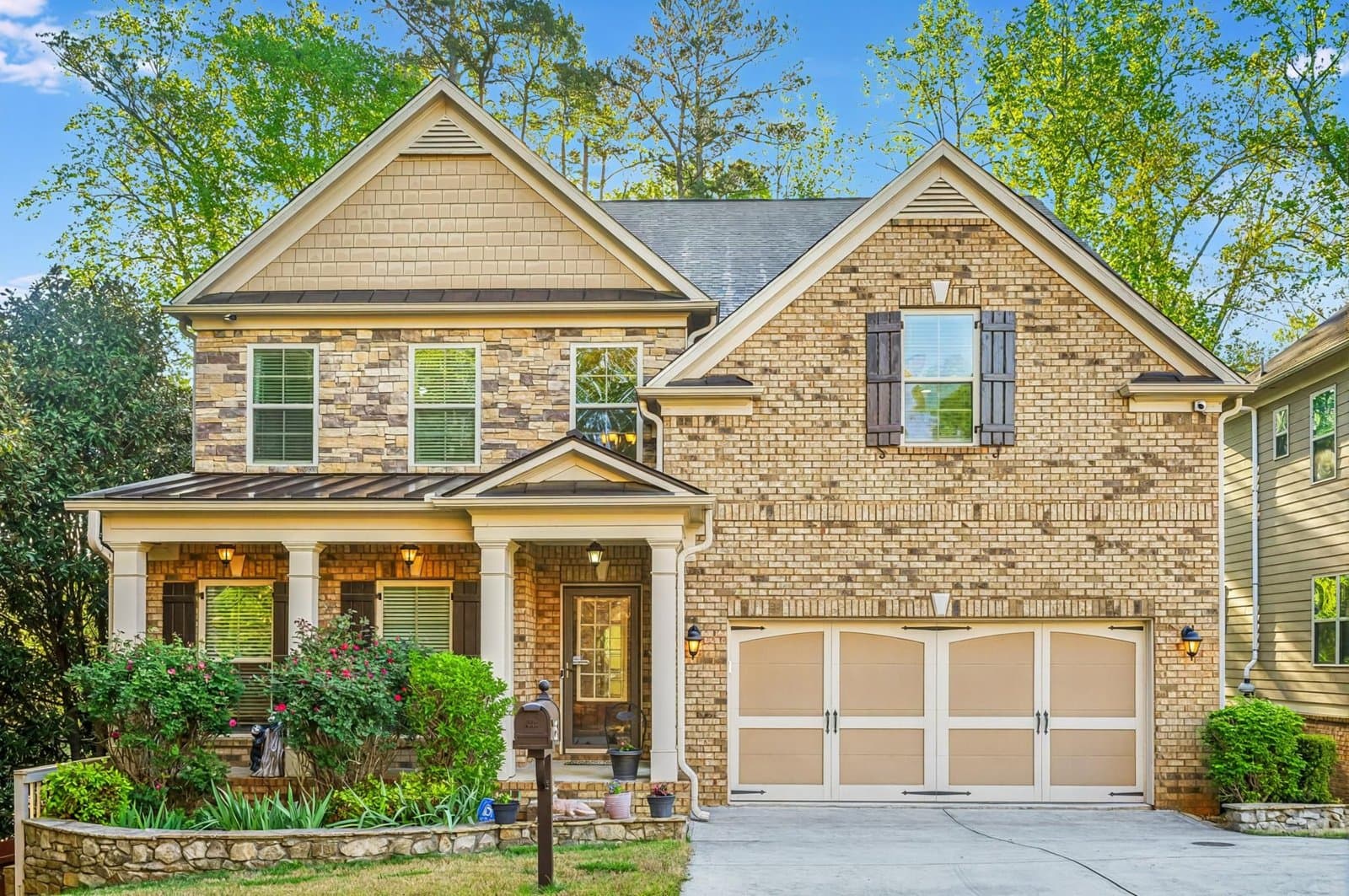

Millage rates for Fulton, Gwinnett, Cobb, DeKalb, Cherokee, Henry and Forsyth — plus the city-limits rule that changes what the same house owes. Written by a metro Atlanta agent.
I was walking a listing in East Cobb last spring: nice house, good bones, solid neighborhood. The buyers were sharp. They'd done their homework on price per square foot, school ratings, commute times to Midtown. But when I mentioned the millage rate, they looked at me like I'd switched languages mid-sentence.
That's not unusual. Most buyers spend months obsessing over purchase price and maybe fifteen minutes thinking about what they'll actually owe the county every year for the rest of the time they own that home. That's a mistake I'm going to help you stop making right now.
Property taxes in Georgia aren't just a line item on a closing disclosure. They're a recurring cost that varies, sometimes dramatically, from one county to the next, one city to the next, and even one school district to the next. I've been in this market for over twenty years, built homes from the ground up, and I've watched buyers get blindsided by tax bills they never saw coming. This post is the one I wish existed when I started.
How Georgia Property Taxes Actually Work
Let me be real with you: Georgia's property tax system is not simple. But once you understand the basic mechanics, you can compare counties like a pro.
Here's the framework. Your annual property tax bill is calculated based on your property's assessed value, which in Georgia is 40% of the fair market value, multiplied by the millage rate set by your county, municipality, and school district. One mill equals $1 per $1,000 of assessed value.
So if your home is worth $500,000, the assessed value is $200,000. If the combined millage rate is 30 mills, your annual tax bill is $6,000. Simple math, but the millage rate is where things get complicated, and where Metro Atlanta counties diverge significantly.
Georgia also offers a Homestead Exemption for primary residences, which reduces the assessed value before the millage rate is applied. The base state exemption is $2,000, but counties and cities layer on additional exemptions. Some are generous. Some are not. I'll flag those as we go.
Georgia Property Tax Rates By County: Metro Atlanta Breakdown
I'm going to focus on the counties I know best: the ones I've driven, walked, negotiated in, and watched evolve over two decades. These are real numbers, not estimates pulled from a generic database. Millage rates shift annually, so I'll give you the most current verified figures alongside context that actually helps you make decisions.
Fulton County
Fulton is the most complex county in the state. It stretches from Roswell in the north to Palmetto in the south, and the tax burden varies wildly depending on which city you're in, or whether you're in an unincorporated area.
The combined millage rate for unincorporated Fulton County (county + school) runs in the range of 33–36 mills depending on the year and district. But if you're in Sandy Springs, Milton, or Alpharetta (all cities that incorporated specifically to control their own services and taxes), the picture changes. Milton, for example, has consistently maintained lower city millage rates, making it one of the more tax-efficient addresses in the metro for what you get: top-tier schools, low crime, and genuinely beautiful land.
Sandy Springs sits in the mid-30s for combined rates when you factor in city and school levies. Johns Creek, which broke away from Fulton in 2006, typically runs a combined rate around 28–31 mills, and with school ratings consistently in the 9–10 range on GreatSchools, the value proposition is hard to argue with.
One thing Fulton buyers need to know: the county has faced well-documented issues with assessment accuracy and appeals backlogs. If you buy in Fulton, get a tax appeal attorney's number in your phone before you close. I mean that.
Gwinnett County
Gwinnett is Georgia's second most populous county and one of the most ethnically diverse in the Southeast. It's also one of the better tax values in the metro when you look at what you're getting for the rate.
Combined millage rates in Gwinnett (county + school + city where applicable) typically range from 27–32 mills. The school system (Gwinnett County Public Schools) is massive but consistently performs well, with several schools rated 8–9 on GreatSchools. For a family buying in Suwanee, Duluth, or Buford, you're getting solid schools at a rate that doesn't punish you for buying a nice home.
Gwinnett also has a more streamlined assessment process than Fulton, in my experience. Appeals happen, but the county is generally more predictable. That matters when you're trying to model your carrying costs five years out.
Cherokee County
Cherokee is where I send buyers who want space, newer construction, and a tax bill that won't make them question their life choices. Combined millage rates in Cherokee typically run 24–28 mills: some of the lowest in the metro for a county with quality infrastructure and schools.
Canton is the county seat and has seen significant growth, but it still feels like a real town rather than a suburb that forgot what it was. Woodstock (one of my favorite markets in the whole metro) sits in Cherokee and delivers a walkable downtown, strong resale history, and tax rates that reward homeowners. I've sold homes on Rope Mill Road and in the Bridgemill community out there. The numbers work.
The tradeoff is commute. If you're working in Midtown or Buckhead, Cherokee County means 45–60 minutes on a good day. Know what you're trading.
Cobb County
Cobb is interesting. It's one of the wealthier counties in Georgia, it has no unincorporated city tax in most areas, and its school system (Cobb County School District) is large but competitive, with pockets of excellence in East Cobb that are genuinely elite.
Combined millage rates in Cobb run roughly 28–34 mills, varying by city. Marietta as a city adds its own millage layer. Smyrna and Kennesaw do the same. East Cobb, technically unincorporated, benefits from not having a city millage, which keeps the total rate more competitive than it might look on paper.
I've walked hundreds of homes in East Cobb. The construction quality in neighborhoods like Walton Chase, Weatherstone, and along Paper Mill Road is strong. The school pipeline from Walton High School is well-documented. Buyers paying $700,000–$900,000 in East Cobb are generally getting a fair tax deal relative to what they're receiving in return.
Marietta city proper has higher combined rates but also has historic character, a genuine downtown square, and price points that are more accessible than much of the metro. Worth the math.
DeKalb County
I'm going to be straight with you on DeKalb. The county has some of the highest effective property tax rates in Metro Atlanta (combined millage rates regularly hit 38–44 mills in parts of the county), and it has faced significant scrutiny over assessment practices and government efficiency.
That said, DeKalb has neighborhoods I love. Decatur (technically its own city with its own tax structure) is one of the most walkable, culturally rich communities in the metro. Druid Hills has architectural bones that make real estate people like me actually emotional. Tucker and Dunwoody (which incorporated in 2012) have carved out more stable tax environments within the county.
If you're buying in DeKalb, do not skip the tax analysis. Run the actual numbers on the specific parcel. I've seen buyers fall in love with a $450,000 home in Decatur and then realize the combined city/county/school tax bill is $9,000+ annually. That's not a reason not to buy (Decatur is worth it for the right buyer), but it needs to be a conscious decision, not a surprise.
Henry County
Henry is southeast of Atlanta and has been one of the fastest-growing counties in the state for the better part of a decade. McDonough and Stockbridge are the main markets, and the tax rates here are genuinely competitive: combined millage in the 25–30 mill range.
The value play in Henry is real. You can buy significantly more home here than in Cobb or Fulton for the same money, and the tax burden is lower. The commute to Atlanta is the honest conversation you have to have — I-75 south of the city is not forgiving at 7:30 a.m.
Forsyth County
Forsyth has been the darling of the northern suburbs for years, and for good reason. Combined millage rates are among the lowest in the metro — typically 22–27 mills — and the school system is exceptional. Forsyth County Schools regularly ranks as one of the top systems in the state.
Cumming is the county seat, and the growth around the GA-400 corridor has been relentless. New construction in communities like Windermere, Polo Golf and Country Club, and along Pilgrim Mill Road has been strong. Buyers coming from Fulton or DeKalb often experience genuine sticker shock (in a good way) when they see what their tax bill will be in Forsyth for a comparable home.
The tradeoff here is that Forsyth has grown so fast that infrastructure is perpetually playing catch-up. Traffic on GA-400 is real. But for families prioritizing schools and tax efficiency, Forsyth is hard to beat in this market.
The Hidden Variable: City vs. Unincorporated
One of the most overlooked factors in Georgia property taxes is whether you're buying inside a city limit or in unincorporated county territory. This single variable can mean a difference of 5–10 mills, which on a $500,000 home could be $1,000–$2,000 per year.
Cities levy their own millage rates on top of county and school rates. Some cities provide services that justify the cost: Alpharetta's parks and infrastructure are genuinely excellent, for example. Others... less so. Before you close on any home in Georgia, I want you to know exactly which taxing jurisdictions apply to that specific parcel. Your county tax commissioner's website will show you this. Use it.
Homestead Exemptions: Don't Leave Money on the Table
Every Georgia homeowner who uses a property as their primary residence should file for the Homestead Exemption. The base state exemption reduces your assessed value by $2,000 for county taxes and $2,000 for school taxes. It's not huge, but it's free money.
The real opportunity is in the local exemptions. Cherokee County, for example, has additional senior exemptions that can dramatically reduce the school tax burden for homeowners 62 and older. Fulton County has an L5A exemption for seniors that eliminates school taxes entirely for qualifying homeowners. Forsyth has similar provisions.
If you're over 62 and buying in Georgia, the senior exemption landscape should be a serious part of your county selection process. I've had clients in their early 60s specifically time their move to maximize these exemptions. That's smart money management, not gaming the system.
You must apply for these exemptions. They are not automatic. File by April 1st of the year following your purchase for most counties.
How to Compare Property Taxes When You're Shopping Across Counties
Here's my practical framework. When you're comparing two homes in different counties, don't compare list prices. Compare total cost of ownership.
- Get the actual parcel tax history. Every county in Georgia has a public tax records portal. Look at what the current owner paid last year, then factor in that your purchase price may trigger a reassessment.
- Calculate the post-purchase assessed value. In Georgia, counties typically reassess to market value upon sale. Take 40% of your purchase price as the likely assessed value.
- Apply the current millage rate. Get this from the county tax commissioner's website, not a third-party app. Third-party apps are often wrong.
- Subtract applicable exemptions. File for every exemption you qualify for, starting with Homestead.
- Add it to your monthly payment model. Divide annual taxes by 12 and add it to your PITI. This is your real housing cost.
I do this analysis for every client before they make an offer. It takes twenty minutes and it has saved people from some genuinely painful surprises.
Frequently Asked Questions About Georgia Property Taxes
What county in Georgia has the lowest property tax rate?
Among Metro Atlanta counties, Forsyth and Cherokee consistently rank among the lowest for combined millage rates, typically in the 22–28 mill range. In more rural parts of Georgia, you'll find even lower rates, but the infrastructure and services reflect that. For suburban Metro Atlanta buyers, Forsyth is usually the benchmark for tax efficiency.
How often does Georgia reassess property values?
Georgia counties are required to reassess properties at least once every three years, but most metro counties reassess annually. A sale typically triggers a reassessment to market value. If you believe your assessment is too high, you have the right to appeal, and in counties like Fulton and DeKalb, appeals are common and often successful.
Can I appeal my Georgia property tax assessment?
Yes, and you should if you believe your assessed value exceeds fair market value. The appeal window is typically 45 days from the date of your assessment notice. You can appeal yourself or hire a property tax attorney or consultant. In high-value counties, the ROI on a successful appeal can be significant. I've seen clients save $2,000–$4,000 annually after a successful challenge.
Do Georgia property taxes go up when you buy a home?
They can. If the previous owner had owned the home for many years and the market has appreciated significantly, the county may reassess the property closer to your purchase price after the sale. This is one reason to model taxes based on 40% of your purchase price rather than the prior year's tax bill when you're analyzing a potential purchase.
What is the Georgia school tax exemption for seniors?
Georgia offers several school tax exemptions for seniors, and they vary by county. The state provides a basic exemption for homeowners 62 and older with income below a certain threshold. Many counties add their own exemptions on top of this. Forsyth, Cherokee, and Fulton all have meaningful senior exemption programs. If you're 62 or older, call the county tax commissioner's office directly and ask what you qualify for. It's worth the phone call.
The Bottom Line on Georgia Property Taxes
Property taxes are not the sexiest part of buying a home. I get it. But over a ten-year ownership period, the difference between a 25-mill county and a 40-mill county on a $600,000 home is roughly $45,000 out of your pocket. That's real money. That's a car. That's a college semester. That's worth understanding before you sign.
Metro Atlanta gives you genuine choices. You can buy in Forsyth and pay some of the lowest rates in the region. You can buy in Decatur and pay some of the highest, and get a walkable, culturally vibrant community that justifies it for the right lifestyle. You can land in East Cobb and hit a sweet spot of quality schools, strong appreciation history, and a tax rate that doesn't punish success.
What you shouldn't do is buy without knowing. That's the move I've watched cost people real money over and over again, and it's entirely preventable.
If you want to run the actual numbers on a specific property or county you're considering, I'm around. No pitch, no pressure: just twenty years of knowing how this market actually works, and a genuine interest in making sure you make the right call. Reach out through becketthomes.org and let's talk through it.
Thinking about a move?
Beckett Real Estate works the whole of Metro Atlanta. Tell me the address or the neighborhood and I will tell you what the house is really like, what the inspection usually finds, and what the number should be.
See homes for saleTalk to an agent nowMore articles like this