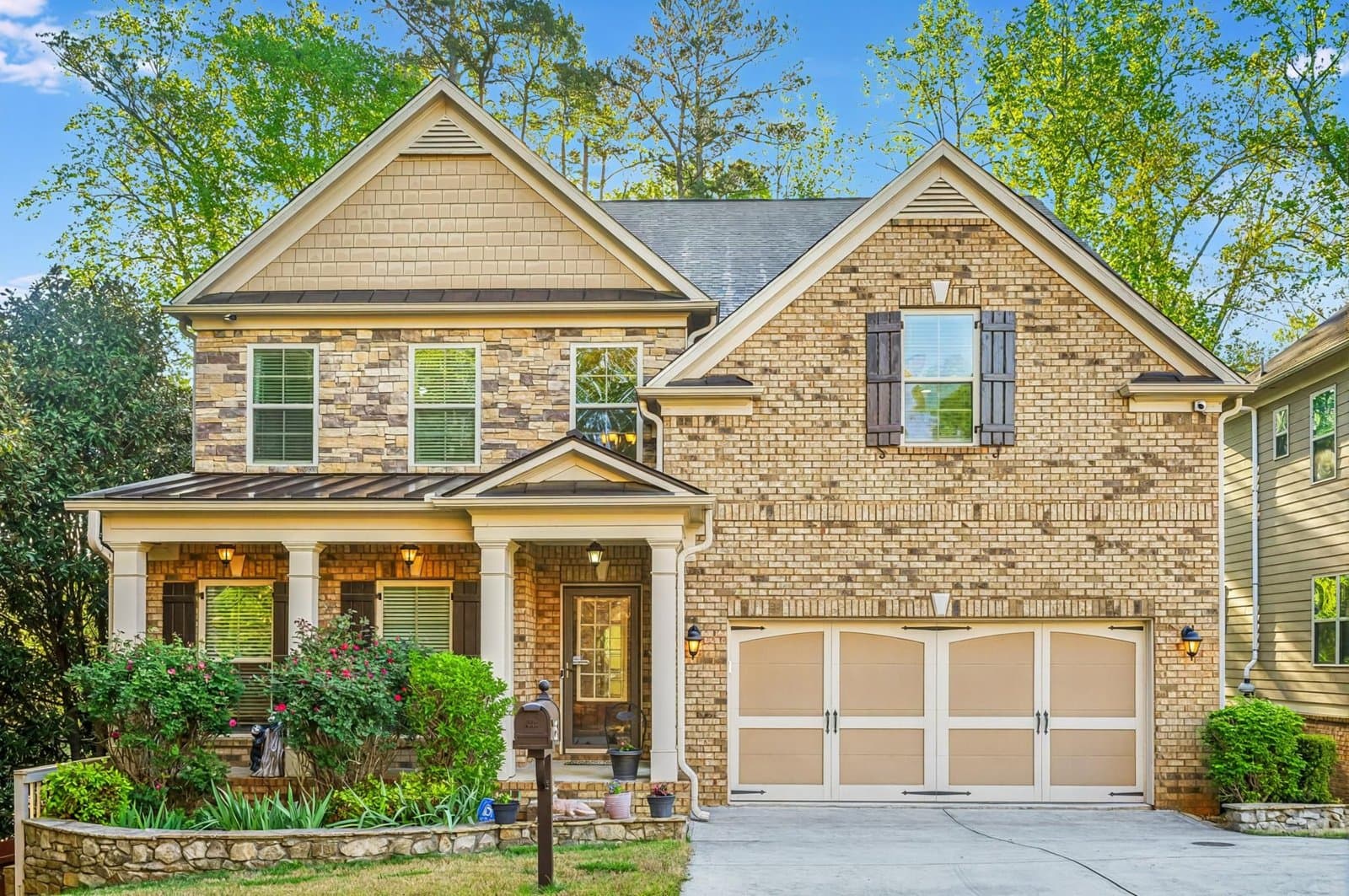

The Honest Answer Nobody Gives You
I was walking a listing in Smyrna last spring — solid brick ranch, great bones, original hardwood under the carpet (I could tell by the nail pattern at the baseboard, a trick you pick up after framing a few hundred houses). The buyers were relocating from Chicago. Nice couple. Smart. And the first thing they asked me wasn't about the price or the schools. It was: "Is Atlanta actually a good place to live? Because everyone we've talked to has an opinion, but nobody's given us a straight answer."
Fair point. So let me give you one.
Atlanta is not perfect. No city is. But for a specific kind of buyer (career-driven, value-conscious, quality-of-life focused), Metro Atlanta hits different than almost anywhere else in the country. And if you're reading this trying to figure out whether to pull the trigger on a move, I'm going to walk you through what actually matters: the economy, the neighborhoods, the costs, the schools, and the stuff that doesn't show up on any listicle.
The Atlanta Economy: Why People Keep Coming Here
Atlanta doesn't have one industry. That's the thing people miss. It has a dozen.
You've got Delta Air Lines and the world's busiest passenger airport at Hartsfield-Jackson. You've got the CDC and a growing life sciences corridor. You've got Georgia Tech pumping out engineers that tech companies are fighting over. You've got film and TV production: Georgia has been the number one state for film production for years, which means real jobs, not just celebrities at the airport. And you've got a Fortune 500 roster that includes Coca-Cola, Home Depot, UPS, Chick-fil-A, and Cox Enterprises, among others.
The national unemployment rate sits at 4.1% as of July 2026 (FRED, UNRATE). Metro Atlanta has historically tracked close to or below that figure, driven by that diversified employment base. When one sector slows, another picks up the slack. That's not an accident. It's the result of decades of intentional economic development.
For buyers, this matters enormously. Job stability drives housing demand. Housing demand protects your investment. It's that simple.
Atlanta Home Prices: What the Data Actually Shows
Let me give you the real numbers, not the spin.
The S&P CoreLogic Case-Shiller Atlanta Home Price Index came in at 249.84 (seasonally adjusted, January 2000 = 100) as of May 2026 (FRED, ATXRSA). Compare that to the national index at 335.1 for the same period (FRED, CSUSHPINSA). Atlanta is running about 25% below the national benchmark on that index, which tells you that relative to the rest of the country, Metro Atlanta still offers real value.
That gap is significant. You're getting a major metro, with all the jobs, culture, and infrastructure that implies, at a price point that cities like Denver, Austin, and Seattle left behind years ago. Not because Atlanta is a lesser city. Because Atlanta has more land, more development capacity, and a political environment that hasn't strangled new construction.
Speaking of which: U.S. new housing starts are running at a seasonally adjusted annual rate of 1,427,000 units as of June 2026 (FRED, HOUST). The Atlanta metro has captured a meaningful share of that activity: you'll see cranes in Forsyth County, new communities going vertical in Cherokee, and infill development happening in Westside Atlanta neighborhoods that were warehouses five years ago.
On financing: the 30-year fixed mortgage rate is averaging 6.67% as of August 13, 2026, per Freddie Mac's Primary Mortgage Market Survey via FRED (MORTGAGE30US). That's the market rate. What you'll actually qualify for depends on your credit profile, loan type, and lender. But it's a useful benchmark for running your numbers.
Metro Atlanta Neighborhoods: Where Should You Actually Live?
This is where I earn my keep. Because "Atlanta" isn't one place. It's dozens of distinct cities, counties, and communities, each with its own personality, school system, commute profile, and price point. Let me break down the major zones.
Inside the Perimeter (ITP): Atlanta Proper and the Close-In Suburbs
If you want walkability, culture, and the full urban experience, you're looking inside I-285 — what locals call ITP. Neighborhoods like Virginia-Highland, Inman Park, and Poncey-Highland offer Craftsman bungalows and renovated Victorians on tree-lined streets. Expect to pay for it: entry-level homes in these areas regularly push into the $600s and $700s, and anything with a good renovation can clear $1M without breaking a sweat.
Decatur is its own city inside DeKalb County — great schools (City of Decatur schools are consistently rated among the best in Georgia), a walkable downtown, and a community feel that's hard to manufacture. It's also expensive by Atlanta standards. Homes here move fast and rarely sit.
Grant Park and East Atlanta Village are for the buyer who wants the character of Inman Park at a slight discount — you'll find more original condition homes, more upside, and a neighborhood that's still in the middle of its story rather than at the end of it.
Cobb County: Smyrna, Marietta, and Vinings
Cobb County is where I spend a lot of my time, and for good reason. Smyrna has become one of the best value plays in Metro Atlanta — you're 15 minutes from Midtown on a good day, the Market Village area gives you walkable dining and retail, and the housing stock ranges from 1960s ranches with great bones to newer construction townhomes. Marietta has a historic square that actually delivers — good restaurants, live music, a real sense of place. Vinings is the quiet money neighborhood that doesn't need to announce itself.
Cobb also has the Cumberland/Galleria employment corridor, the Braves stadium at Truist Park (and the Battery development around it), and a road network that — while still Atlanta — is less punishing than some parts of the metro.
North Fulton: Alpharetta, Milton, and Roswell
If you've got kids and you're prioritizing schools, North Fulton is the conversation. Alpharetta's school cluster — including Cambridge High School — consistently earns top ratings. The city itself has transformed from a suburban bedroom community into a legitimate tech hub, with companies like Microsoft, Salesforce, and dozens of fintech firms operating there. That means shorter commutes for a growing slice of the workforce.
Milton is where you go when you want acreage, equestrian properties, and a rural feel without leaving the metro. It's not cheap, but it's real. Roswell sits between those two worlds — established neighborhoods, good schools, and a historic Canton Street district that gives it more texture than your average suburb.
Cherokee County: Canton and Woodstock
This is where the value buyers are landing right now. Canton and Woodstock offer newer construction, lower price points than North Fulton, and a quality of life that surprises people who write them off as "too far out." Woodstock's downtown has genuinely good restaurants and a music venue. Canton is growing fast — new communities going up along GA-20 and beyond.
The trade-off is commute time if you're working in Midtown or Buckhead. But if you're hybrid or remote, Cherokee County is one of the best value propositions in the entire metro.
Gwinnett County: Duluth, Suwanee, and Johns Creek
Gwinnett is the most diverse county in Georgia, and that diversity shows up in the food, the culture, and the community. Duluth and Suwanee are established, family-friendly cities with good schools and reasonable price points. Johns Creek — technically in Fulton County but culturally aligned with Gwinnett — has some of the highest-rated schools in the state and a strong South Asian and East Asian community that's built a genuine cultural infrastructure: restaurants, grocery stores, community organizations.
The Atlanta Traffic Problem: Let's Be Honest
You knew this was coming. Atlanta traffic is real. I'm not going to pretend otherwise.
The I-285/I-85 interchange (locally known as Spaghetti Junction) is not a metaphor. It is an actual engineering challenge that will test your patience. The I-75/I-285 interchange in Cobb can turn a 20-minute drive into an hour on a bad afternoon. This is a known quantity.
The thing is, though: Atlanta's traffic problem is largely a commute-pattern problem. If you're driving into Midtown or Downtown between 7:30 and 9:00 AM, or leaving between 4:30 and 6:30 PM, you're in it. If your schedule has any flexibility (or if you're hybrid or remote), the city opens up dramatically. MARTA connects Buckhead, Midtown, Downtown, the airport, and Decatur. The BeltLine trail system has made biking and walking a legitimate option for inner-loop residents.
My honest advice: before you buy, drive your actual commute at your actual commute time. Not Google Maps estimates: the real thing. That 30-minute estimate from Cherokee County to Perimeter Center is accurate at 10 AM on a Tuesday. It is not accurate at 8:15 AM on a Wednesday.
Atlanta Schools: A More Nuanced Picture
Atlanta's school landscape is genuinely uneven, and you deserve a straight answer on that.
Atlanta Public Schools (APS) serves the city proper and has been working through a long rebuilding process. There are bright spots: Midtown High, for instance, has strong programs and improving outcomes. But it's a mixed picture, and families with kids should do their homework on specific school clusters rather than assuming a zip code tells the whole story.
Outside APS, the story gets considerably better. Fulton County Schools (covering areas like Alpharetta, Roswell, and Sandy Springs) and the City of Decatur school system consistently produce strong outcomes. Cherokee County Schools punch above their weight for a county their size. Forsyth County Schools have earned a strong reputation as the county has grown.
GreatSchools ratings are a starting point, not a verdict. Visit the schools. Talk to parents who have kids there right now. The data tells you part of the story. People on the ground tell you the rest.
Cost of Living in Atlanta vs. Other Major Cities
This is where Atlanta makes its clearest argument.
Georgia has no city income tax. The state income tax rate is on a path to reduction. Property taxes vary by county (Fulton County has historically been on the higher end, while Cherokee and Forsyth tend to be more favorable), but even at the high end, you're not paying what you'd pay in New York, New Jersey, or California.
Food costs are reasonable. Utilities are moderate: summers will test your electric bill, no question, but winters are mild enough that heating costs are manageable. And the restaurant scene, which has exploded over the last decade, gives you genuine options at every price point. You don't have to spend $40 an entrée to eat well in Atlanta.
For buyers coming from coastal markets, the sticker shock runs in reverse. What gets you a one-bedroom condo in San Francisco or a townhome in Brooklyn buys you a four-bedroom house on a cul-de-sac in Alpharetta or a renovated craftsman in Smyrna. That's not marketing copy. That's just math.
What Atlanta Gets Right That Nobody Talks About
The arts scene is legitimate. The High Museum of Art is world-class. The Fox Theatre books real acts. The music scene (from Buckhead clubs to East Atlanta Village dive bars) has produced more influential artists than most cities twice its size.
The food culture is exceptional. Buford Highway alone (a stretch of road running through Chamblee and Doraville) is one of the most diverse dining corridors in the United States. Vietnamese, Korean, Mexican, Ethiopian, Peruvian: all within a few miles of each other, all excellent, most of it affordable.
The weather. Nine months of the year, Atlanta's weather is genuinely pleasant. Mild winters, warm springs, long falls. July and August are hot and humid (not "warm," hot), but if you've ever lived in Phoenix or Houston, you'll find it manageable. And the tree canopy that gives Atlanta the nickname "city in a forest" provides more shade cover than most Southern cities.
Access to nature is underrated. North Georgia mountains are 90 minutes from Buckhead. The Blue Ridge area (Blue Ridge, Ellijay, Dahlonega) offers hiking, kayaking, vineyards, and weekend escape without a plane ticket. Chattanooga is two hours. The beaches of 30A are five hours. Atlanta is a hub, and that hub status extends beyond just business travel.
Frequently Asked Questions About Living in Atlanta
Is Atlanta a good place to live for families?
Yes, with the right neighborhood. North Fulton (Alpharetta, Milton, Roswell), Cherokee County (Woodstock, Canton), and Forsyth County offer strong schools, safe communities, and plenty of family-oriented infrastructure. The key is matching your priorities (school ratings, commute, price point) to the right submarket. There's no one-size answer, but there are excellent options at a range of price points.
Is Atlanta affordable compared to other major cities?
Relative to comparable metros, yes. The S&P CoreLogic Case-Shiller Atlanta Home Price Index stood at 249.84 as of May 2026 (FRED, ATXRSA), while the national index hit 335.1 for the same period (FRED, CSUSHPINSA): a meaningful gap that reflects Atlanta's relatively more accessible price point for a major metro. There's no state city income tax, and while property taxes vary by county, the overall cost of living remains competitive.
What are the best suburbs of Atlanta to buy a home?
It depends on what you're optimizing for. For schools and established neighborhoods: Alpharetta, Roswell, Milton, and Johns Creek. For value and growth trajectory: Woodstock, Canton, and Smyrna. For walkability and urban feel at a slight discount to ITP: Decatur and East Atlanta. For acreage and quiet: Milton and parts of Cherokee County. There's a right answer for almost every buyer profile. It just takes knowing which questions to ask.
How bad is Atlanta traffic, really?
Bad during peak commute hours on the major corridors. Manageable if your schedule has flexibility, you live near MARTA, or you work in a submarket close to where you live. The worst mistake buyers make is underestimating commute time: always drive your route at your actual commute time before you commit to a neighborhood. That's not a sales pitch, it's just common sense.
Is Atlanta a good place to invest in real estate?
The data supports a yes. The Atlanta home price index at 249.84 (May 2026, FRED ATXRSA) versus the national index at 335.1 suggests room for continued appreciation relative to the national baseline. A diversified economy, consistent population growth, and ongoing housing demand from corporate relocations make Atlanta a fundamentally sound market. That said, no investment is guaranteed, and submarket selection matters enormously: some pockets outperform, some underperform. Know what you're buying and why.
The Bottom Line
Is Atlanta a good place to live? For the right buyer, yes, genuinely. It's a city with real economic depth, a cost structure that still makes sense, a food and culture scene that's earned its reputation, and enough geographic diversity in its suburbs to match almost any lifestyle.
It's not perfect. The traffic is real. The school quality is uneven in parts. Summers are hot. But the tradeoffs are favorable compared to most comparable metros, and the value proposition, particularly for buyers coming from higher-cost markets, is hard to argue with.
What I tell my clients is this: Atlanta rewards people who do their homework. The buyers who struggle here are the ones who picked a neighborhood off a list without understanding the commute, the school cluster, or the community feel. The buyers who thrive are the ones who treated this like the significant decision it actually is.
I've spent 20+ years building homes across Metro Atlanta, and the last six selling them. I know where the good bones are, which subdivisions were built right and which ones cut corners, and which neighborhoods are in the middle of their story versus the end of it. If you want to talk through your specific situation (where you're coming from, what you're looking for, what your budget actually buys you here), I'm around.
Reach out to Evan Beckett at becketthomes.org. No pressure, no pitch: just a straight conversation about whether Atlanta makes sense for you.
Thinking about a move?
Beckett Real Estate works the whole of Metro Atlanta. Tell me the address or the neighborhood and I will tell you what the house is really like, what the inspection usually finds, and what the number should be.
See homes for saleTalk to an agent nowMore articles like this