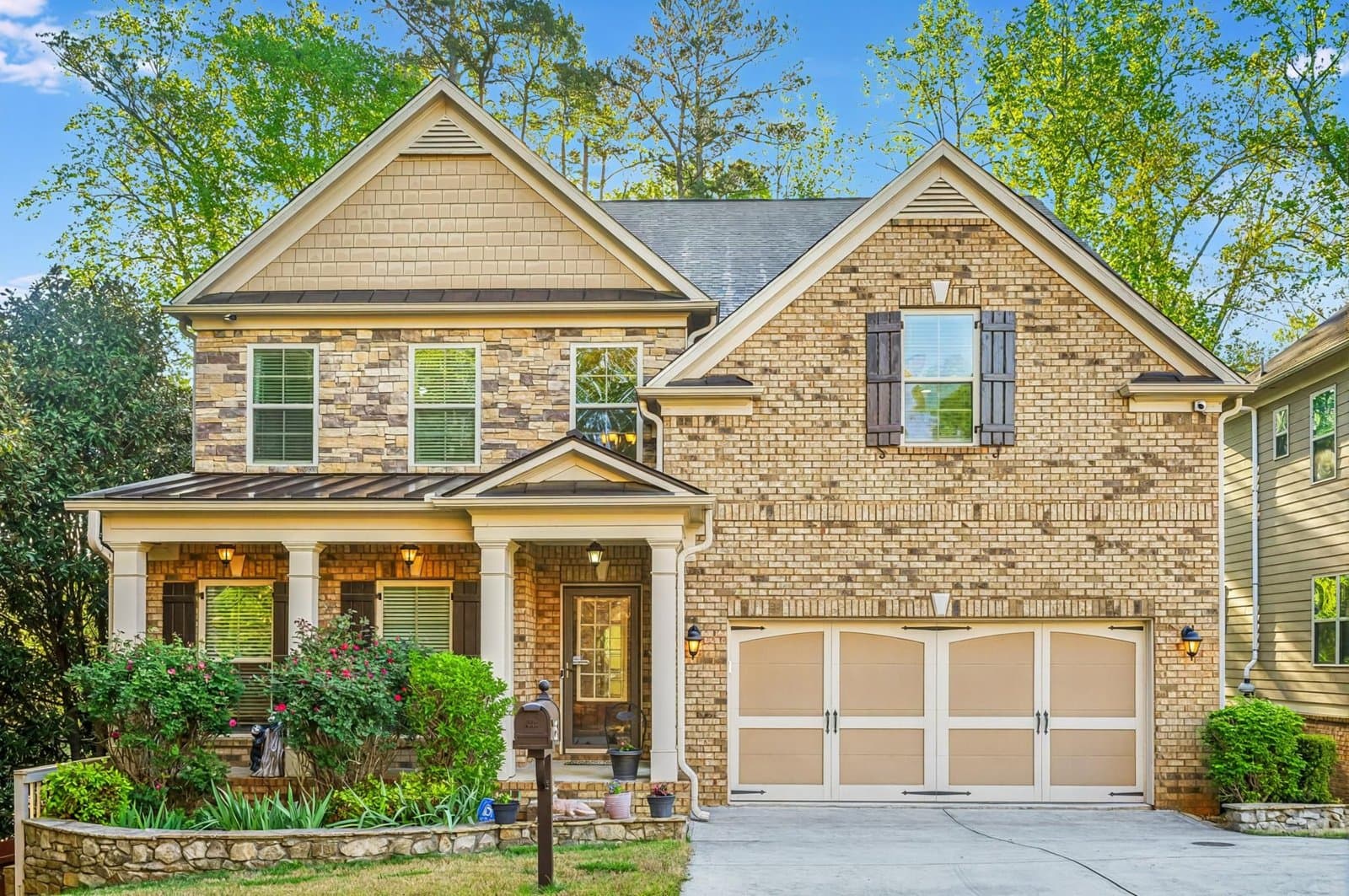

The Couple Who Almost Walked Away From a $0-Down Home
I was sitting across from a couple in Morrow last spring — both working, combined income around $58,000, two kids in Clayton County schools. They'd been told by two different lenders that homeownership wasn't in the cards for them yet. "Just keep renting and save more," one of them said. I asked what programs those lenders had walked them through. The answer? None.
Six weeks later, that couple closed on a three-bedroom home in Riverdale. They used a stacked combination of programs most buyers (and frankly, most agents) don't know exist. Their out-of-pocket at closing? Under $1,200.
That's not a sales pitch. That's a Tuesday in Metro Atlanta when you know what you're doing.
If you're a lower-income buyer in the Atlanta metro area and you think homeownership is out of reach, I want to walk you through exactly what's available, how it actually works, and what the catches are, because there are always catches, and you deserve to know them upfront.
Why Low Income Home Buying Programs Exist (And Why They Actually Work)
Let me be real with you. These programs aren't charity. They're policy tools designed to stabilize neighborhoods, build generational wealth in underserved communities, and expand the tax base. The government, state agencies, and nonprofits have a vested interest in getting qualified buyers into homes. That alignment of incentives is your friend.
Metro Atlanta is one of the most active markets in the country for these programs, partly because of the region's size and partly because of the income disparity that exists across counties like Fulton, DeKalb, Clayton, Gwinnett, and Cobb. The S&P CoreLogic Case-Shiller Atlanta Home Price Index sat at 249.84 (seasonally adjusted, May 2026, FRED ATXRSA), well below the national index of 335.1 for the same period (FRED CSUSHPINSA). That gap matters. Atlanta home prices, while rising, remain more accessible than coastal metros, which means your assistance dollars stretch further here.
The 30-year fixed mortgage rate averaged 6.67% as of August 13, 2026 (Freddie Mac PMMS via FRED MORTGAGE30US). That's market data, not a quote. Your actual rate depends on your credit and lender. But these programs often come with below-market rate options that can meaningfully change your monthly payment picture.
Georgia Dream: The Foundation Most Buyers Should Start With
If you're a first-time homebuyer in Georgia — meaning you haven't owned a primary residence in the past three years — the Georgia Dream Homeownership Program through the Georgia Department of Community Affairs (DCA) is your baseline. It's not a secret, but it's wildly underutilized because most buyers don't know how to access it or assume they won't qualify.
What Georgia Dream Actually Offers
- 30-year fixed-rate mortgage at a below-market interest rate through participating lenders
- Down payment assistance of $10,000 for standard borrowers
- $12,500 in down payment assistance for public protectors, educators, healthcare workers, and active military
- $12,500 for borrowers with a household member who has a disability
Income and Purchase Price Limits
Here's where people get tripped up. Income limits vary by county and household size. For a two-person household in Fulton or DeKalb County, the limit is typically around $74,000 annually. In less expensive counties like Haralson or Heard, limits may be lower. Purchase price limits also apply, generally around $350,000 for most Metro Atlanta counties, though this gets updated periodically by DCA.
The down payment assistance comes as a second mortgage with 0% interest and no monthly payments. It's due when you sell, refinance, or pay off the home. That structure works in your favor as long as you're not planning to flip the house in year two.
You'll need a minimum 640 credit score, completion of a homebuyer education course (I'll tell you exactly which ones to use), and the home must be your primary residence.
City of Atlanta and County-Level Programs You Might Be Leaving on the Table
Georgia Dream is the state-level play. But Metro Atlanta has a patchwork of local programs that can be layered on top — and that layering is where buyers go from "I can barely afford this" to "I actually have reserves left over after closing."
Invest Atlanta: For City of Atlanta Buyers
If you're buying inside Atlanta city limits — think West End, Pittsburgh, Mechanicsville, Edgewood, or parts of Southwest Atlanta — Invest Atlanta runs several programs worth knowing:
- Atlanta Affordable Homeownership Program (AAHOP): Up to $20,000 in down payment assistance for buyers at or below 80% of Area Median Income (AMI). Forgiven over time if you stay in the home.
- Vine City Renaissance Initiative: Targeted at the Vine City and English Avenue neighborhoods with additional incentives for buyers willing to invest in historically underserved areas.
- Westside Future Fund programs: Tied to specific neighborhoods near Mercedes-Benz Stadium, designed to prevent displacement while creating ownership opportunities.
The Invest Atlanta programs tend to have stricter geographic restrictions but more generous terms. If you're open to those neighborhoods — and some of them are genuinely up-and-coming — the numbers can be compelling.
DeKalb County Housing Programs
DeKalb County administers HOME Investment Partnerships Program (HOME) funds that can provide down payment and closing cost assistance to income-qualifying buyers. Decatur, Clarkston, and Stone Mountain buyers should ask specifically about DeKalb County's Community Development Division. The process is slower — budget 90 days — but the money is real.
Clayton County and South Metro Options
Clayton County, which covers Jonesboro, Morrow, Forest Park, and Lovejoy, has some of the most affordable inventory in Metro Atlanta. The county works with HUD-approved housing counseling agencies to connect buyers with USDA Rural Development loans (more on that below) and state programs. For buyers in this corridor, the combination of lower purchase prices and available assistance can genuinely change what you can afford.
FHA Loans: The Workhorse of Low Income Home Buying
FHA loans aren't a "program" in the traditional sense, but they're the backbone of low income home buying in Atlanta and nationwide. Here's what actually matters:
- 3.5% down payment with a 580+ credit score
- 10% down if your score is between 500-579
- Down payment can come entirely from gift funds or assistance programs
- More flexible debt-to-income ratio requirements than conventional loans
- Mortgage Insurance Premium (MIP) is required — this is the real cost people forget to factor in
The MIP is the catch. You'll pay an upfront MIP of 1.75% of the loan amount, plus an annual MIP that runs 0.55% to 1.05% depending on loan term and down payment. On a $220,000 loan, that's real money every month. Run those numbers before you commit.
FHA loans work particularly well when stacked with Georgia Dream down payment assistance, because DCA allows FHA as the underlying loan product. That combination is what I walked that Riverdale couple through.
USDA Loans: Zero Down in More of Metro Atlanta Than You Think
People hear "USDA" and picture farmland. That's outdated. USDA Rural Development loans are available in more Metro Atlanta zip codes than most buyers — and most agents — realize. Areas like Douglasville, Carrollton, Canton, Cumming (parts of it), Winder, Covington, and McDonough have USDA-eligible zones.
The deal: zero down payment. No down payment at all. Income limits apply — generally 115% of the area median income — and the home must be in an eligible area (check the USDA eligibility map directly; it changes). There's a guarantee fee instead of mortgage insurance, which often ends up cheaper than FHA's MIP structure.
If you're flexible on location and open to the outer ring of Metro Atlanta, USDA is one of the most powerful tools available to lower-income buyers. I've seen buyers get into solid three-bedroom homes in Henry County and Barrow County with almost nothing out of pocket.
VA Loans: If You Served, Use This
If you're a veteran or active-duty service member, VA loans are the single best mortgage product in existence. Zero down payment, no private mortgage insurance, competitive rates, and no loan limit for full entitlement borrowers. If you qualify and you're not using a VA loan, you're leaving money on the table — full stop.
Metro Atlanta has a significant veteran population, and lenders here are experienced with VA loans. Fort Gillem's closure shifted some of that population, but many veterans settled in Clayton, Henry, and Rockdale counties. If that's you, call me and we'll talk through it.
Homebuyer Education: Not Optional, Actually Useful
Most of these programs require a HUD-approved homebuyer education course. I know that sounds like a box to check. It's actually more than that — if you do it right.
The Georgia DCA requires completion of a course through an approved provider. NeighborWorks America, eHome America, and the Urban League of Greater Atlanta all offer solid options. Some are online and take about 6-8 hours. The Urban League's in-person workshops in Atlanta are particularly good if you want real Q&A time with a housing counselor.
Here's what I tell every buyer: use the housing counselor session. Ask them to pull your credit, walk through your debt-to-income ratio, and help you identify which programs you qualify for. That hour is worth more than most things you'll do in this process.
Credit Score Reality Check: Where You Need to Be
Let me be straight with you on credit. Most of these programs require a minimum 640 score. Some FHA lenders will go to 580. A few specialty programs will work with 620. Below 580, your options narrow dramatically and the costs go up.
If your score is below 640 right now, that's not a dead end — it's a timeline. Here's what actually moves the needle:
- Pay down revolving credit card balances below 30% utilization (ideally below 10%)
- Don't close old accounts — length of credit history matters
- Dispute legitimate errors on your credit report through AnnualCreditReport.com
- Don't open new accounts in the 6 months before you apply for a mortgage
- Ask your lender about rapid rescore — it's a real thing and it can move your score in 3-5 business days in some cases
I've seen buyers go from 598 to 648 in 90 days with focused effort. It's not magic — it's math.
How to Stack Programs: The Real Strategy
The buyers who get the best outcomes aren't using one program. They're layering. Here's a real-world example of how stacking works:
- Underlying loan: FHA 30-year fixed (3.5% down required on a $210,000 home = $7,350)
- Georgia Dream: $10,000 down payment assistance (covers the $7,350 down and part of closing costs)
- Invest Atlanta or county program: Additional $5,000-$20,000 toward remaining closing costs
- Seller concessions: Negotiate 3% from the seller toward closing costs
- Result: Buyer potentially closes with minimal or zero out-of-pocket cash
Not every deal stacks this cleanly. Sellers in competitive markets resist concessions. Some programs have waitlists. But this framework is real and it works when the pieces align. My job — and the job of a good HUD-approved housing counselor — is to find that alignment for your specific situation.
What to Watch Out For: The Catches Nobody Tells You
I promised you honesty, so here it is:
- Recapture tax: Some federal programs require repayment of assistance if you sell within a certain period and make a profit above a threshold. Read the fine print on any forgivable loan.
- Property condition requirements: FHA and USDA loans have stricter property condition standards than conventional loans. Homes with deferred maintenance, roof issues, or safety hazards may not appraise for FHA/USDA. With my construction background, I can spot these issues on a walkthrough before you ever make an offer.
- Slower closing timelines: Some assistance programs add 2-4 weeks to your closing. In a competitive offer situation, that can cost you the deal. Work with an agent who knows how to write offers that account for this.
- Not all lenders participate: Georgia Dream requires a DCA-approved participating lender. Your neighborhood bank may not be on that list. Don't assume — verify.
- Income documentation is thorough: Self-employed buyers, gig workers, and people with variable income need to be prepared for detailed documentation. Two years of tax returns, profit/loss statements, and bank statements are standard.
Frequently Asked Questions About Low Income Home Buying in Metro Atlanta
What is the income limit for low income home buying programs in Georgia?
Income limits vary by program, county, and household size. For Georgia Dream, limits generally range from around $60,000 to $80,000+ depending on the county and number of people in the household. DeKalb and Fulton counties tend to have higher limits than rural counties. Always verify current limits directly with the Georgia DCA or your housing counselor, as these figures are updated periodically.
Can I buy a home in Metro Atlanta with bad credit?
Most assistance programs require a minimum 640 credit score. FHA loans can go as low as 580 with 3.5% down, and some lenders will work with 500-579 with 10% down. Below 580, options are limited and expensive. A focused 90-120 day credit repair effort can often get buyers to qualifying thresholds. Work with a HUD-approved housing counselor to build a realistic plan.
What is the Georgia Dream Homeownership Program and how do I apply?
Georgia Dream is a first-time homebuyer program administered by the Georgia Department of Community Affairs (DCA) that offers below-market mortgage rates and down payment assistance of $10,000 to $12,500 depending on your profession or circumstances. To apply, you must work through a DCA-approved participating lender. You cannot apply directly through DCA. Complete a homebuyer education course first, then contact a participating lender to begin the process.
Are USDA loans available in Metro Atlanta?
Yes, in more areas than most people expect. Outer-ring Metro Atlanta counties including parts of Cherokee, Forsyth, Barrow, Newton, Henry, and Carroll counties have USDA-eligible zones. The USDA eligibility map is the authoritative source: check it directly at the USDA Rural Development website before assuming an area qualifies or doesn't.
Can I use multiple assistance programs at the same time?
Yes, and this is often the most effective strategy. Georgia Dream can be combined with local programs like Invest Atlanta's offerings, and both can be layered on top of an FHA or USDA loan. Not all programs allow stacking, and the rules vary. A good housing counselor or knowledgeable real estate agent can help you identify which combinations work for your situation and target area.
Let's Talk About Your Situation
The thing about low income home buying programs: the information is out there, but the application is specific to you. Your income, your credit, your target neighborhood, your timeline: all of it changes which combination of programs makes sense. There's no universal answer, and anyone who tells you otherwise is selling something.
I've spent 20+ years in construction and real estate in Metro Atlanta. I've framed walls and I've negotiated contracts. I know what a house is worth and I know what it costs to fix what the last owner ignored. That combination is rare, and it's yours to use.
If you want to sit down and actually map out what's possible for your situation (no pressure, no pitch), I'm around. Reach out through becketthomes.org and let's have a real conversation. Bring your questions. Bring your skepticism. I can work with both.
Thinking about a move?
Beckett Real Estate works the whole of Metro Atlanta. Tell me the address or the neighborhood and I will tell you what the house is really like, what the inspection usually finds, and what the number should be.
See investor dealsSearch homes for saleTalk to an agent nowMore articles like this