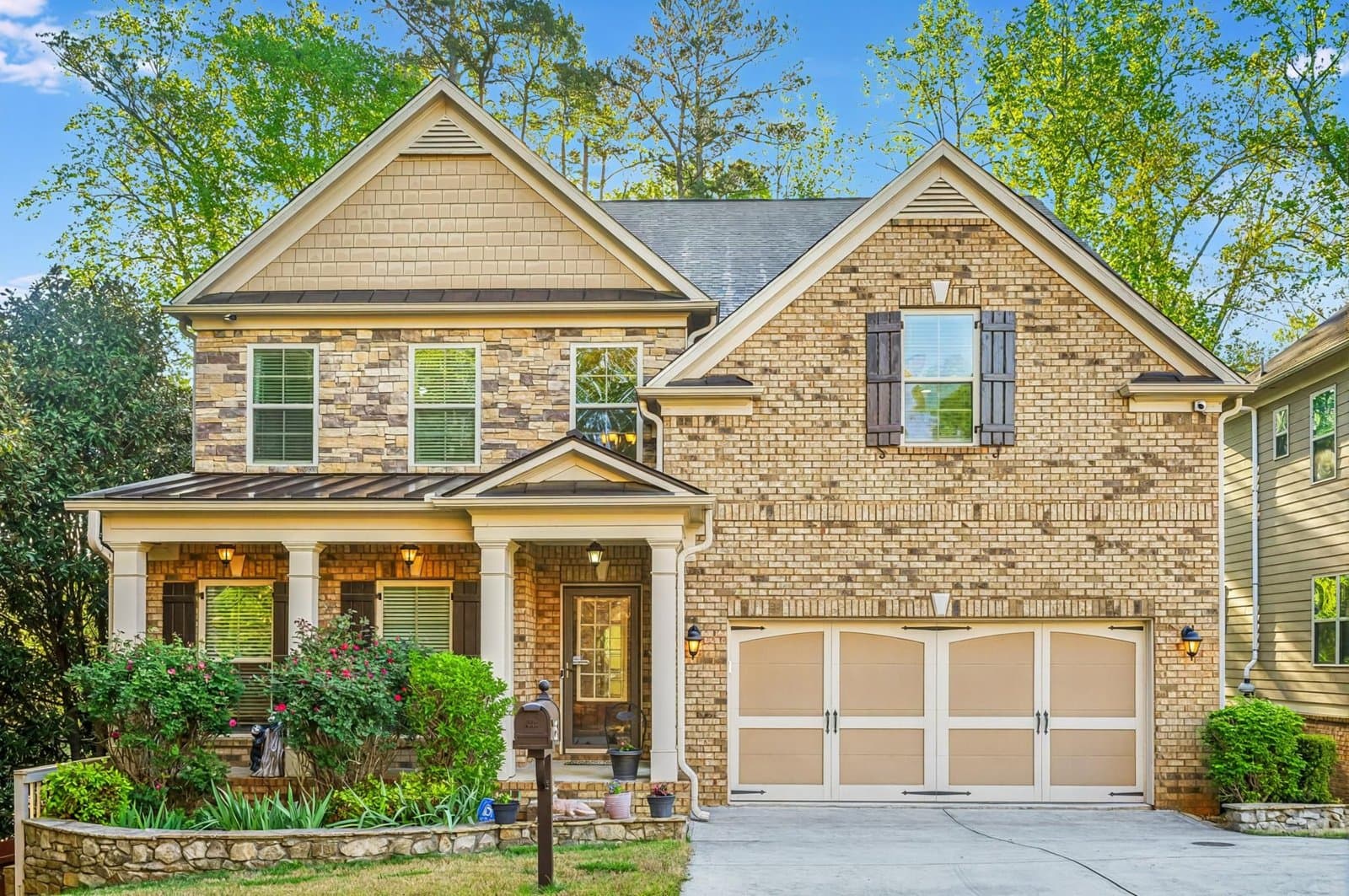

I walked through a house in East Cobb last spring: solid brick ranch, good bones, updated kitchen. The seller had already dropped the price twice in six weeks. Neighbors were watching. The listing had gone stale, and everyone in the market could smell it. By the time I got involved, we had to do some real work just to reset the narrative before we could get traction.
Here's what went wrong: the seller wanted to move fast, but their strategy was built around hope instead of data. They priced high, did minimal prep, and assumed the market would do the heavy lifting. It didn't. It never does.
If you're trying to sell your house in Atlanta fast, whether you're in Alpharetta, Decatur, Smyrna, or somewhere in between, this is the playbook I'd hand you before we ever put a sign in your yard.
Understanding the Atlanta Market Before You List
Let me give you the honest picture. The S&P CoreLogic Case-Shiller Atlanta Home Price Index sat at 249.8 as of April 2026 (source: FRED ATXRSA), compared to the national index at 332.68 for the same period (source: FRED CSUSHPINSA). Atlanta is still trading at a meaningful discount to the national baseline, which is actually a feature, not a bug, if you're a seller trying to attract buyers who've been priced out of other metros.
The 30-year fixed mortgage rate as of July 23, 2026 was 6.58% according to Freddie Mac's Primary Mortgage Market Survey via FRED (FRED MORTGAGE30US). That's not 2021. Buyers are more deliberate now. They're doing the math on monthly payments, and they're not going to overpay for a house that isn't dialed in. That means your pricing and presentation have to be sharper than they were three years ago.
Nationally, new single-family home sales were running at a seasonally adjusted annual rate of 628,000 units as of June 2026 (source: FRED HSN1F), with new housing starts at 1,427,000 units annualized for the same period (source: FRED HOUST). New construction is a real competitor in Metro Atlanta, especially in places like Forsyth County, Cherokee County, and the outer Gwinnett corridors where builders are still putting up inventory. If your resale home doesn't show better value than a new build down the road, buyers will walk toward that fresh drywall every time.
Why Atlanta Homes Sit — And How to Make Sure Yours Doesn't
I've framed hundreds of walls and poured footings in the Georgia heat. When I walk through a house, I'm not just looking at paint colors and staging. I'm reading the bones. And I can tell you from experience: most homes that sit on the market in Atlanta aren't sitting because of the market. They're sitting because of three fixable problems.
Problem 1: Mispriced from Day One
Overpricing is the single most common mistake I see from sellers who want to move fast but price slow. Here's the math: a house that's 5% overpriced doesn't just attract 5% fewer buyers. It might attract zero buyers in the right price bracket, because those buyers aren't even searching at your listing price. Meanwhile, the buyers who are searching at your price are comparing your house to homes that are genuinely worth that number, and yours loses every time.
In neighborhoods like Dunwoody, Sandy Springs, and Brookhaven, where the comps are tight and buyers are sharp, a $15,000 pricing error can cost you 30 days on market. And 30 days on market in a rate environment like this one costs you negotiating power, carrying costs, and sometimes the deal itself.
Problem 2: Deferred Maintenance That Buyers Can Smell
I'm not being poetic. Buyers walk in and they feel it: a soft spot in the floor near the water heater, a musty smell in the crawl space, HVAC that sounds like it's working too hard. These things don't just affect the inspection. They affect the emotional decision buyers make in the first 90 seconds of a showing.
In older neighborhoods like Candler Park, Kirkwood, or the historic sections of Marietta, deferred maintenance is expected to a degree, but it has to be priced in or addressed. I'd rather spend $3,000 on a pre-listing inspection and fix the obvious issues than hand a buyer a $12,000 negotiating club at the inspection table.
Problem 3: Presentation That Doesn't Match the Price
Professional photography is not optional. Virtual tours are not optional. If your listing photos were taken on an iPhone at 6 PM with the overhead lights on and a pile of mail on the kitchen counter, you've already lost buyers before they ever request a showing. In a market where buyers are rate-sensitive and deliberate, your online presence is your first showing. Treat it like one.
The Fast Sale Formula: What Actually Works in Metro Atlanta
When a seller tells me they need to sell fast, I don't panic and I don't start talking about cash investors as a first resort. I build a strategy. Here's what that looks like in practice.
Pre-Listing Preparation: The 30-Day Sprint
If you have 30 days before you need to list, use them. Here's where I'd focus the energy and the money:
- Pre-listing inspection: Know what's coming before the buyer's inspector does. Fix the easy stuff. Price in the hard stuff.
- Curb appeal: In Georgia, the exterior is everything. Fresh mulch, trimmed shrubs, pressure-washed driveway. In neighborhoods like Vinings or Smyrna, where buyers are driving the street before they ever call their agent, the exterior sells the showing.
- Declutter and depersonalize: I know you love your family photos and your collection of Falcons memorabilia. Buyers need to see themselves in the space. Box it up.
- Paint: Neutral doesn't mean boring. A clean, fresh coat of paint, especially on trim and doors, signals that a home has been cared for. It's one of the highest ROI moves you can make.
- Light: Open every blind. Replace every burned-out bulb. Add lamps to dark corners. Bright homes photograph better, show better, and sell faster. Period.
Pricing Strategy: The Competitive Window
The goal isn't to price low. The goal is to price at the intersection of market reality and buyer psychology. In most Metro Atlanta submarkets right now, that means pricing at or just below the top of your comp range, not above it. You want buyers to feel like they found something, not like they're being asked to overpay.
In high-demand areas like Johns Creek, Milton, or the Alpharetta tech corridor near GA-400, well-priced homes in good condition are still moving with multiple offers. But the keyword is well-priced. The days of listing $30,000 over comp and waiting for the market to catch up are largely behind us at current rate levels.
Days on Market: The Clock You Can't Ignore
In Metro Atlanta, the first 10-14 days on market are everything. That's when the most active, most motivated buyers are seeing your home. If you don't generate showing activity and offers in that window, the listing starts to age, and aged listings attract low-ball offers and skeptical buyers who assume something is wrong.
This is why I launch listings with a full marketing package: professional photography, Matterport 3D tour, targeted social media, MLS syndication, and direct outreach to active buyer's agents in the area. You get one first impression. Make it count.
Cash Offers, iBuyers, and the Trade-Off You Need to Understand
Let me be real with you about cash offers and iBuyer programs. They exist, they can close fast, and in some situations (estate sales, job relocations, homes that need significant work) they make sense. But they come at a cost.
Typical iBuyer and cash investor offers in Metro Atlanta run 5-15% below market value, sometimes more depending on the condition of the home and the neighborhood. On a $450,000 house, that's $22,500 to $67,500 you're leaving on the table for the convenience of speed and certainty.
If your timeline allows for even 30-45 days on market, a properly prepared and priced listing will almost always net you more money than a cash offer, even after commissions and closing costs. The math is usually not close.
That said, if you're in a situation where speed is the absolute priority (you're already under contract on another home, you're relocating for work, or the property has issues that would make a traditional sale complicated) then a cash offer deserves a serious look. Just go in with eyes open about what you're trading away.
Neighborhood-Specific Insights: Metro Atlanta Isn't One Market
This is the part that most generic real estate advice gets wrong. Metro Atlanta isn't one market. It's thirty markets wearing the same name tag.
A house in Buckhead sells differently than a house in Woodstock. A townhome in Midtown has a completely different buyer pool than a four-bedroom in Peachtree City. School district ratings, commute patterns, HOA structures, flood zones: these variables matter enormously and they shift neighborhood by neighborhood.
Here's a quick read on a few key submarkets:
- Cobb County (Marietta, Smyrna, Kennesaw): Strong demand from buyers who want proximity to the Battery and Truist Park without Buckhead prices. Inventory has been tight in the $350,000-$500,000 range. Well-prepped homes in good school districts (Pope, Wheeler, Walton clusters) still move quickly.
- North Fulton (Alpharetta, Milton, Roswell): Tech sector employment keeps demand steady. Buyers here are financially savvy and do their homework. Pricing has to be defensible. Homes near top-rated schools in the Fulton County system command real premiums.
- DeKalb County (Decatur, Tucker, Avondale Estates): Strong walkability scores, proximity to Emory and CDC employment, and a buyer demographic that values neighborhood character. Older homes need honest pricing that reflects condition, but location premiums are real and defensible.
- Gwinnett County (Duluth, Suwanee, Buford): Diverse buyer pool, strong school ratings in the Suwanee/North Gwinnett corridor, and significant new construction competition. Resale homes need to compete on value and condition.
- Cherokee County (Canton, Woodstock): One of the fastest-growing counties in Georgia. Buyer demand from Atlanta transplants looking for more space and lower price points. The Canton/Woodstock market has matured significantly. Don't assume you can underprice and spark a bidding war like you could in 2021.
Frequently Asked Questions: Selling Your House in Atlanta Fast
How long does it take to sell a house in Metro Atlanta right now?
It depends heavily on price point, condition, and location. A well-priced, well-prepared home in a strong submarket (North Fulton, East Cobb, Suwanee) can go under contract in under two weeks. Homes that are overpriced or need work can sit for 60-90 days or more. The honest answer is that your timeline is largely within your control based on the decisions you make before you list.
Should I make repairs before selling or sell as-is?
Almost always make the repairs — at least the ones that will show up on an inspection report and give buyers a reason to renegotiate. The exception is major structural or systems issues where the cost of repair exceeds what you'd recover in sale price. In those cases, price the home to reflect the condition and disclose everything. Transparency protects you legally and builds buyer trust.
What's the best time of year to sell a house in Atlanta?
Spring (March through May) is historically the strongest selling season in Metro Atlanta. Families want to close before the school year ends. The weather is good for showings and photography. But I've sold homes in every month of the year. A well-priced, well-presented home in October will outperform an overpriced, underprepared home in April every single time. Don't wait for a magic month. Get the fundamentals right.
Do I need to stage my home to sell it fast?
Full professional staging isn't always necessary, but it helps, especially in higher price points above $600,000 where buyers expect a polished presentation. At minimum, declutter aggressively, clean thoroughly, and make sure the furniture arrangement makes rooms feel spacious. If the home is vacant, staging is almost always worth the investment. Empty rooms photograph poorly and feel smaller than they are.
How do I know if I'm pricing my home correctly?
Look at closed sales, not active listings, within a half-mile radius in the last 90 days. Active listings tell you what sellers are hoping to get. Closed sales tell you what buyers actually paid. Adjust for square footage, condition, lot size, and upgrades. If you're not sure, get a Comparative Market Analysis from an agent who knows the specific submarket, not just Metro Atlanta broadly. Neighborhood-level data is what matters.
The Bottom Line: Speed Comes from Strategy, Not Luck
Selling your house fast in Atlanta isn't about catching a hot market or getting lucky with a motivated buyer. It's about making the right decisions before the sign goes in the yard: pricing with precision, preparing the home honestly, and marketing it like it deserves to be seen.
The sellers who move fast are the ones who do the work upfront. The ones who sit are the ones who skipped steps and hoped the market would cover for them. In a rate environment where buyers at 6.58% (Freddie Mac PMMS, July 23, 2026, via FRED) are running the numbers carefully on every offer, there's no room for sloppy execution.
I've spent 20+ years in Metro Atlanta: building homes, renovating them, and selling them. I know what buyers see when they walk through a door, because I've built what's behind that door. That perspective changes how I approach every listing.
If you want to talk through your specific situation, whether you're in Roswell or Riverdale, Buckhead or Buford, I'm around. No pitch, no pressure. Just a straight conversation about what your home is worth and what it would take to sell it on your timeline.
Reach out to Evan Beckett at becketthomes.org. Let's figure out the right move for you.
Thinking about a move?
Beckett Real Estate works the whole of Metro Atlanta. Tell me the address or the neighborhood and I will tell you what the house is really like, what the inspection usually finds, and what the number should be.
What is my home worth?See a cash offerSell for more with conciergeTalk to an agent nowMore articles like this