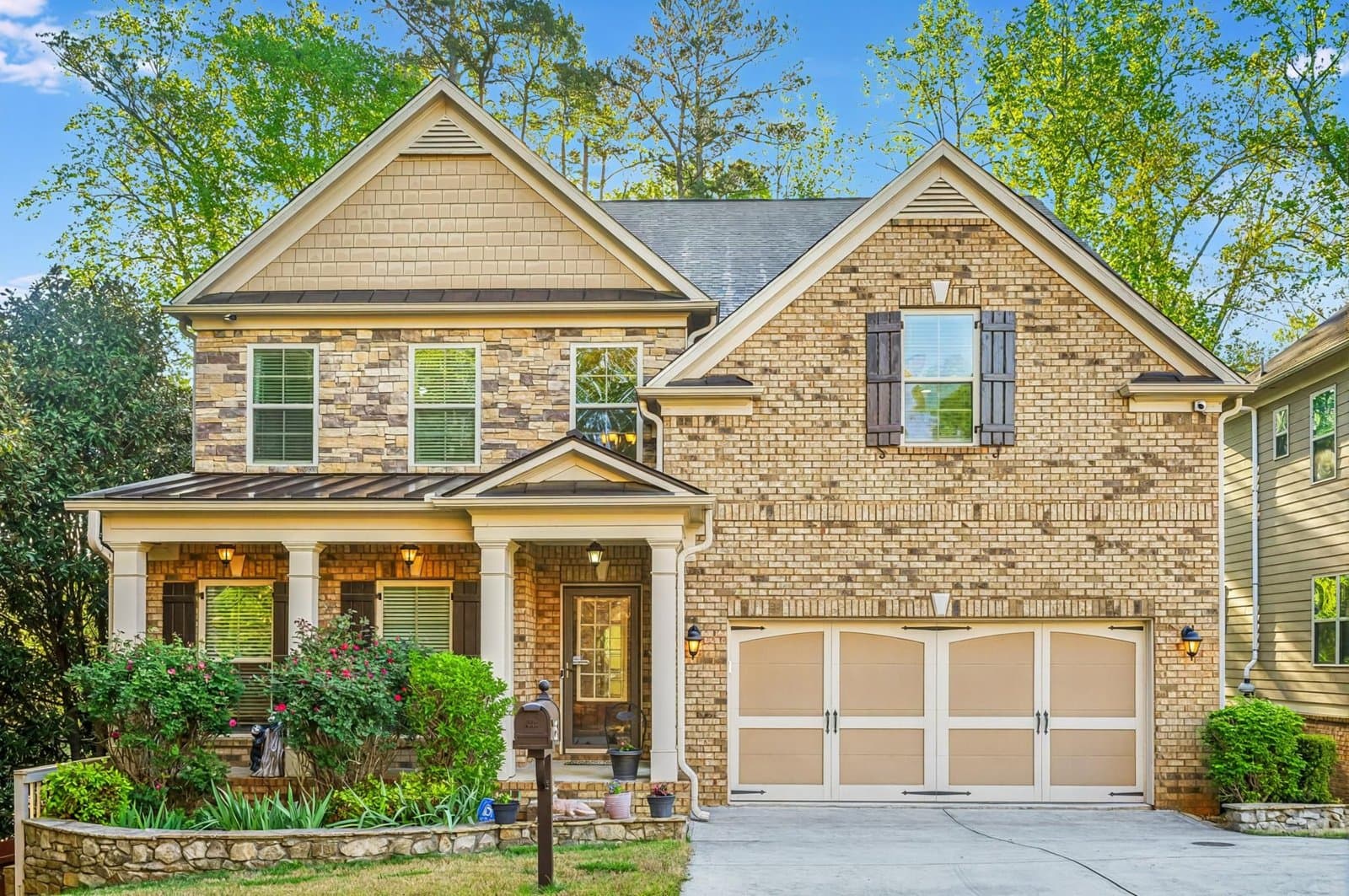

National construction headlines dropped this week, and the number getting the most airplay is a good one: housing starts surged 10.8% in March, both month over month and year over year. Single-family starts crossed 1 million units for the first time in over a year.
If you're sitting in Chicago, Los Angeles, or the New York metro trying to decide whether to pull the trigger on an Atlanta move, that headline probably feels like a green light.
Here's what it actually is, and what it isn't.
The Start Number Doesn't Tell You When You Can Move In
A housing start is a shovel in the ground. It is not a certificate of occupancy. It is not a move-in date. And it is definitely not an available listing.
The same Realtor.com report that celebrated the starts surge also showed completions down 12.8% year over year nationally. Permits, which tell you what's coming to market six to eighteen months from now, fell 10.8% month over month and 7.4% year over year.
So builders are starting projects they already had queued. They are not greenlit-ing new ones at the same pace. The pipeline is moving, but the spigot on future supply is tightening.
For a relocating buyer with a twelve-month horizon, those are different signals pointing in different directions, and collapsing them into 'construction is up' is the kind of mistake that costs you six months of waiting on inventory that isn't coming.

What This Looks Like on the Ground in Metro Atlanta
The Realtor.com report is explicit about where the permit pullback is concentrated: the South. Down 14% year over year. That is Atlanta's region.
Here is the translation.
Builders in Cherokee, Forsyth, and Hall counties, where Woodstock, Canton, Cumming, and Gainesville have been absorbing the bulk of Atlanta's northside new-construction volume, are reading the same economic headwinds everyone else is. Tariff-driven material cost pressure, land costs that never came back down, and labor that is still tight. Margins are thin. Permitting new phases when you are not sure what lumber costs in Q3 is a real business risk, not irrational caution.
On the southside (Coweta and Fayette, the Peachtree City, Newnan, and Senoia corridor), the dynamic is slightly different. These are more established markets with lower new-construction volume relative to northside, and resale inventory here is moving faster than most out-of-state buyers expect. You are not shopping a deep well of choices.
Henry County (McDonough, Stockbridge, Hampton) still has active builder communities, but the entry-level product that relocating buyers from high-cost metros find so striking is the product builders have the least margin to discount on right now.
The honest read: the March starts surge is builders working through pipelines they committed to before the current cost environment got worse. The permit pullback is their honest signal about what they believe the next twelve months look like.
The New Construction Inspection Problem Nobody Talks About
Here is something that is genuinely useful if you are considering new construction as part of your Atlanta relocation search.
I spent twenty years as a licensed contractor and project manager across commercial and residential builds: data centers, transit stations, office parks, ground-up residential. My job, specifically, was to walk alongside builders and subcontractors and verify that every system performed as designed before a building turned over. HVAC commissioning, electrical panel verification, plumbing rough and final, framing and insulation checks. That was the role.
New construction buyers in Atlanta are, almost universally, relying on the builder's own inspection process to protect them. Some builders run a tight quality gate. Some do not.
Three things I see missed on new construction walk-throughs that a standard home inspection often does not catch:
One. HVAC duct leakage. Ducts in unconditioned attic space with poor sealing at joints bleed conditioned air before it reaches your rooms. Your energy bills will tell you eventually. A duct pressure test or a thermal camera pass before closing tells you now.
Two. Electrical panel labeling versus actual circuit mapping. The label says 'master bedroom.' The breaker may also serve the bonus room and a bathroom. Matters when you are figuring out load capacity for a home office setup.
Three. Grading slope away from foundation. Builders grade on completion day. Settling changes that profile over the first year. Walk the perimeter after a hard rain before you close if you can, or have someone who knows what to look for walk it for you.
None of these are dealbreakers on their own. All of them are negotiating points or warranty claims if you know about them before you sign.

The Relocating Buyer's Actual Decision Framework Right Now
If you are planning a move to Metro Atlanta in the next six to eighteen months, here is what the March construction data actually tells you to do:
Do not wait on new construction inventory to loosen. Permit pullbacks now mean tighter supply in that window. If you are targeting a specific community or submarket, the queue is not getting shorter.
Resale is competitive across most southside and eastside submarkets. Cherokee and Forsyth northside still have more inventory headroom, but that spread is narrowing.
New construction is available now in specific Henry, Gwinnett, and Paulding communities, but the builder incentives that relocating buyers from California and Illinois heard about in 2022 and 2023 are largely gone. Rate buydowns exist on some communities. Free upgrades on standing inventory exist. Sweeping concessions on custom builds do not.
Build time is still running twelve to eighteen months on true ground-up contracts in most Atlanta-area communities. If you need to be in a home by a specific school year or job start date, that timeline has to be part of the conversation before you sign a build contract.
Full transparency: the national headline is not your timeline. Your timeline, your target submarket, your price band, and your build-versus-resale preference are variables the national data cannot resolve for you.
Send the address or the community name you are looking at. Beckett Real Estate will tell you what the inventory reality is in that specific submarket and whether the builder's timeline is realistic based on current permit and completion patterns, not what the brochure says.
Looking in Woodstock?
Beckett Real Estate works Woodstock end-to-end: active listings, off-market opportunities, and the construction-trained walk-through that tells you what the price reflects vs. what it papers over.
Browse Woodstock listings → · Schedule a tour with Beckett Real Estate
Thinking about a move?
Beckett Real Estate works the whole of Metro Atlanta. Tell me the address or the neighborhood and I will tell you what the house is really like, what the inspection usually finds, and what the number should be.
See homes for saleTalk to an agent nowMore articles like this