
The Tsunami They Promised Is Real — It's Just Arriving Late
For the better part of a decade, housing economists have been warning about a coming wave of inventory. Baby Boomers aging out of their homes, downsizing, moving into assisted living, or passing property to heirs. The narrative was compelling: tens of millions of homes, mostly paid off, mostly in established neighborhoods, hitting the market over a compressed window. Supply shock incoming.
It didn't show up on the timeline everyone expected. Boomers held. Low rates in 2020 and 2021 let them lock in cheap money on refinances. Equity gains made selling feel optional. The 'tsunami' became a running joke in analyst circles, always five years away.
Now the data is moving. Slowly, unevenly, but it's moving. And if you're a buyer, a seller, or an investor in Metro Atlanta right now, understanding the mechanics of this shift matters more than the headline.

What This Actually Looks Like in Metro Atlanta
Here's what the national narrative misses: the Boomer wave doesn't hit all markets the same way. It's hyperlocal by nature, because it follows where Boomers actually live.
In Metro Atlanta, that means a few specific pockets worth watching:
Southside — Fayette, Coweta, Henry, Spalding counties. These were build-out markets in the 1980s and early 1990s. Peachtree City, Fayetteville, Newnan: these were aspirational suburbs when Boomers were in their 40s raising families. Now those same buyers are in their late 60s and 70s. The homes are paid off. The kids are gone. The question isn't if these will come to market. It's when, and at what condition.
That last part is where the construction background matters.
I've walked hundreds of homes in Fayette and Coweta that were built between 1985 and 1998. I know what those building systems look like at 30-plus years old, because I installed versions of them and later inspected them on commercial and residential projects across that exact vintage. Original HVAC: likely original ductwork, possibly original air handler. Roofs that were replaced once in the 2000s and are now back on the clock. Electrical panels that were code-compliant then and are now showing their age in load capacity and breaker behavior.
A home that's been owner-occupied by a retiree for 35 years isn't necessarily well-maintained. It might be immaculate cosmetically and mechanically deferred in every system that costs real money to fix. That's the gap between what the listing photos show and what a construction-trained walk-through surfaces.
Northside OTP: Cherokee, Forsyth, Cobb. Similar story, slightly different vintage. Woodstock and Canton saw heavy Boomer move-in through the mid-to-late 1990s. Canton alone has neighborhoods built almost entirely in a five-year window, and those windows are now showing up in county permit data as replacement permit activity. Roof permits, HVAC permits, deck replacement. The houses are aging and the owners are making selective decisions about what to fix and what to leave for the next buyer.
ITP: Older Decatur, Tucker, portions of Brookhaven. Different dynamic. These are homes built 1950s through 1970s. Original knob-and-tube electrical in some pockets. Cast-iron drain lines. Older crawl spaces. Boomers who bought these in the 1980s and 1990s as young adults are now in full retirement. This segment tends to sell into investor/rehab demand rather than retail buyer demand, which creates a specific deal profile worth understanding.
The Deal Angle Nobody Is Talking About
Here's the real question for investors and savvy buyers: does incoming Boomer supply represent opportunity or risk?
Both. And the split is entirely about building systems.
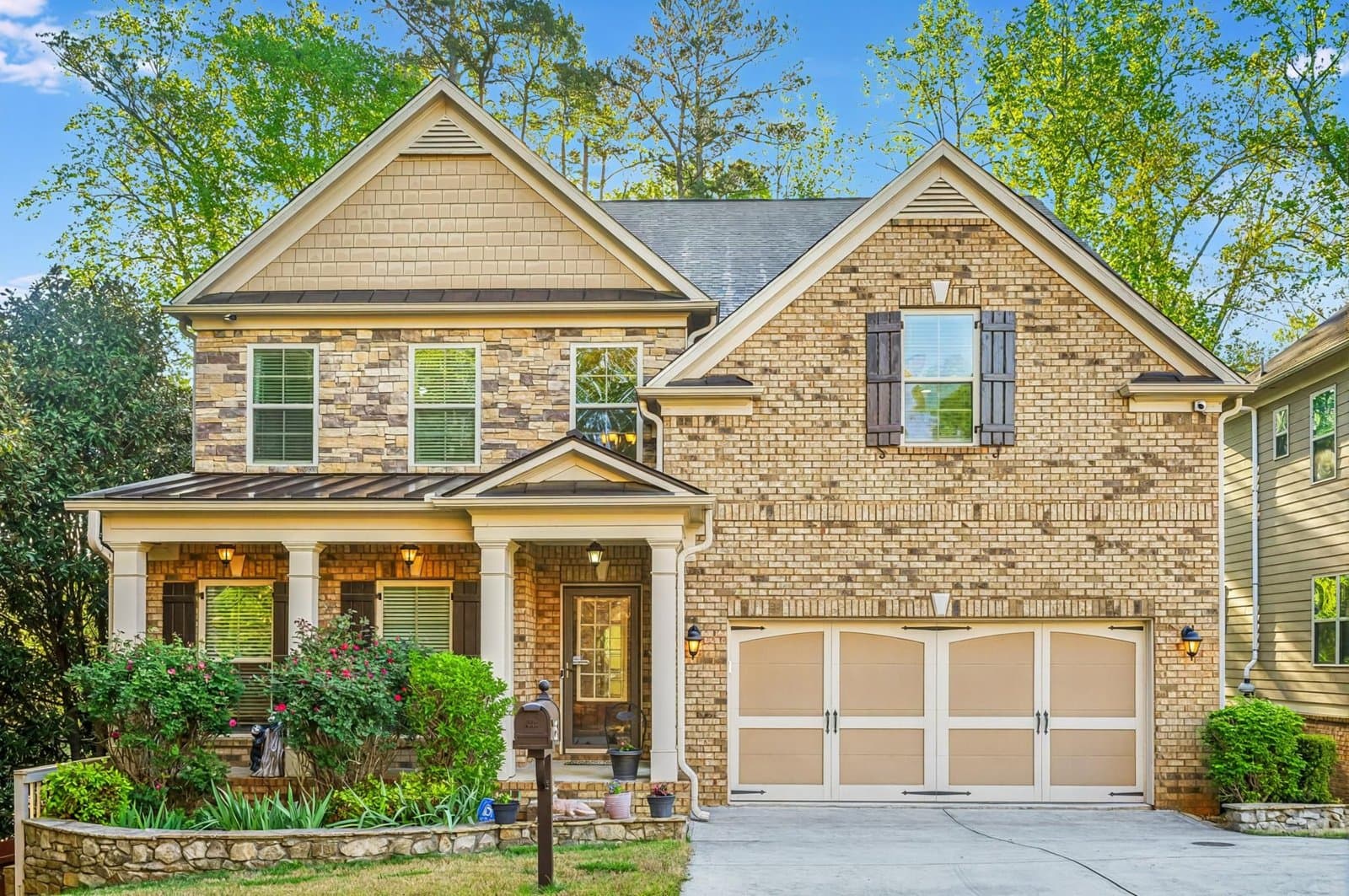
A home that's cosmetically dated but mechanically sound is a deal. You're buying something an owner occupied and cared for over decades: deferred aesthetic updates, but a roof that's got 12 years left, an HVAC that was replaced in 2019, a crawl space that's dry and well-ventilated. The price might reflect 'dated kitchen' and miss the fact that the bones are clean. That's where a construction-trained buyer's agent earns the commission, because most agents look at the kitchen and miss the mechanical room.
A home that's cosmetically updated by a seller preparing to list (fresh paint, new countertops, fixtures swapped) but is sitting on a 2004 roof, a 20-year-old HVAC running on borrowed time, and a panel that trips under load? That's the trap. The update budget went to what photographs well, not what matters. The listing photos look great. The building systems tell a different story.
As Boomer supply increases over the next three to five years in Metro Atlanta, both profiles will hit the market in volume. The buyers who understand which is which will build equity. The ones who buy on curb appeal and staging will get a different kind of surprise.

How to Read the Market Right Now
A few things worth tracking if you're active in Metro Atlanta:
FMLS DOM trends by zip. If days-on-market is climbing in specific Boomer-heavy zip codes, it's early signal that seller pricing expectations haven't adjusted to the new inventory reality. That's negotiating leverage for buyers.
Permit activity in the target county. Coweta, Fayette, Cherokee, and Forsyth county permit offices publish replacement permit data. A spike in HVAC and roof permits in a specific subdivision is a tell: owners preparing to sell, and the ones who didn't pull permits are the ones worth watching.
Estate sales and trust sales. These are accelerating. An estate sale is, almost by definition, a motivated seller with no emotional attachment to the price. It's also often a home that hasn't been actively maintained in the final years of ownership. Price accordingly and negotiate on condition.
The hold-back effect is real. Rate lock-in hasn't disappeared. Boomers who refinanced at 2.75% in 2021 are not enthusiastic about giving that up. The wave comes in the form of death, health transitions, and family circumstance, not voluntary listings. That means the supply shows up unevenly and often without the preparation a voluntary sale gets. More condition variance. More negotiating room.
Full transparency: this is not a crash call. It's not a 'buy now before the supply hits' call either. It's a read on where the market is structurally moving and what it means for how deals get evaluated, which is a different conversation than what most agents are having.
Send the address. Beckett Real Estate would need eyes on it to give a professional opinion on value, structure, and building system stability, but that's exactly the kind of read that separates the deals from the traps in this market.
Looking in Peachtree City?
Beckett Real Estate works Peachtree City end-to-end: active listings, off-market opportunities, and the construction-trained walk-through that tells you what the price reflects vs. what it papers over.
Browse Peachtree City listings → · Schedule a tour with Beckett Real Estate
Thinking about a move?
Beckett Real Estate works the whole of Metro Atlanta. Tell me the address or the neighborhood and I will tell you what the house is really like, what the inspection usually finds, and what the number should be.
See homes for saleTalk to an agent nowMore articles like this