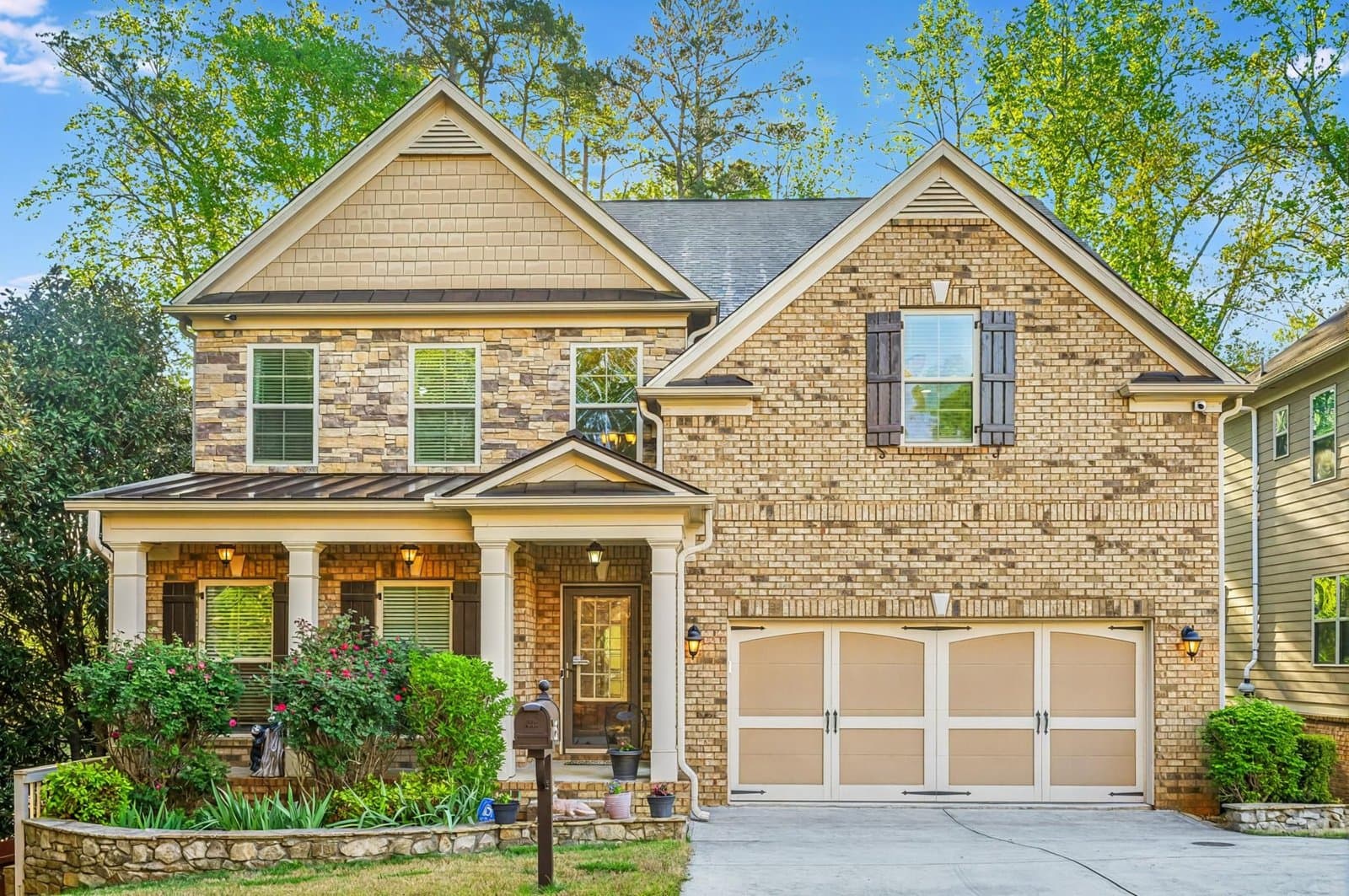

Most people walk a property and see the lawn. I walk a property and read it.
Weeds are not a landscaping problem. They are a diagnostic report the yard is printing in real time, and if you know how to read it, you know things about the soil, drainage, and site preparation that no listing photo will ever show you.
Here is what 20 years across construction sites taught me about the ground before the foundation goes in.
The Weed Species Tells You What the Soil Is Doing
This is not garden trivia. This is site-condition intelligence.
Crabgrass dominates compacted, thin, drought-stressed soil. If you are walking a property in Newnan or McDonough and the lawn is 40 percent crabgrass, that yard has been neglected for years, and neglected yards in Georgia's clay-heavy subsoil compact fast. Compacted soil sheds water instead of absorbing it. Shed water finds the path of least resistance, which is often toward the foundation.
Nutgrass (nutsedge, technically) is a wet-soil indicator. See it clustered near a corner of the house or running in a diagonal stripe across the yard? That stripe is following water. It is telling you where subsurface water is moving. On a project I managed in Fayette County years back, we had nutsedge running straight toward a crawlspace wall that the seller had freshly painted. Pulled back the insulation: the rim joist was soft. The stripe did not lie.
Broadleaf weeds like plantain and clover thrive in low-nitrogen, compacted soil. That is useful data if you are evaluating whether the previous owner maintained this property, or just kept it mowed enough to pass a visual inspection.

None of this means walk away from the property. It means know what you are buying.
Site Prep and Drainage: What Gets Buried and Forgotten
In ground-up construction — and I have run this process from data centers in Alpharetta to residential builds in Coweta County — the earthwork and grading phase is where the long-term site drainage story gets written. Get it wrong at grading, and you spend the next 30 years managing the consequences.
The problem with resale homes is that the grading story happened before anyone currently involved was watching. I cannot pull the civil drawings on a 1987 Peachtree City ranch. I cannot call the grading sub. What I can do is read the current evidence, and weeds are part of that evidence.
Specific things I look for when I walk a resale lot:
Positive grade away from foundation. The ground should fall away from the house at minimum six inches over the first ten feet. If I see standing weed clusters right at the foundation line, especially after recent rain, the grade has either settled or was never set correctly.
Downspout termination points. Where are the gutters dumping? If a downspout terminates four inches from the foundation and there is a patch of nutsedge or moss at that exact spot, the water has been pooling there for years. That is not a landscaping issue. That is a moisture-intrusion risk that is actively working on the framing and the crawlspace.
Low spots in the turf. Settlement creates low spots. Low spots pool. Pooling feeds the weed species that like wet feet. A diagonal line of wet-soil weeds from the back corner of the yard toward the house is worth tracing all the way to its origin.
I have walked properties in Senoia, in Stockbridge, in east Cobb where the sellers had fresh sod down and the landscaping looked immaculate. Pull the downspout splash block back and there is standing water in the trench. The sod was installed last month. The drainage problem was installed 20 years ago.
The Pre-Emergent Window: Why This Matters to a Buyer's Timeline
Family Handyman had a piece this week on early spring weed prevention — timing your pre-emergent herbicide before soil temperatures hit 55 degrees, before crabgrass germinates. Good practical advice for homeowners.
Here is the angle they did not cover: the pre-emergent window is also the ideal time to read a yard's drainage behavior before spring growth covers the evidence.
In metro Atlanta, soil temperatures cross that 55-degree threshold somewhere between late February and mid-March depending on the subregion. Before that window closes (before the crabgrass fills in and the nutsedge gets mowed down and the yard looks 'fine') is when a trained set of eyes can see the water migration patterns most clearly.
If you are under contract on a property right now, or evaluating one, and there has been any rain in the last two weeks: walk the yard. Look at what is growing where. Look at where the soil is still saturated and where it has dried out. Look at the grade relative to the foundation. That information is free, it is available right now, and it will not be as legible in June when everything is green and the irrigation system is running.

This is not about whether to buy. It is about whether the price reflects the condition, or whether the spring landscaping is doing cosmetic work that a wet January already exposed.
What a Construction-Trained Walkthrough Actually Catches
Most buyer's agents are looking at finishes. Countertops, paint color, staging furniture. That is not a criticism. It is what most of the job is.
Beckett Real Estate approaches a walkthrough the way I approached a quality gate inspection on a commercial project: systematically, starting from the site and working inward. Lot drainage. Foundation grade. Crawlspace or slab condition. Roof penetrations. Then the five critical building systems: HVAC, electrical, plumbing, framing, envelope.
Weeds are part of that first layer. They are not the whole story, but they are part of the story the property is telling, and the property does not lie.
Send the address. A construction-trained walk-through is what tells you whether the price reflects the condition or papers over it.
Looking in Newnan?
Beckett Real Estate works Newnan end-to-end: active listings, off-market opportunities, and the construction-trained walk-through that tells you what the price reflects vs. what it papers over.
Browse Newnan listings → · Schedule a tour with Beckett Real Estate
Thinking about a move?
Beckett Real Estate works the whole of Metro Atlanta. Tell me the address or the neighborhood and I will tell you what the house is really like, what the inspection usually finds, and what the number should be.
See homes for saleTalk to an agent nowMore articles like this