
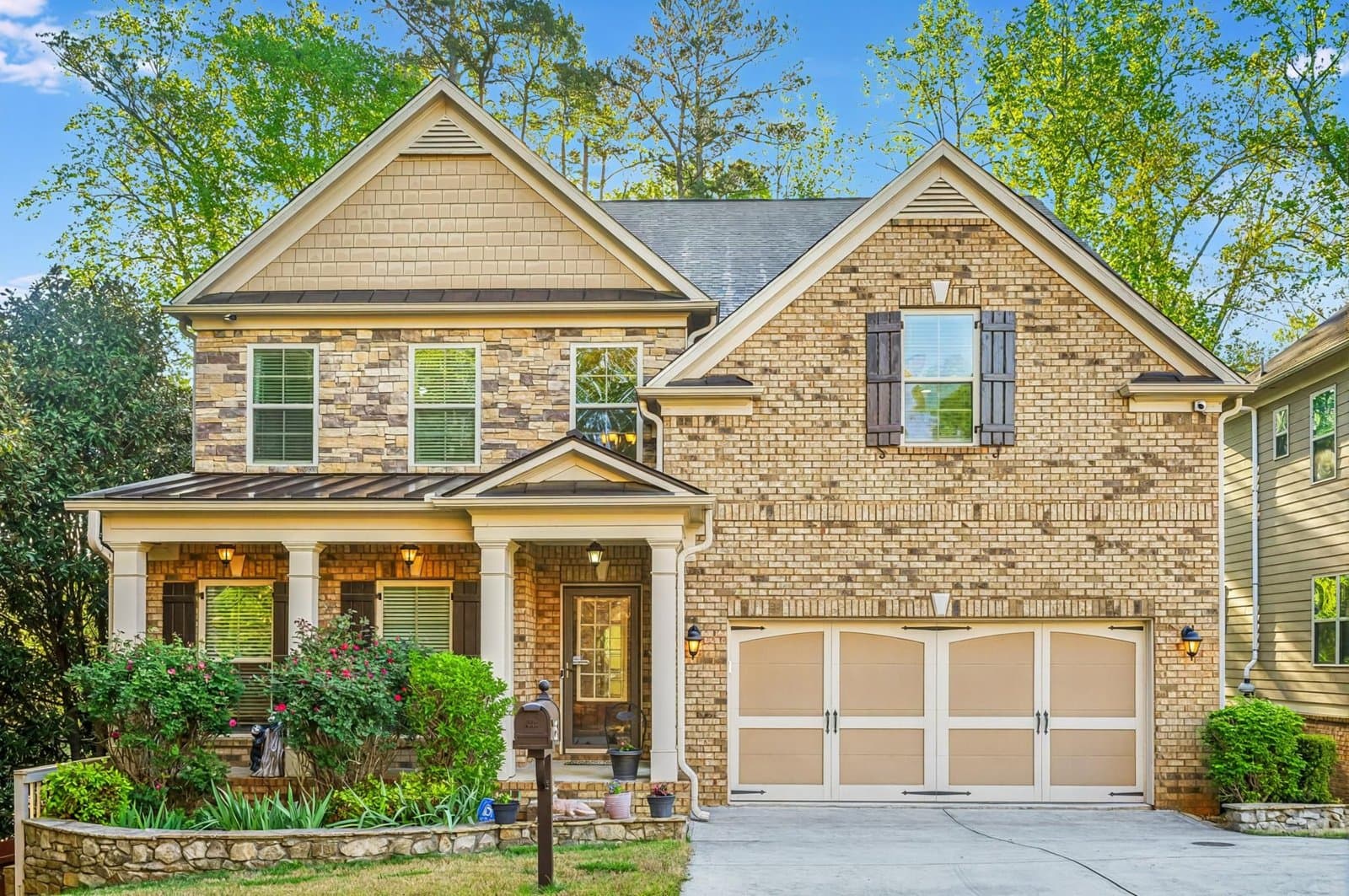
The Walkthrough That Made Me Rethink the Question
Last spring I walked a 1970s ranch in Chamblee with a client who'd flown in from Charlotte with a spreadsheet full of cap rates. He asked me the question I get more than any other: 'Evan, just tell me — which is the best city to invest in real estate around here?' I stood in that kitchen, ran my hand along a soffit that told me the HVAC had been re-routed twice, and gave him the answer nobody wants at first: there isn't one city. There's a right city for what you're trying to do, with your money, on your timeline. That's not a dodge. That's twenty years of pulling permits and closing deals talking.
Metro Atlanta isn't one market. It's fifteen markets wearing the same zip code prefix. Cobb County plays a different game than Henry County. Decatur doesn't move like McDonough. If you ask 'which is the best city to invest in real estate' like it's a single trophy sitting on a shelf, you'll miss the fact that the real answer depends on whether you want cash flow, appreciation, or a house you can flip in eight months without losing your mind.
Which Is the Best City to Invest in Real Estate? It Depends on the Play You're Running
Here's the framework I use with every investor who sits across from me at Beckett Homes. The is the question underneath the question: what's your exit? Are you renting this out for fifteen years, or are you renovating and reselling by next spring? Those are two different Metro Atlanta maps.
Marietta and East Cobb: Stability with Room to Grow
Marietta gives you what I call 'boring good' — top-rated school zones, established neighborhoods like Indian Hills and Kensington Farms, and a buyer pool that never dries up because families want in for the schools and stay for the trees. Cobb County's proximity to the Battery, I-75, and the job base along the Cumberland corridor keeps rental demand steady. If you want a property you can hold for a decade without sweating vacancy, this is where I point long-term buy-and-hold investors first.
Decatur and Avondale Estates: Small Footprint, Big Demand
Decatur is tight — inventory-starved in the way that keeps values firm even when the broader market cools. Bungalows near the Square, or anything walkable to MARTA's East Line, rent fast and appreciate steadily because you simply cannot build more Decatur. That scarcity is the investment thesis. It's not a cash-flow market on day one, but it's one of the safest appreciation plays inside the perimeter.
McDonough and Henry County: Where the Cash Flow Lives
If yield is the priority, I'm sending people south to McDonough. Land costs less, new construction is still moving, and rent-to-price ratios are healthier than almost anywhere closer to the city. Henry County has absorbed a wave of logistics and distribution jobs, and rooftops have followed. This is where I tell investors: don't chase the address everyone's talking about at the cocktail party — chase the numbers that actually cash flow.
Woodstock and Cherokee County: The Growth Corridor
Woodstock has done something a lot of towns talk about and few pull off — it built a real downtown, added trails, and kept adding rooftops without losing its identity. Cherokee County's growth along GA-92 and Towne Lake means new subdivisions are still absorbing well, and resale in established neighborhoods like Eagle Watch holds value because the school ratings back it up. For investors thinking five-to-ten-year appreciation with a hedge against overbuilding, Woodstock is worth a hard look.
Grant Park and Southeast Atlanta: The Renovation Play
Inside the city, Grant Park and the surrounding historic pockets are where I send clients who want to add value with their own hands — or mine, frankly, since I've framed more than a few of these additions myself. Bungalow bones, proximity to the Beltline, and a buyer who'll pay a premium for a well-executed renovation. This isn't passive investing. This is 'know your contractor and know your permits' investing.
What the Actual Data Says Right Now
I don't do hype, up or down. Here's where things stand, straight from the Federal Reserve's economic data as of the most recent readings available.
- The 30-year fixed mortgage rate averaged 6.71% as of September 3, 2026, according to Freddie Mac's Primary Mortgage Market Survey via FRED (series MORTGAGE30US). That's a real cost of capital every investor needs to underwrite honestly — it is not a rate anyone is being offered here, just the market benchmark.
- The S&P CoreLogic Case-Shiller Atlanta Home Price Index sits at 249.84 (seasonally adjusted, Jan 2000 = 100) as of May 2026, per FRED series ATXRSA. Compare that to the national index at 336.66 for June 2026 (FRED series CSUSHPINSA), and you can see Atlanta is running meaningfully below the national benchmark on this indexed basis — a data point worth sitting with if you're weighing long-term appreciation potential here versus other major metros.
- New single-family home sales nationally were running at a seasonally adjusted annual rate of 607,000 units as of July 2026 (FRED series HSN1F), while national housing starts were at 1,239,000 units for that same month (FRED series HOUST). Supply is still moving — this isn't a frozen market.
- Unemployment nationally stood at 4.1% as of August 2026 (FRED series UNRATE), which matters more to real estate investors than people realize — job stability underpins rent payment reliability and buyer confidence alike.
None of these numbers, on their own, tell you which Metro Atlanta city wins. But together they tell you the cost of borrowing is real, the national price index still runs ahead of Atlanta's, and the broader housing engine — starts, sales, jobs — is still turning. That's the backdrop every investment decision here gets made against.
The Construction Angle Nobody's Telling You
Here's what twenty years of building homes taught me that most agents can't: the neighborhood matters, but the house matters just as much, and most investors get that backwards. I've walked properties in 'hot' zip codes with foundation issues that would eat five years of appreciation in repair costs. I've also found underpriced gems in overlooked pockets of Stone Mountain and Lithonia because the bones were right — proper flashing, a roof with life left in it, a slab that hadn't shifted.
When I walk a property for an investor, I'm not just running comps. I'm checking the pitch of the roofline for water pooling, looking at how additions tie into the original framing, checking whether the electrical panel's been updated or if it's original 1980s aluminum wiring that's going to scare off every conventional lender's inspector down the line. That's the difference between an investment that performs and one that eats your returns in surprise repairs. Which is the best city to invest in real estate matters less, some months, than which is the best house on that street — the one with a roof that isn't lying to you.
Mistakes Investors Make Chasing 'The Best City'
I've watched smart people lose money chasing a headline instead of a strategy. A few patterns I see over and over:
- Buying the story instead of the numbers. Everyone's heard Woodstock or Alpharetta is 'hot.' Hot doesn't mean the rent-to-price ratio works for your goals. Run your own numbers before you run with the crowd.
- Ignoring school district turnover. Rezoning happens. A great elementary school rating today doesn't guarantee the district lines in five years. I track this closely for clients because it moves resale value more than people expect.
- Underestimating renovation costs because of a TV show. A kitchen remodel in Grant Park doesn't cost what it costs on cable. I've built enough of them to tell you where the real money goes — usually behind the walls, not on the countertops.
- Treating Metro Atlanta as one market. I said it at the top and I'll say it again: Cobb, DeKalb, Henry, Cherokee, Fulton, Gwinnett — these counties have different tax structures, different permitting timelines, different tenant pools. Know the county you're buying in, not just the city name.
So — Which Is the Best City to Invest in Real Estate in Metro Atlanta?
If you want my honest, no-spin answer after twenty years doing this: for cash flow, look hard at McDonough and Henry County. For safe, scarcity-driven appreciation, Decatur is tough to beat. For growth with an established identity, Woodstock. For a renovation play where sweat equity actually pays off, Grant Park and the surrounding Southeast Atlanta pockets. And for the investor who just wants to sleep at night, Marietta and East Cobb rarely disappoint.
The best city is the one that matches your capital, your timeline, and your tolerance for hands-on work. Anyone who gives you a single-word answer to 'which is the best city to invest in real estate' without asking you three questions first isn't doing their job.
Frequently Asked Questions
Which is the best city to invest in real estate in Metro Atlanta right now?
There isn't one universal answer — it depends on your strategy. McDonough and Henry County tend to offer stronger cash flow, Decatur offers scarcity-driven appreciation, and Woodstock offers steady growth with an established downtown. The right city depends on whether you're after yield, appreciation, or a renovation project.
Is Metro Atlanta still a good market for real estate investors?
Housing starts and new home sales nationally are still moving, per FRED data (1,239,000 units annualized for starts and 607,000 for new single-family sales as of July 2026), and the Atlanta Case-Shiller index (249.84, May 2026) runs below the national index (336.66, June 2026) — suggesting there may still be room relative to national price levels. It's not a market to chase headlines in, but it's actively turning.
How does the current mortgage rate affect real estate investment decisions in Atlanta?
The 30-year fixed mortgage rate averaged 6.71% as of September 3, 2026 (Freddie Mac PMMS via FRED). That's a real cost of capital every investor should underwrite into their return projections — it directly affects cash flow math on any financed purchase, regardless of which city you're buying in.
Should I focus more on the neighborhood or the condition of the house when investing?
Both matter, but the house's actual construction — roof condition, foundation, electrical, how additions were tied into original framing — can make or break your returns just as much as the zip code. A great location with a house full of hidden repair costs isn't a great investment.
What's the biggest mistake investors make when picking a city to invest in?
Buying the story instead of running their own numbers. A neighborhood being 'hot' doesn't guarantee the rent-to-price ratio or appreciation timeline fits your specific investment goals.
Let's Walk the Numbers Together
I've built homes with my hands and closed deals with my head, and I use both when I'm walking a property for an investor. If you're trying to figure out which is the best city to invest in real estate for your specific goals — cash flow, appreciation, or a renovation play — I'm not going to give you a generic answer off a spreadsheet. I'm going to walk the property, know the county, and tell you the truth about what you're buying. If you want to talk through this, I'm around.
Thinking about a move in Woodstock?
Beckett Real Estate works the whole of Metro Atlanta. Tell me the address or the neighborhood and I will tell you what the house is really like, what the inspection usually finds, and what the number should be.
See investor deals in WoodstockBrowse Woodstock listingsTalk to an agent nowMore articles like this