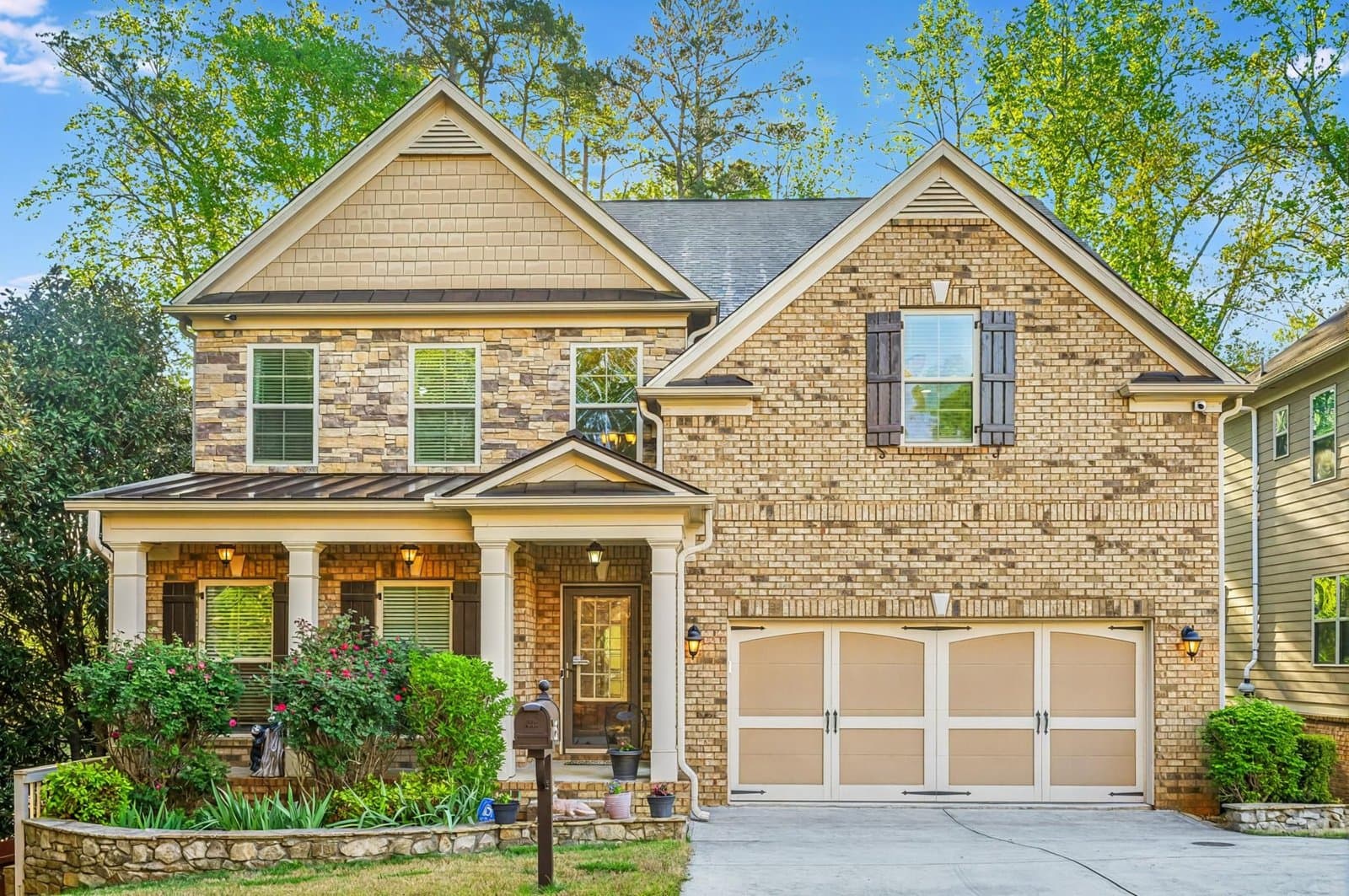

What I Saw on a Walkthrough in Alpharetta Last Spring
I was doing a pre-listing walkthrough on a beautiful four-bedroom in Alpharetta — solid construction, good bones, nice lot backing up to a creek. The sellers were a couple in their early forties. Both worked remotely. Two kids in middle school. They'd been in Atlanta for eleven years. And they were leaving for Greenville, South Carolina.
I asked them straight: why? Not to talk them out of it. I genuinely wanted to know.
The wife looked at me and said, "Evan, I love Atlanta. But I feel like I'm paying Atlanta prices for a suburban life I could have somewhere else for a lot less."
That sentence has stayed with me. Because she wasn't wrong. And she wasn't alone. People are absolutely moving out of Atlanta, but the reasons are more nuanced than the headlines suggest. Let me break it down for you the way I'd explain it sitting across a kitchen table.
Why Are People Moving Out of Atlanta? The Honest Breakdown
First, let's be clear about something: Atlanta is still growing. The metro area continues to attract corporate relocations, young professionals, and transplants from the Northeast and West Coast. But there's a real and measurable counter-current: a group of residents, many of them long-timers, who are packing up and heading out. Understanding why matters whether you're staying, selling, or trying to figure out your next move.
The Cost of Living Has Caught Up With Atlanta
Atlanta used to be the open secret of the South. Affordable housing, no state income tax on Social Security, warm weather, world-class airport, and a booming job market. That reputation made Atlanta a magnet for two decades. But that magnet worked so well it created its own problem.
The S&P CoreLogic Case-Shiller Atlanta Home Price Index sits at 249.84 as of May 2026 (source: FRED ATXRSA, observation date 2026-05-01). For context, that index started at 100 back in January 2000. Prices have more than doubled in a generation. And while the national index (335.1 as of May 2026, source: FRED CSUSHPINSA) is higher, the gap between Atlanta and the national average has narrowed significantly over the past several years.
What that means practically: the people who moved to Atlanta from New York or Los Angeles to escape high costs are now looking at home prices in Buckhead, Decatur, and East Cobb and doing a different kind of math. Some of them are running that math toward Chattanooga, Greenville, Huntsville, or even smaller Georgia cities like Rome and Cartersville.
And with the 30-year fixed mortgage rate averaging 6.65% as of August 20, 2026 (source: FRED MORTGAGE30US, Freddie Mac PMMS) (that's a market rate, not a quote), the monthly payment on a $500,000 home is a very different conversation than it was in 2020. People are doing the math and some of them don't like the answer.
Property Taxes Are a Growing Pain Point
Georgia has a homestead exemption, but it doesn't keep pace with rapid appreciation. Fulton County, Gwinnett, and Cobb County homeowners have seen their assessed values climb steeply. When your property tax bill jumps $2,000 to $4,000 in a single year, that's real money, especially for retirees on fixed incomes or families already stretched by mortgage payments. This is one of the quieter drivers of outmigration that doesn't get enough attention.
Traffic: Atlanta's Oldest, Most Stubborn Problem
I've been doing this for over twenty years. Traffic was bad when I started. It's worse now. And the remote work revolution that was supposed to fix it? It helped, for a while. But as more companies have called workers back, the I-285 parking lot is back in business.
The stretch of I-75/85 through downtown, the I-20 interchange, the connector between Marietta and Midtown, these aren't just inconvenient. They're life-consuming. A commute from Woodstock to Midtown can run 90 minutes each way on a bad day. That's three hours of your life, five days a week.
People who discovered during the pandemic that they could do their job from anywhere started asking a logical question: if I'm going to sit in traffic, why not do it in a smaller city where the traffic lasts 20 minutes instead of 90? That question has sent a steady stream of families toward secondary markets in Tennessee, the Carolinas, and North Georgia.
The Remote Work Recalibration
Remote and hybrid work didn't eliminate Atlanta's traffic problem — it just gave people the option to move away from it entirely. The families who relocated to Dawsonville, Blue Ridge, or Canton during 2020-2022 and discovered they loved the pace of life there? Many of them stayed. And they told their friends. That word-of-mouth has legs.
Schools: The Conversation Nobody Wants to Have Publicly
Let me be real with you. School quality is one of the top three drivers of residential real estate decisions in Metro Atlanta, and it's also one of the most complicated conversations to have publicly. But if I'm going to be useful to you, I have to go there.
The Atlanta metro has extraordinary school districts: Cherokee County, parts of Forsyth County, and certain pockets of Cobb County routinely produce schools rated 8, 9, and 10 on GreatSchools. Alpharetta, Milton, and Johns Creek have built entire real estate ecosystems around school quality. Families move to these zip codes specifically for the schools, and they pay a premium to do it.
But not all of Metro Atlanta is created equal. Atlanta Public Schools, parts of Clayton County, and some DeKalb County schools struggle with ratings, funding, and overcrowding. Families who can't afford the premium zip codes, or who feel priced out of the Cherokee/Forsyth corridor, sometimes make the calculation that they can get better schools AND lower home prices by moving to smaller markets in Georgia or neighboring states.
I've watched families leave Gwinnett for Oconee County. Leave Fulton for Barrow. Leave Metro Atlanta entirely for school systems in the Carolinas or Tennessee. It's not a criticism of Atlanta. It's families doing what families do: optimizing for their kids.
Crime Perceptions and Neighborhood Change
Crime in Atlanta is a real issue, and it's also a heavily distorted one depending on who's telling the story. The City of Atlanta proper has pockets with elevated violent crime rates (parts of the Westside, certain corridors in South Atlanta) that are real and documented. But "Atlanta" as a crime story often gets applied to the entire 29-county metro area, which is wildly inaccurate.
Johns Creek is one of the safest cities in Georgia. Peachtree City, Alpharetta, Milton, Woodstock, these are not high-crime areas by any reasonable measure. But perception matters in real estate. And the national media narrative about Atlanta crime has caused some residents — particularly those who moved here from other parts of the country — to second-guess their decision.
What I see on the ground: crime concerns are rarely the primary reason someone leaves Atlanta. But they're often the thing that makes someone feel okay about a decision they were already leaning toward for cost or traffic reasons. It's the final permission slip.
Where Are Atlanta Residents Actually Going?
This is the part that surprises people. It's not one destination. It's a scatter pattern.
Greenville, South Carolina
Greenville has become Atlanta's most popular exit ramp. Lower home prices, a revitalized downtown, good schools in the Upstate region, and a four-hour drive from Atlanta that keeps family connections intact. I've personally worked with multiple Atlanta sellers who ended up in Greenville. It checks a lot of boxes.
Chattanooga, Tennessee
No state income tax in Tennessee. Lower cost of living. Outdoor recreation. A two-hour drive from Atlanta. Chattanooga has seen significant investment in its downtown and tech sector. For families who want the urban amenities without the Atlanta price tag, Chattanooga is a serious contender.
Huntsville, Alabama
Huntsville is becoming one of the most interesting real estate markets in the Southeast. Defense and aerospace industries, a strong job market, low cost of living, and home prices that still feel like Atlanta circa 2015. Atlanta transplants are showing up in Huntsville in real numbers.
North Georgia: Canton, Jasper, Blue Ridge, Dahlonega
Not everyone is leaving the state. A significant number of Atlanta residents are simply moving north — into Cherokee County, Pickens County, and Lumpkin County. They're trading the suburb for the small town, keeping one foot in Georgia culture, and finding that they can get a lot more house for a lot less money once you get past Canton on Highway 575.
Coastal Georgia: Brunswick, St. Simons, Savannah
Retirees and remote workers with flexibility are heading to the coast. Brunswick and the Golden Isles offer a quality of life that's hard to argue with. Savannah has become a full-on destination market. These aren't budget moves — Savannah in particular has seen significant price appreciation — but they represent a lifestyle trade that many Atlantans are willing to make.
What This Means If You're Thinking About Selling in Metro Atlanta
Here's where I put on my construction hat for a second. I've framed, drywalled, and roofed houses. I know what a house is actually worth — not just what Zillow says it's worth. And right now, the Atlanta market is nuanced in a way that rewards preparation and punishes laziness.
The national new home sales rate sits at 628,000 seasonally-adjusted annual units as of June 2026 (source: FRED HSN1F). New housing starts are at 1,239,000 annualized units as of July 2026 (source: FRED HOUST). Builders are still active. That means your resale home is competing with new product, and in some submarkets — particularly in Cherokee, Forsyth, and Paulding County — that new product is aggressive.
If you're planning to sell because you're leaving Atlanta, the preparation you put into your home before it hits the market is the difference between a smooth transaction and a painful one. Deferred maintenance, dated finishes, and poor staging don't get forgiven in this environment the way they did in 2021. Buyers have options now. They're going to use them.
Price it right the first time. Prepare the home properly. Work with someone who can actually walk through the house and tell you what a buyer with a good agent and a sharp inspector is going to find — before they find it. That's not a pitch. That's just how this works.
What This Means If You're Staying in Atlanta
If you're staying — and plenty of people are — the outmigration story actually has a silver lining for you. Markets that are losing some residents tend to stabilize in ways that make long-term ownership more sustainable. The frenzied, over-ask, no-inspection environment of 2021-2022 is gone. You can actually buy a house like a rational adult again in most Metro Atlanta submarkets.
The unemployment rate is at 4.1% nationally as of July 2026 (source: FRED UNRATE), which suggests a labor market that's softened but not collapsed. Atlanta's economy (anchored by Delta, Coca-Cola, Home Depot, NCR Voyix, and a growing tech sector) remains diversified and resilient. The fundamentals of Atlanta as a place to own real estate are still solid. The days of 15% year-over-year appreciation may be behind us, but equity-building ownership is still a reasonable long game here.
Frequently Asked Questions About Moving Out of Atlanta
Is Atlanta losing population?
The City of Atlanta proper has seen some population fluctuation, but the broader Metro Atlanta area continues to grow. The outmigration story is real but selective: it's primarily affecting certain demographics (retirees, remote workers, cost-sensitive families) rather than representing a broad urban decline. Atlanta remains one of the top destination metros in the Southeast for corporate relocations and younger professionals.
What is the most common reason people leave Atlanta?
Cost of living, specifically housing costs combined with property taxes, is the most consistent driver I hear from sellers who are leaving. Traffic and commute times are a close second. School quality concerns and lifestyle preferences round out the top reasons. Crime perceptions exist but are rarely the primary driver on their own.
Are home prices in Atlanta dropping?
The S&P CoreLogic Case-Shiller Atlanta Home Price Index was at 249.84 as of May 2026 (source: FRED ATXRSA). Prices are not in freefall. Atlanta hasn't experienced the sharp corrections seen in some other Sun Belt markets. But appreciation has moderated significantly from the 2021-2022 pace. Certain submarkets and price points are softer than others. This is a market that rewards local knowledge, not broad generalizations.
Where are most people moving when they leave Atlanta?
Based on what I see in my business and what migration data broadly reflects, the most common destinations are Greenville, SC; Chattanooga, TN; Huntsville, AL; North Georgia communities like Canton, Jasper, and Blue Ridge; and coastal Georgia markets including Savannah and the Golden Isles. Secondary destinations include Charlotte, NC and various Florida markets, though Florida's own cost increases have made it less compelling than it once was.
Is it a good time to sell a home in Atlanta?
That depends entirely on your specific home, neighborhood, condition, and price point. There's no universal answer. What I can tell you is that well-prepared, correctly priced homes in strong school districts (Johns Creek, Alpharetta, Milton, East Cobb, Cherokee County) are still moving. Homes that are overpriced or under-prepared are sitting. The market will tell you the truth. Make sure you're listening to it before you list.
The Bottom Line
People are moving out of Atlanta for real reasons — cost, traffic, schools, lifestyle recalibration. The city isn't dying. Not even close. But it's maturing, and maturity means trade-offs that not everyone is willing to make. Some people are going to run that calculus and decide Atlanta still wins. Others are going to head to Greenville or Chattanooga and never look back.
What matters is that you make that decision with clear eyes and real information: not panic, not hype, not whatever your neighbor told you at a cookout.
I've spent over two decades in Metro Atlanta real estate and construction. I've seen booms, corrections, and everything in between. If you're trying to figure out whether to stay, sell, or make a move, whether that's within the metro or out of it entirely, I'm happy to talk it through with you. No pressure, no script. Just a straight conversation.
If you want to talk through your situation, I'm around. Reach out at becketthomes.org or give me a call. We'll figure out what makes sense for you.
Thinking about a move?
Beckett Real Estate works the whole of Metro Atlanta. Tell me the address or the neighborhood and I will tell you what the house is really like, what the inspection usually finds, and what the number should be.
See homes for saleTalk to an agent nowMore articles like this