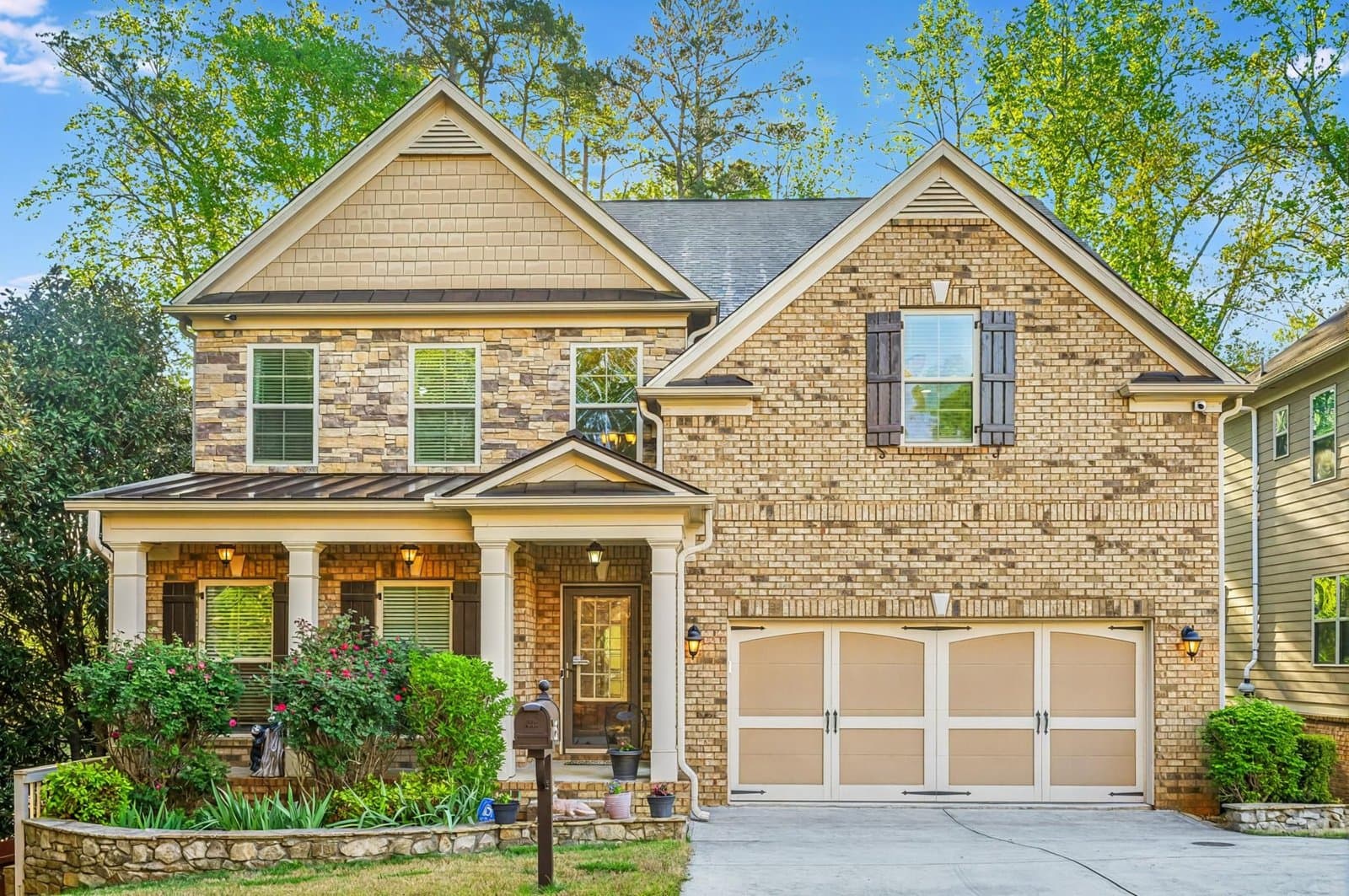

I was walking through a solid three-bedroom ranch in Mableton last spring — good bones, newer roof, original hardwoods that just needed a light sand — when my buyer stopped me mid-tour and said, 'Evan, I love this house. But I don't have $20,000 sitting around for a down payment.'
I told her to slow down. Because she didn't need $20,000 sitting around. She needed to know where to look. Two months later, she closed on that house with $0 out of pocket for the down payment, and she still had money left in her savings account.
That's not a fairy tale. That's Georgia's down payment assistance ecosystem working exactly the way it's supposed to. The problem is, most buyers in Metro Atlanta have never heard of half these programs. Their coworker mentioned something about a grant, their lender shrugged, and they gave up before they even started.
Let me fix that right now.
What Is Down Payment Assistance in Georgia, Really?
Down payment assistance Georgia programs are exactly what they sound like: financial help, from state agencies, local governments, or nonprofits, that covers part or all of your down payment and sometimes your closing costs. But the details matter, because not all assistance is created equal.
Some programs are grants: free money that doesn't need to be repaid as long as you stay in the home for a set period. Some are second mortgages: low or zero-interest loans that sit behind your first mortgage until you sell or refinance. Some are forgivable loans, meaning if you stay put for 5 or 10 years, the balance disappears entirely.
The distinction matters when you're running numbers. A grant is pure upside. A forgivable loan is nearly as good if you plan to stay. A deferred second mortgage is still a liability, just one you don't have to deal with today.
Here's what most buyers in Cobb County, Gwinnett, DeKalb, and Fulton don't realize: you can often stack programs. State assistance on top of a local grant on top of a lender credit. Done right, some buyers are walking into closings with nothing out of pocket and a seller-paid closing cost credit on top of it.
The Georgia Dream Homeownership Program: Start Here
The anchor of down payment assistance in Georgia is the Georgia Dream Homeownership Program, administered by the Georgia Department of Community Affairs (DCA). This is the one you've probably heard whispers about. Here's how it actually works.
Standard Georgia Dream Assistance
The base program offers $10,000 in down payment assistance to eligible first-time homebuyers. That's a zero-interest second mortgage, deferred until you sell, refinance, or pay off the first mortgage. Effectively, it's interest-free money you pay back only when you're done with the home.
To qualify for Georgia Dream, you need to:
- Be a first-time homebuyer (or not have owned a home in the past three years)
- Meet income limits: in Metro Atlanta counties like Fulton, DeKalb, Gwinnett, and Cobb, the household income limit is currently around $120,600 for 1-2 person households and $138,690 for 3+ person households (verify current limits at dca.ga.gov, as these update)
- Have a minimum credit score of 640 (660 for manufactured homes)
- Purchase a home within the program's purchase price limits: currently $425,000 in most Metro Atlanta counties
- Complete a homebuyer education course (online or in person, it's not painful, I promise)
The loan must be a 30-year fixed-rate FHA, VA, USDA, or conventional mortgage through an approved Georgia Dream lender.
Georgia Dream PEN, Choice, and HERO Assistance
Here's where it gets interesting. Georgia Dream has enhanced assistance tiers for specific groups, and these go up to $12,500.
- PEN (Protectors, Educators, Nurses): Active duty military, veterans, law enforcement, healthcare workers, and teachers qualify for $12,500 in assistance.
- Choice: Buyers with a household member who has a disability qualify for $12,500.
- HERO: Also $12,500 for eligible public protectors and health workers, overlaps with PEN in some categories.
If you're a teacher in Gwinnett County schools or a nurse at Northside Hospital and nobody's told you about PEN, that's a conversation worth having.
Atlanta-Specific Down Payment Assistance Programs
Georgia Dream is statewide, but Metro Atlanta has its own layer of local programs that can work alongside (or instead of) the state program.
City of Atlanta's Invest Atlanta Programs
Invest Atlanta, the city's economic development arm, runs several homebuyer assistance programs for buyers purchasing within Atlanta city limits. We're talking neighborhoods like Westview, Pittsburgh, Mechanicsville, Vine City, and parts of Southwest Atlanta where these programs are specifically designed to encourage homeownership and neighborhood stabilization.
The Atlanta Affordable Homeownership Program (AAHOP) offers up to $20,000 in down payment assistance as a forgivable loan, meaning if you stay in the home for the required period, you owe nothing. The income limits are tied to Area Median Income (AMI), and the home must be within Atlanta city limits.
The Vine City and English Avenue Homebuyer Incentive has offered up to $30,000 in specific targeted areas near the Mercedes-Benz Stadium corridor. These programs come and go based on funding cycles, so timing matters.
The catch with Invest Atlanta programs: funding runs out. These aren't unlimited wells. When the allocation is gone, it's gone until the next cycle. If you're seriously considering an Atlanta city purchase, you want to know the current funding status before you fall in love with a house.
Fulton County and DeKalb County Programs
Both Fulton and DeKalb counties have run their own down payment assistance initiatives through their housing departments, often using federal HOME Investment Partnership funds. The availability and amounts fluctuate, but these programs have historically offered $5,000 to $15,000 in assistance for income-qualified buyers purchasing in unincorporated county areas.
If you're looking in Tucker, Clarkston, or Stone Mountain in DeKalb (or in unincorporated Fulton areas like parts of South Fulton), these county programs are worth a direct call to the housing department.
Cobb County and the AHA
The Atlanta Housing Authority (AHA) has homeownership voucher programs for current HCV participants, and Cobb County has periodically offered its own housing assistance through the Cobb County Community Development Division. If you're looking in Marietta, Smyrna, or Kennesaw, check in with Cobb's housing office directly. The programs aren't always well-publicized.
USDA Loans: The Zero-Down Option Nobody Talks About Enough
Here's something that surprises buyers every single time I bring it up: parts of Metro Atlanta's outer ring are still classified as USDA-eligible rural areas. That means zero down payment required: not assistance, just zero down, built into the loan structure.
We're talking areas like:
- Parts of Cherokee County: Canton, Ball Ground, and surrounding areas
- Portions of Paulding County: Dallas, Hiram
- Parts of Bartow County: Cartersville and surrounding areas
- Areas of Walton and Newton Counties east of Atlanta
The USDA eligibility map shifts as areas grow and get reclassified, so what was eligible two years ago may not be today, and vice versa. Income limits apply, and the home must be your primary residence. But if you're open to a slightly longer commute and you're buying in one of these areas, you could be looking at a 30-year fixed mortgage with no down payment at all.
I've seen buyers in Acworth and Woodstock get surprised when they found out their target neighborhoods didn't qualify anymore. And I've seen buyers in Ball Ground get even more surprised when they realized they did. Always verify current eligibility at the USDA's online map before you assume either way.
FHA Loans and Down Payment Assistance: How They Work Together
Most Georgia Dream assistance is structured to work with FHA loans, which require a minimum 3.5% down payment for buyers with 640+ credit scores. On a $300,000 home, that's $10,500, which is almost exactly what the base Georgia Dream program covers.
That's not a coincidence. The programs are designed to work together.
Here's a real scenario: A buyer in Austell targets a $295,000 townhouse. FHA requires 3.5% down: that's $10,325. Georgia Dream provides $10,000. The buyer's lender negotiates a seller contribution toward closing costs. The buyer walks in with maybe $1,500 out of pocket for earnest money, and gets most of it back at closing. That's a real outcome, not a hypothetical.
The key is working with a lender who knows how to structure these deals, and an agent who knows how to write offers that account for seller contributions without blowing up the negotiation. Those two things together are where buyers leave money on the table when they're working with people who don't know what they're doing.
Conventional Down Payment Assistance: Fannie Mae and Freddie Mac Options
Not everyone wants an FHA loan, and with good reason. FHA has mortgage insurance that sticks around for the life of the loan if you put less than 10% down. Conventional loans have PMI too, but it drops off once you hit 20% equity.
Fannie Mae's HomeReady and Freddie Mac's Home Possible programs allow down payments as low as 3% on conventional loans, with reduced PMI rates for income-qualified buyers. These can be paired with certain down payment assistance second mortgages.
Several Georgia lenders also offer their own proprietary assistance programs layered on top of conventional financing. These aren't advertised on billboards. You find them by working with a lender who actually knows the full toolkit, not just the two programs they close every week.
What Actually Disqualifies Buyers From Down Payment Assistance in Georgia?
Let me be real with you. These programs aren't for everyone, and there are legitimate reasons buyers get turned down or passed over.
- Income too high: If your household income exceeds the program limits, you're out. For many dual-income households in Alpharetta or Johns Creek, this is the reality. The programs are means-tested: they're designed for moderate-income buyers, not high earners.
- Credit score below threshold: Georgia Dream requires 640 minimum. Some lenders participating in the program want 660 or higher. If you're at 620, you're not there yet. The fix is usually 6-12 months of strategic credit work.
- Property type restrictions: Most assistance programs cover single-family homes and condos, but have restrictions on investment properties, multi-family purchases, or certain manufactured homes. The Mableton townhouse I mentioned earlier? That buyer had to confirm the property met Georgia Dream's guidelines before we went under contract.
- Purchase price above limits: At $425,000, most of Metro Atlanta's entry-level market is covered. But if you're shopping in Buckhead, Midtown, or Decatur's higher price points, you may be above the ceiling.
- Previous homeownership: Georgia Dream requires you to be a first-time buyer, or to not have owned a home in the past three years. There are exceptions for federally designated target areas and for veterans, but the general rule applies.
How to Actually Access These Programs: The Real Process
Here's where most buyers get frustrated. They read about these programs online, call a random lender, and get told 'we don't do those.' That's not because the programs don't exist: it's because not every lender is approved to originate them.
For Georgia Dream specifically, you need to work with a DCA-approved participating lender. The list is on the DCA website. These lenders have been trained on the program guidelines and have the infrastructure to process the second mortgage alongside your first.
The process looks like this:
- Get pre-qualified with an approved lender: they'll assess your income, credit, and which programs you're eligible for
- Complete the required homebuyer education course (usually 8 hours, available online through HUD-approved agencies)
- Find your home and go under contract: your agent should know how to write the offer to accommodate the assistance timeline
- Close: the second mortgage funds alongside your first, and the assistance is applied directly to your down payment
The timeline for Georgia Dream deals can run slightly longer than a conventional purchase, sometimes 45-60 days instead of 30. If you're in a competitive situation, that matters. A well-connected agent can help you structure the offer to make your timeline less of a liability.
Frequently Asked Questions About Down Payment Assistance in Georgia
Can I use down payment assistance if I'm buying a home in a competitive Metro Atlanta market?
Yes, but it takes strategy. In markets like Smyrna, Decatur, or East Atlanta Village where multiple offers are common, you need an agent who knows how to make an assistance-backed offer competitive. That means clean terms, strong earnest money, and sometimes a pre-approval letter that signals speed and certainty to the seller. Assistance doesn't make you a weak buyer. A weak offer makes you a weak buyer.
Is down payment assistance in Georgia taxable income?
Generally, no. Grant-based assistance isn't considered taxable income. Forgivable and deferred loan programs aren't either, since they're structured as loans. But consult your tax professional for your specific situation. I'm a real estate guy, not a CPA.
Can I use Georgia down payment assistance for a new construction home?
In many cases, yes. Georgia Dream can be used for new construction as long as the property meets program guidelines and the builder is willing to work within the program's timeline. Some builders in communities like Stonecrest, Fairburn, and Douglasville actively market their homes as DCA-compatible. Others are less accommodating. Know before you sign a builder contract.
What's the difference between a grant and a forgivable loan for down payment assistance?
A grant requires no repayment, period. A forgivable loan is technically a loan, but the balance is forgiven (usually 20% per year over five years, or all at once after a set period) as long as you remain in the home. If you sell or refinance before the forgiveness period ends, you may owe the remaining balance. Read the terms carefully.
How much can I actually receive in down payment assistance in Georgia?
Depending on the programs you qualify for and stack, buyers in Metro Atlanta have accessed anywhere from $5,000 to $30,000+ in combined assistance. The Georgia Dream base program is $10,000. Enhanced tiers go to $12,500. Invest Atlanta programs can go to $20,000 or more in targeted areas. The ceiling depends on your eligibility, the property location, and current funding availability.
The Bottom Line
Down payment assistance in Georgia is real, it's substantial, and it's being left on the table every single day by buyers who didn't know to ask or didn't have someone in their corner who knew where to look.
I've helped buyers in Mableton, Austell, Clarkston, South Atlanta, and Douglasville close homes they thought were out of reach, not by bending rules, but by knowing the programs cold and structuring deals that made them work. That's what 20 years of building homes, and six more selling them in this market, gets you.
If you're thinking about buying in Metro Atlanta and you're not sure what you actually qualify for, let's talk through it. No pressure, no pitch, just a straight conversation about what's available and whether it fits your situation. I'm around.
Reach out to Evan Beckett at becketthomes.org. Let's figure out what you're actually working with.
Thinking about a move?
Beckett Real Estate works the whole of Metro Atlanta. Tell me the address or the neighborhood and I will tell you what the house is really like, what the inspection usually finds, and what the number should be.
Check what you qualify forSearch homes for saleTalk to an agent nowMore articles like this