It's July. You've already done a handful of lake weekends. You know what's worked and what's been taking up space in the hull since Memorial Day.
This is the mid-season gut check — not a shopping list, not a buyer's guide. A gear audit. The stuff that earns its place on a Lanier or Allatoona weekend versus the stuff you keep hauling out of the garage because you bought it once and feel guilty leaving it behind.
Three categories. Honest takes on each.
---
Safety Kit: Theater vs. Substance
The Coast Guard requirement list is the floor, not the ceiling. Four Type II PFDs in a bag under the bow that nobody's ever pulled out is theater. This is what actually matters on a crowded Lanier Saturday when the weekend-warrior traffic gets thick.
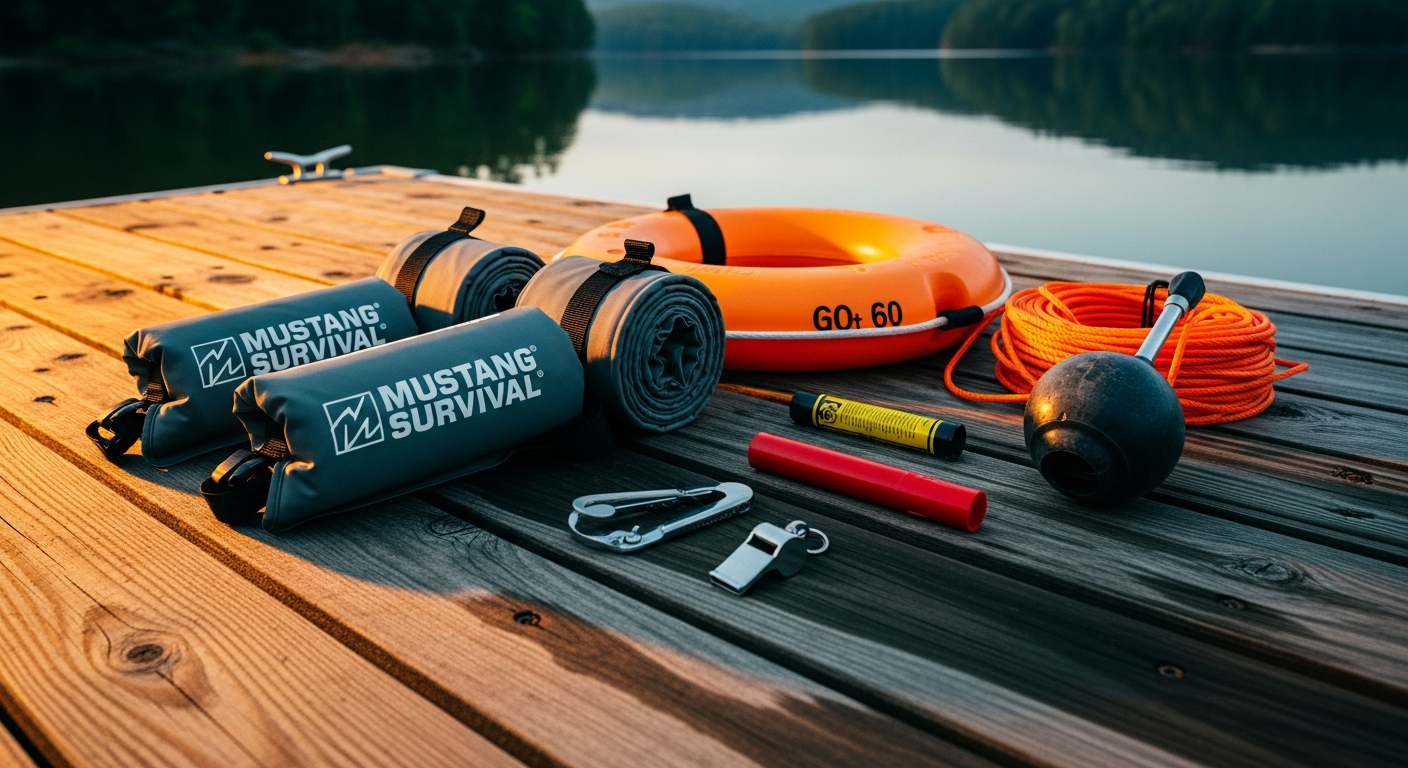
First: life jackets worth wearing. The old orange foam bricks sit in the bag because they're uncomfortable and nobody argues. The Mustang Survival inflatable auto-inflating PFDs actually get put on — which is the entire point. Around $120-140 each. Worth every dollar if anyone in your boat doesn't swim well or you're running at dusk.
Second: a proper throwable. Not the square seat-cushion that came with the boat. A foam rescue ring with 60 feet of floating line, clipped somewhere you can reach it in three seconds without thinking. Overton's and West Marine both carry decent options under $50. The test: could you deploy it one-handed while someone else is already in the water? If the answer involves untying anything, fix it.
Third: a handheld VHF radio. Cell service disappears in the coves and the back channels on both lakes — this isn't Montana, but it happens more than people expect. The Standard Horizon HX210 runs about $100 and floats. If your phone is your emergency communication plan on the water, you're fine until you're not.
Safety kit isn't the glamorous part of this audit. It's also the part that matters most. Get it right once, check it at the start of every season, and don't think about it again.
---
Coolers, Anchors, and Dry Bags: The Tier List
This is where gear decisions get religious and personal. Here's the honest version.
Coolers: YETI Tundra 65 or Tundra 75 remains the call for a full-day boat. Not because it's the only option — Orca and Engel both make legitimate alternatives — but because the 65 fits the layout of most ski boats and bowriders without fighting you, holds ice for three days if you pack it right, and the rotomolded wall thickness holds up to being used as a step, a seat, and a dock bumper for years. If you're on a pontoon and want to go cheaper, the Lifetime 77-quart from Costco at $75 is genuinely fine for day trips. Nobody's judging the cooler on a pontoon. On a ski boat or a PWC trailer rig where the cooler is visible all day, the Tundra earns its keep.
Anchors: Most people on Lanier and Allatoona are using the stock Danforth fluke anchor that came with the boat, which is fine for sandy-bottom coves. Where people get into trouble is rocky bottom near the dam areas and the northern channels on Lanier where you need holding power in current. A Bruce claw anchor — $40 to $70 depending on size — grabs rock and irregular bottom better than a fluke. Carry both if you're doing multiple spots. Anchor chain matters too: 10 feet of chain between the rope and anchor keeps the angle right and doubles your holding power. Most people skip it. Don't.
Dry bags: One bag per person is the right system, not one communal bag that becomes a game of Jenga every time someone needs sunscreen. The Sea to Summit Ultra-Sil 20-liter rolls down to nothing when empty, weighs nothing, and waterproofs your phone, wallet, and keys at a level the average boat's glovebox cannot. Around $35. If you've got a PWC situation where you're actually in the water regularly, upgrade to the YETI Panga 28 backpack — fully waterproof, backpack carry for launch and takeout, and bombproof. At $250 it's a real purchase, but one dry bag that lasts a decade beats replacing cheaper ones every two seasons.
---
PWC Accessories: What Actually Earns Its Space
Personal watercraft are the gear-accessory trap. Every manufacturer and aftermarket brand sells you a reason to bolt something else on. Most of it is clutter. Here's what actually pulls weight.
A boarding ladder that fits your specific hull. This sounds basic but it isn't — the generic fold-down ladders that come with Sea-Doos and Yamahas are fine from the dock but miserable when you're trying to reboard in choppy water after a fall. The Sea-Doo rear boarding step extension is $40-50 and makes reboarding from the water genuinely easy instead of a workout. Yamaha FX and VX owners: the Megaware KeelGuard ($60-80) isn't a ladder but deserves a mention here — it's a keel protector that prevents the fiberglass-grinding noise on every beach launch. Fit it once, never think about it again.
A proper tow rope and flag system. If you're pulling tubes or a wakeboarder behind a PWC, the rope matters more than the tube. A straight PWC tow rope with no handle (you attach your own) rated at 1,500-2,000 lbs is the move — around $30-40 for a quality 60-footer from HO Sports or Radar. And a ski flag: legally required in Georgia when a rider is down, frequently ignored, and worth having to avoid a conversation with lake patrol on a crowded July weekend.
A deck bag that actually mounts. Most people bungee a dry bag to the rear deck and call it done. The OCEAN-SOUTH PWC front storage bag mounts cleanly to Yamaha and Sea-Doo front decks with hardware — around $80-120 depending on size — and keeps sunscreen, keys, and a water bottle accessible without unstrapping anything mid-ride. Small thing. High daily-use value.
---
Between Weekends: Storage Worth Doing
Two hours of proper storage prep between weekends saves you one blown-up season. The things most people skip:
Flushing the engine if you're running in Allatoona specifically — it's a Corps of Engineers lake fed by tributaries that run higher sediment than Lanier's cleaner Chattahoochee source water. Most modern PWCs have a flush port; use it.
Drying the hull before covering. Trapping moisture under a fitted cover accelerates mold on upholstery faster than you'd expect in Georgia humidity. Leave the cover loose or propped for 24 hours, then secure.
Battery maintenance: a CTEK MXS 5.0 smart charger ($80) on a trickle cycle between weekends is the difference between a boat that starts first turn and one that needs a jump on a Saturday morning when the launch ramp is backed up. Buy it once.
Sunscreen off the upholstery: SPF 70 left on white vinyl for a week in Georgia July heat stains permanently. A quick wipe with 303 Aerospace Protectant keeps the seats looking right for years. It's a five-minute job.
This is the July call — tighten up the kit that's been loose since Memorial Day, cut what isn't earning its space, and get back out there. Lake season's not over. Georgia doesn't let you forget that it's still very much on.
Pull the audit list, order what you're missing, and text a friend for the next Saturday that isn't already spoken for.