July in Georgia isn't summer. It's a negotiation with the atmosphere. By 9 a.m. the humidity has already made its argument, and by 2 p.m. the argument has become a threat. The backyard stops being a place you go and becomes a place you survive — unless you've built the right setup.
Here's what I've learned about the backyard water economy: most people spend money in the wrong order. They buy the big inflatable pool, skip the shade, ignore float storage, and wonder why the whole thing feels like a chore by week three. Let me save you the August regret.
---
The Pool Spectrum — Ranked Honestly
There's a spectrum here, and where you land on it should be determined by your yard, your household, and your actual tolerance for setup and maintenance — not by what looks good on someone else's Instagram.
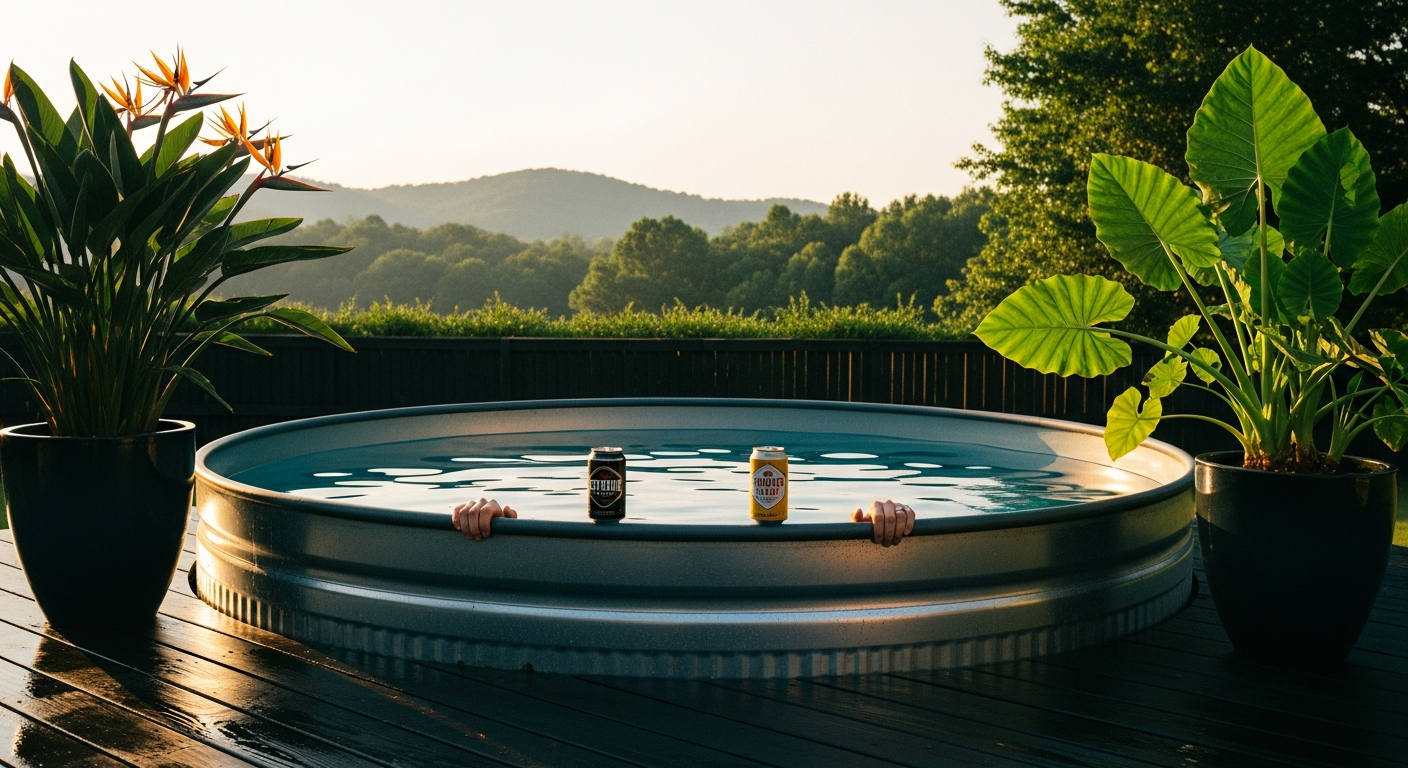
Stock-tank pools are the sleeper pick. A 300-gallon galvanized stock tank from Tractor Supply runs $300-$400. Add a simple intex-compatible pump-filter kit for another $60, and you've got a legitimate cooling vessel that fits two adults comfortably and holds up against Georgia thunderstorms because it's made of steel. No PVC seams to blow out. No slow-leak anxiety. It looks intentional on a deck or paved patio, especially with a few potted tropicals around it. I've seen these setups last five-plus Georgia summers with nothing more than basic water chemistry.
Soft-side above-grounds (the Intex Ultra XTR 15-foot round being the workhorse of this category) are the right call if you've got kids who need actual swimming room or you want something that feels like a pool rather than a plunge situation. Expect to spend $500-$900 on a decent one. The gotchas: the liner WILL develop micro-punctures if your prep work is lazy — ground cloth is non-negotiable, and so is clearing every sharp object in a ten-foot radius before inflation. Water chemistry matters more here than it does in a stock tank because you've got more volume and more surface area baking in the Georgia sun. Algae will win if you give it the opening.
Hard-side semi-permanent pools (composite or resin walls) are where you cross from seasonal purchase into home improvement territory. Prices start around $1,500 and scale up fast. If you're renting, skip it entirely. If you own and you're planning to sell in the next two years, think hard — in Fayette and Coweta counties a well-maintained above-ground setup reads as a lifestyle amenity; a half-dismantled one reads as a liability.
Full in-ground is not this article. That's a conversation about permits, setbacks, soil conditions, and five-figure budgets. It's the right answer for the right house — but it's not backyard-season gear, it's a construction project.
---
Inflatables Adults Actually Use
The float market is full of novelty. Giant swan, oversized pizza slice, inflatable flamingo that's six feet tall and tips over in a light breeze — I understand the appeal and I'm not going to pretend I haven't owned one. But after a few Georgia summers, the things that stay inflated all season are the things built for actual use.
The two-person lounger format (look at Frontgate's 'Resort Collection' floats or Kelsyus's mesh floats if you want something that drains instead of pooling water) wins because it keeps you horizontal and shaded-adjacent without requiring athletic ability to mount. Sun Tribe and Yacht Master make versions that hold their inflation for a full month of daily use.
The drink-holder ring float sounds ridiculous until you've been in a 94-degree pool at 5 p.m. with nowhere to put a cold glass. It's a utility item. Treat it like one.
Where people waste money: the oversized novelty floats that tip, drag, and store badly. They look great in the first photo. By week four they're deflated in a corner and you're annoyed you paid $80 for them.
---
Shade That Survives a Georgia Thunderstorm
This is the most under-invested category in the backyard water economy. People will spend $600 on a float set and $40 on a market umbrella that collapses in the first July pop-up storm.
Georgia summer storms don't mess around. A classic market umbrella — even a good one — is a wind-catch device with a pole through the middle. When a cell rolls through with 45 mph gusts, it either becomes a projectile or it inverts and destroys itself. Neither outcome is good.
What actually survives:
Cantilever umbrellas with weighted bases — the offset-pole design lets you position shade exactly where you need it without a table-hole mount, and the weighted base (look for anything 50 lbs or heavier) keeps it planted. Close it when storms are coming. That's the one rule. Treasure Garden and California Umbrella make commercial-grade versions in the $400-$700 range that hold up to repeated open-close cycles across a full Georgia season.
Sail shades (tensioned sun sails) installed on anchor posts or attached to the house and a fence post are the permanent-shade play. They handle wind better than umbrellas because they're tensioned rather than fighting the load. Install with quality hardware — lag bolts into studs, not drywall anchors — and angle them so water doesn't pool in the center after rain. A 12x12 UV-blocking sail shade runs $60-$150 for the canvas; another $50-$100 in hardware if you're doing it right.
Pergolas are the right long-term answer if you own your home and you're staying. A properly built pergola — 4x4 posts set in concrete, notched beams, metal post bases — is permanent, it adds perceived value to the property, and it handles Georgia weather because it doesn't try to catch it. I've seen pergolas built with deck post anchors surface-mounted to concrete that tipped in the first good storm. Pour the footings. Do it once.
---
Float Storage Sanity
The part nobody talks about but everybody regrets: where does this all go between uses?
Inflatables deflated and jammed into a bin get pinched, folded wrong, and develop stress cracks in the PVC at the fold lines. By mid-August you've got three floats that won't hold air anymore and you've spent $200 replacing things that should have lasted the season.
Two moves that actually work:
A large mesh laundry bag (the oversized 30-inch versions) hung on a hook in the pool area lets inflatables dry fully before storage — which also prevents mildew on the inside of the float. Air circulation is the thing.
A vertical bike rack-style float organizer bolted to a fence or shed wall keeps floats hanging rather than folded. Frontgate and Pool Candy both make these; they're worth every dollar. $40-$80 and your floats last two to three seasons instead of one.
The stock tank gets a simple fitted cover — either a custom-cut piece of foam board insulation (cheap, works perfectly, keeps the water cooler overnight) or a purpose-built stock tank lid if you want something cleaner.
---
The backyard water economy rewards investment in the right order: shade first, then the pool vessel that matches your space and household, then floats built for actual adults, then storage that lets everything last more than one Georgia summer. Get the order wrong and you'll spend the same money twice.
Send a photo of your space — I'll tell you what setup fits it.