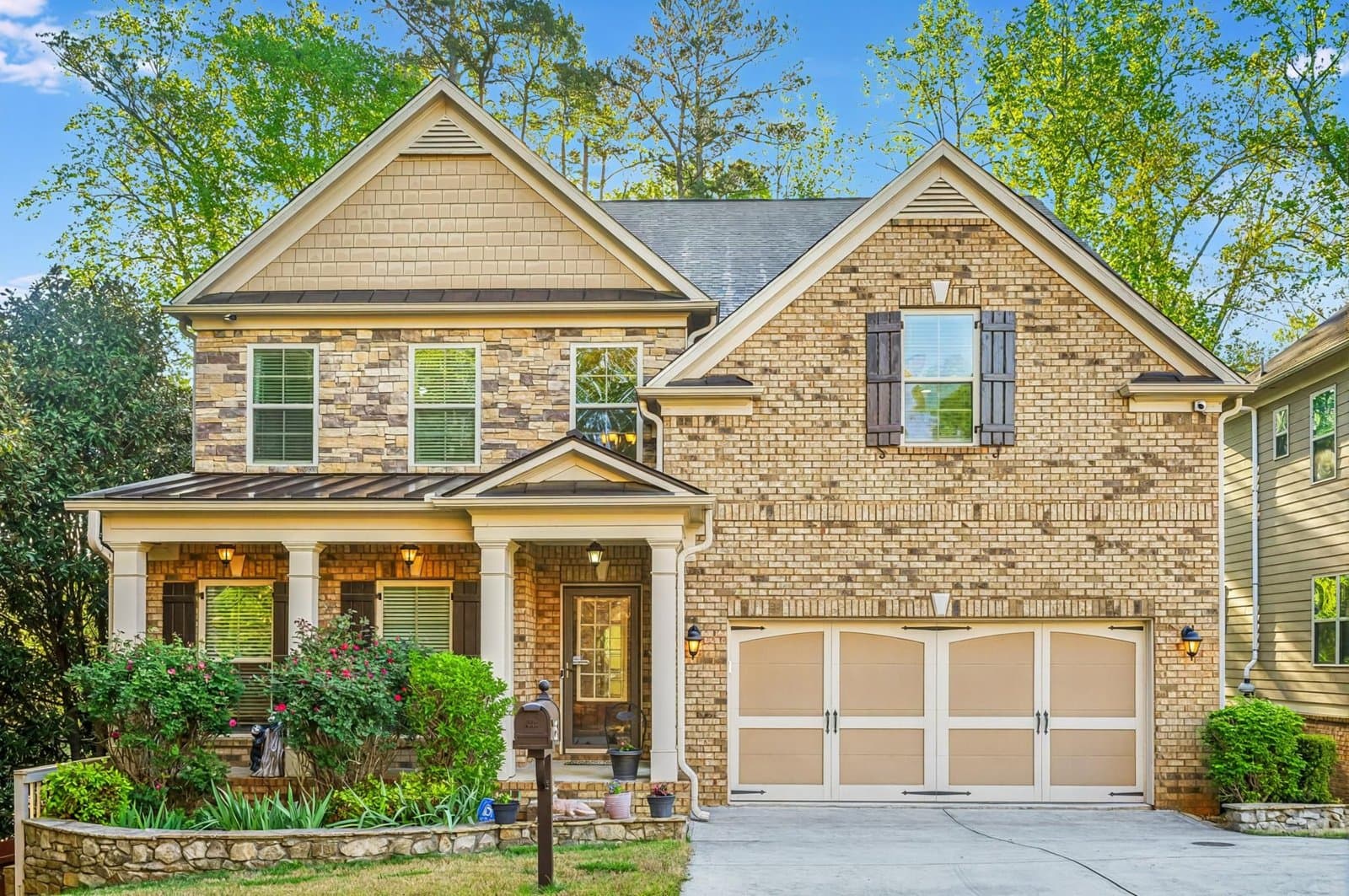
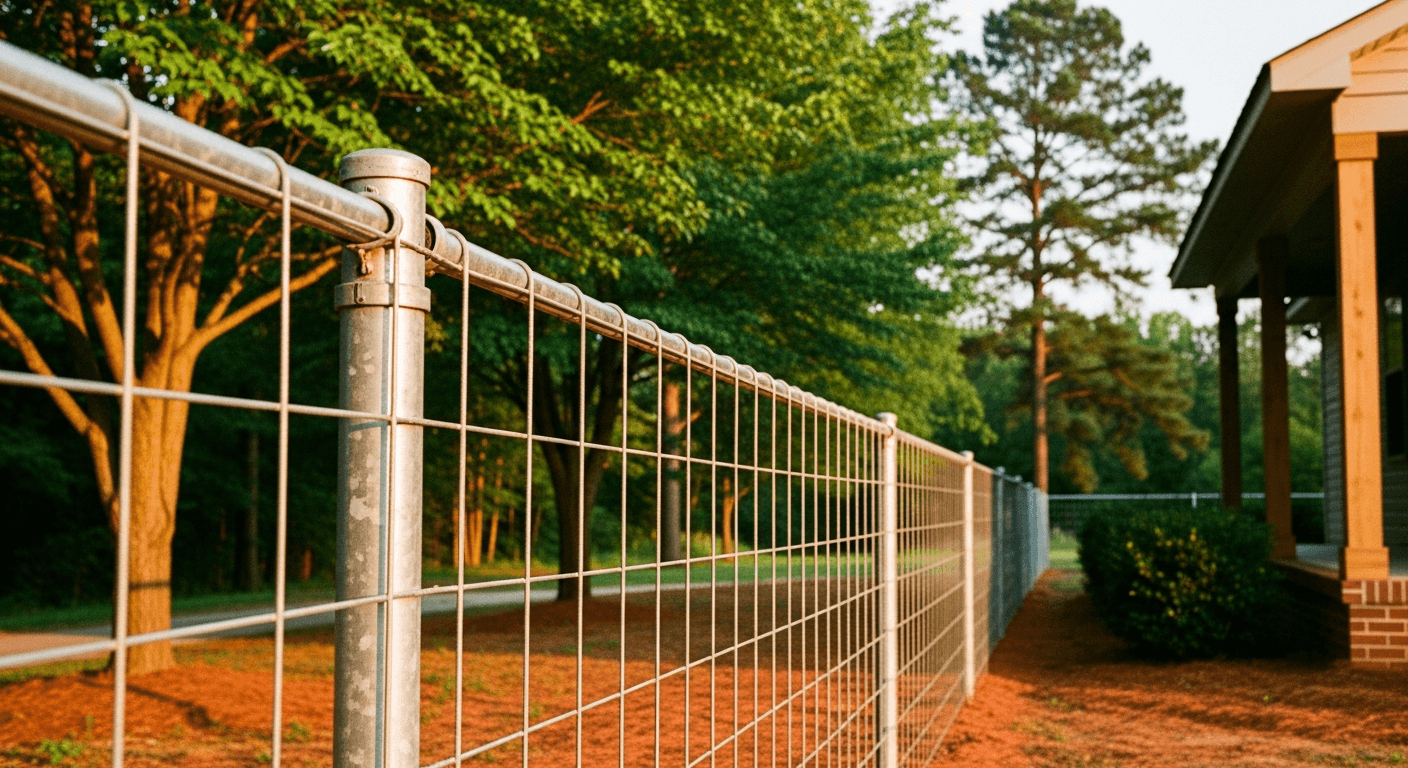
There's a house in Senoia: 1940s bungalow, original hardwoods, the kind of front porch that makes relocating buyers weak in the knees. The fence out front is woven galvanized wire with rounded tops, probably installed sometime in the Eisenhower administration. It's still standing. Still plumb. Still doing its job.
The listing agent called it 'charming.' What it actually is: a construction material that outlasted four owners, two recessions, and whatever that 2009 ice storm was.
That's worth understanding. Not as a fence story, as a construction story.
What Loop Fencing Actually Is (And Why It Lasted)
The style is called loop fencing — single-loop or double-loop woven wire, galvanized steel, with a rounded top rail instead of the sharp-cut edge you get on modern chain link. It was the residential standard from roughly the 1920s through around 1970. You see it on old Peachtree City properties, on farmsteads along Highway 34 in Coweta County, on mid-century bungalows in East Atlanta and Kirkwood. Wherever houses still have their original site infrastructure intact, this fence shows up.
Galvanization is the story. Hot-dip galvanized steel develops a zinc oxide patina that is chemically self-sealing. The surface oxidizes, slows, and stabilizes rather than continuing to rust the way bare steel does. A properly installed galvanized fence from the 1940s or 1950s, in a Georgia climate with reasonable drainage at the post bases, can have another 30 years of functional life in it when you're reading this sentence.
Modern chain link, the stuff you buy at a big box for a quick install, is thinner gauge, lighter galvanization, and starts showing rust at the post bases within a decade in our humidity. The old stuff was built to a different standard because the people installing it expected to be looking at it for the rest of their lives.

What This Has To Do With Reading a Property
Here's what 20 years in construction taught me about exterior infrastructure: the condition of original site elements — fencing, retaining walls, drainage swales, exterior stairs — tells you something about how a property was maintained that the interior staging never will.
A 1955 galvanized fence that's still plumb and intact tells me the posts were set deep, drainage was decent, and whoever owned this property through the decades wasn't ignoring it. That same attention to detail usually shows up in the roof flashing, in the crawlspace vapor barrier, in whether the gutters are pitched right.
A 1985 wooden privacy fence that's already listing at 15 degrees tells me the posts were set shallow, probably no concrete footing, and the people who installed it were cutting corners. That same pattern tends to show up in the HVAC installation, in how the deck ledger board is attached to the house, in whether there's flashing at the chimney base.
Exterior infrastructure is a tell. Not a guarantee, but a tell.
When Beckett Real Estate walks a property, the fence is part of the read. So is the condition of the downspout extensions, the gap between the AC condenser and the foundation plantings, the slope of the grade at the foundation perimeter. These aren't cosmetic details. They're behavioral data about how this property has been treated.
Where To Get It If You're Restoring
If you've got original loop fencing on a property and you need to source matching material for repairs — this comes up on older Fayette County and Coweta County properties more than people expect — it's still manufactured. Two sources worth knowing:
- American Iron Fence: Search 'decorative double loop wire.' They carry the correct profile.
- A Rustic Garden: Search 'galvanized double loop woven wire fence.' Also sells through Etsy if you need smaller quantities for a patch repair.
Home Depot carries something they call border fencing that looks similar in a listing photo but isn't the same gauge or profile. If you're doing a patch repair on original loop fencing and you use the Home Depot product, the mismatch will show within two years as the new material starts to rust while the old material stays stable. Source the right material.
Post replacement is where most people make the mistake. Original posts were typically set 24–30 inches deep in concrete. If you're pulling a rotted post and resetting, match that depth. A shallow reset on a replacement post in Georgia clay (with our freeze-thaw cycles, limited as they are) will heave and lean within three to five years.
The Broader Point
Original construction materials, when they were specified correctly and installed correctly, tend to outperform the shortcuts that replaced them. That's true of galvanized loop fencing. It's also true of cast iron drain lines, original hardwood flooring, old-growth lumber framing, and copper plumbing in houses from the right eras.
The job (whether walking a data center in 2004 or a 1950s bungalow in Senoia in 2026) is to read what's actually there. Not what the listing says. Not what the seller's disclosure implies. What the building itself is telling you, if you know how to listen.
Send the address. Beckett Real Estate brings 20 years of construction knowledge to every walkthrough: the kind that reads fences, panels, and crawlspaces the same way a foreman reads a job site before sign-off.
Looking in Senoia?
Beckett Real Estate works Senoia end-to-end: active listings, off-market opportunities, and the construction-trained walk-through that tells you what the price reflects vs. what it papers over.
Browse Senoia listings → · Schedule a tour with Beckett Real Estate
Thinking about a move?
Beckett Real Estate works the whole of Metro Atlanta. Tell me the address or the neighborhood and I will tell you what the house is really like, what the inspection usually finds, and what the number should be.
See homes for saleTalk to an agent nowMore articles like this