
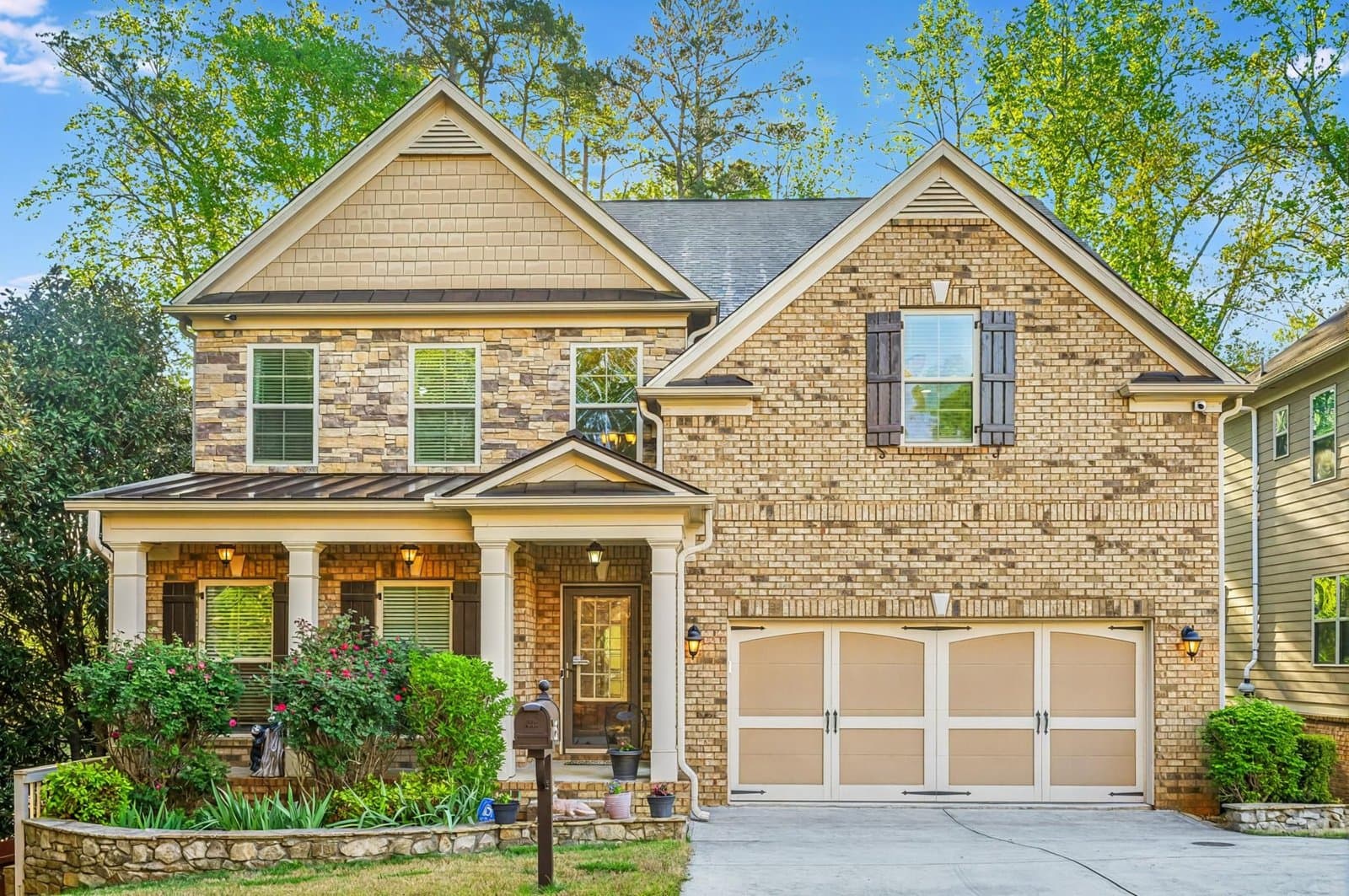
Had a guy fly in from Chicago last month, boots still box-fresh, wanting me to walk him through three houses in one afternoon. He opened with, "Evan, just tell me — what state is best for real estate investing?" I stopped him on the porch of a 1940s bungalow in Grant Park before he even got inside. "Wrong question," I said. "You're not buying a state. You're buying a foundation, a roofline, a school district, and a tenant pool. The state is just the wrapper."
That said — I get why people ask it. When you're deploying capital from out of state, you want a shortcut. A headline. So let me give you the real answer, then let me show you why Georgia, and specifically Metro Atlanta, keeps landing on my desk as the place smart money keeps circling back to.
Why "What State Is Best" Is the Wrong First Question
Every year some list ranks states by cap rate, population growth, or landlord-friendliness. Half of those lists are built on stale data or a spreadsheet somebody built to sell you a course. I've been building and selling houses in this state for over two decades — I've framed walls, poured slabs, and closed deals through two recessions. Here's what I've learned: state-level data tells you the weather. Neighborhood-level data tells you whether you'll get rained on.
So instead of chasing a ranking, ask three better questions:
- Is population and job growth pulling renters and buyers into specific submarkets, or is it flat statewide?
- Are new supply and pricing trends sustainable, or is the market overheated on hype?
- Can you actually underwrite the deal with today's financing costs and still cash flow?
Georgia — and Metro Atlanta specifically — answers all three better than most states I track, and I'll show you the numbers instead of just telling you to trust me.
The Georgia Case: What the Data Actually Shows
Let's start with pricing. The S&P CoreLogic Case-Shiller Atlanta Home Price Index sits at 249.84 as of the May 2026 observation (FRED, series ATXRSA). Compare that to the national index at 336.66 for June 2026 (FRED, series CSUSHPINSA). Atlanta is running meaningfully below the national benchmark relative to its own baseline growth since January 2000 — that's not a red flag, that's runway. It tells me Atlanta hasn't priced itself into the stratosphere the way coastal markets have.
Now layer in financing. The 30-year fixed mortgage average nationally sits at 6.76% as of the September 10, 2026 observation (Freddie Mac PMMS via FRED, series MORTGAGE30US). That's the market rate — not a quote, not an offer, just where the market sits. Rates like that change the math for every investor in every state. What matters is whether a market's rents and appreciation can still make sense at that cost of capital. In my experience walking Metro Atlanta deals, they still do, especially in the submarkets I'll walk you through below.
On the supply side, U.S. new single-family home sales are running at a seasonally-adjusted annual rate of 607,000 (FRED, series HSN1F, July 2026 observation), and national housing starts sit at 1,239,000 units annualized (FRED, series HOUST, July 2026 observation). Builders are still building. Buyers are still buying. National unemployment sits at 4.1% (FRED, series UNRATE, August 2026 observation) — that's a labor market that's steady, not scared. When I see steady employment plus continued housing starts plus a metro that's still under the national price index, I see a market with room left to move, not one that's topped out.
Metro Atlanta's Structural Advantage
Here's what the national numbers don't capture: Atlanta is one of the only major metros in the country still adding both population and corporate relocations at scale, while housing stock hasn't caught up in the tightest submarkets. I've been on job sites in Alpharetta and Sandy Springs where the crane count alone tells you where capital is flowing. I've also walked 1960s ranch houses in East Point and College Park that are getting scraped and rebuilt because the land value alone justifies it.
That combination — job growth outpacing housing stock in specific pockets — is exactly what turns a state-level trend into a street-level opportunity.
Where in Metro Atlanta the Smart Money Is Actually Looking
If you're going to invest in Georgia, don't just buy "Atlanta." Buy a submarket. Here's how I break it down for clients right now.
Fulton County: Buckhead, Sandy Springs, West Midtown
Buckhead and Sandy Springs command rent premiums because of proximity to GA-400 and the corporate corridor stretching up to the Perimeter. West Midtown is still absorbing new multifamily and mixed-use product, which keeps single-family and townhome inventory scarce — scarcity is your friend as a landlord. I've had investors ask me to find them anything walkable to the Works or Interlock, and I tell them the same thing every time: those units don't sit on market long enough for you to overthink it.
DeKalb County: Decatur, Avondale Estates, Kirkwood
Decatur schools and walkability keep this submarket in demand from young families and renters who work downtown or in Emory/CDC's employment corridor. Kirkwood and East Lake have gone through the classic gentrification arc — I watched it happen house by house — and there's still value in the streets one block off the main corridors that haven't fully turned yet.
Cobb County: Smyrna, Marietta, Vinings
The Battery and Truist Park changed Smyrna's trajectory permanently. I remember what that land looked like before the ballpark went in — nobody wanted it. Now it's one of the tightest rental markets inside the perimeter. Marietta gives you more affordable entry points with strong owner-occupant demand, which matters if your exit strategy is eventually selling to a homeowner instead of another investor.
Gwinnett County: Norcross, Duluth, Suwanee
Gwinnett is where I send investors who want cash flow over appreciation speed. Lower entry price, strong rental demand driven by proximity to job centers along I-85, and a diverse renter base that's been remarkably resilient through rate cycles.
South Fulton and Clayton County
This is the value-add territory. I've rehabbed houses down here where the bones were solid — real 2x6 framing, poured foundations, not the OSB-and-prayer construction you find in some newer flips. If you know what to look for structurally, and I do because I built these things, there's meat on the bone in these submarkets that out-of-state investors overlook because they're reading a heat map instead of walking the block.
What This Means for Your Underwriting Right Now
With the 30-year fixed averaging 6.76% nationally (FRED MORTGAGE30US, September 10, 2026), your cash flow model needs to be honest, not optimistic. I tell every investor the same thing I'd tell myself: run your numbers at today's financing cost, not last year's, and not the rate you're hoping for six months from now. If the deal only works with a rate cut, it's not a deal — it's a bet.
What makes Metro Atlanta forgiving in this environment is the price-to-rent ratio in the submarkets I mentioned above. You're not paying coastal-market prices for the rent you're collecting. The Atlanta Case-Shiller index at 249.84 versus the national index at 336.66 (both FRED, referenced observation dates above) tells you this market has appreciated, but it hasn't detached from fundamentals the way some markets have.
Construction Knowledge Is Your Edge
I built houses before I sold them, and that matters more than people think when you're underwriting an investment property. A house with a cosmetic problem — old carpet, bad paint, dated kitchen — is a discount. A house with a structural problem — foundation movement, roof decking rot, undersized HVAC for the square footage — is a liability wearing a For Sale sign. I walk every property for my investor clients the way I'd walk a job site, because that's exactly what it is.
The Honest Risks — Because I Don't Sell Fantasies
I'm not going to tell you Georgia is risk-free, because no market is, and I've never once told a client what they wanted to hear over what was true. Insurance costs have climbed statewide. Property tax assessments in hot submarkets like Smyrna and Decatur have caught some owners off guard. And if national new home sales — currently running at a seasonally-adjusted annual rate of 607,000 units (FRED HSN1F, July 2026) — cool further, that puts pressure on resale comps in newer-construction-heavy submarkets.
None of that changes my answer. It just means you underwrite with your eyes open, and you have someone local who's actually swung a hammer telling you which risks are real and which are noise.
FAQ: What State Is Best for Real Estate Investing?
Is Georgia really the best state for real estate investing?
"Best" depends on your strategy, but Georgia — particularly Metro Atlanta — offers a rare combination right now: a home price index still below the national benchmark, continued job growth, and submarkets where rental demand is outpacing available inventory. For cash flow and appreciation balance, it's one of the strongest markets I track.
What's the best Metro Atlanta city for rental property investing?
It depends on your goal. Smyrna and West Midtown lean toward appreciation and rent premiums. Gwinnett submarkets like Norcross and Duluth lean toward cash flow. South Fulton and Clayton County offer value-add opportunities for investors willing to do rehab work.
How do current mortgage rates affect real estate investing in Georgia?
The 30-year fixed mortgage average was 6.76% as of the September 10, 2026 observation (Freddie Mac PMMS via FRED). That cost of capital affects every market, but Metro Atlanta's price-to-rent ratios still allow deals to cash flow if you underwrite conservatively at today's rate rather than hoping for a future decrease.
Is now a good time to invest in Atlanta real estate?
The data points to a stable, still-growing market rather than an overheated one. The Atlanta Case-Shiller index at 249.84 remains below the national index of 336.66, national housing starts remain healthy at 1,239,000 units annualized, and unemployment sits at a steady 4.1% — all signs of a market with room to grow rather than one that's peaked.
What should out-of-state investors know before buying in Metro Atlanta?
Buy the submarket, not the metro. Fulton, DeKalb, Cobb, Gwinnett, and Clayton counties each behave differently. Work with someone who can evaluate the actual construction and condition of the property, not just the comps, so you're not inheriting a structural problem disguised as a discount.
Let's Talk Through Your Next Move
I've built these houses, sold these houses, and walked these neighborhoods for over twenty years. I know which streets in Kirkwood are still undervalued, which Smyrna blocks are about to turn, and which "renovated" flip in South Fulton has a roof that's going to cost you in eighteen months. If you're serious about figuring out where in Georgia — and specifically where in Metro Atlanta — your capital works hardest, I'm not going to sell you a state. I'm going to show you a street. If you want to talk through this, I'm around.
Thinking about a move?
Beckett Real Estate works the whole of Metro Atlanta. Tell me the address or the neighborhood and I will tell you what the house is really like, what the inspection usually finds, and what the number should be.
See investor dealsSearch homes for saleTalk to an agent nowMore articles like this